★★★★★
350
☰
The AC equipment checks out fine, and yet one wing never cools and the upstairs runs hot. That is the pattern we keep finding in Parkland's master-planned subdivisions — big two-story homes where air duct leaks start at builder-taped joints long before the ductwork itself wears out.
Air duct leaks in Parkland, FL catch homeowners off guard, because most people expect leaks in a 1970s ranch, not in a house built this century. Parkland's growth came in waves of master-planned construction — Heron Bay, Parkland Golf & Country Club, Miralago, Watercrest — and most were built in the 2000s and 2010s. Their duct joints, held together with tape instead of UL 181M code-standards duct sealant, are aging on a much faster clock.
These are also big homes — two stories, high ceilings, floor plans wide enough that many run two or even three separate AC systems, each with long flex-duct runs across a wide, hot attic. More systems mean more joints, and more places for cooled air to escape before it reaches a vent.
Production building runs on speed. A builder's duct crew can install an entire house in a day or two, and the fastest way to close a flex-duct joint is a wrap of foil or cloth tape. Done right, that joint also gets UL 181M code-standards duct sealant — a thick, brush-on sealant that forms a permanent, flexible bond. On fast-tracked jobs, the tape goes on and the UL 181M code-standards duct sealant never does.
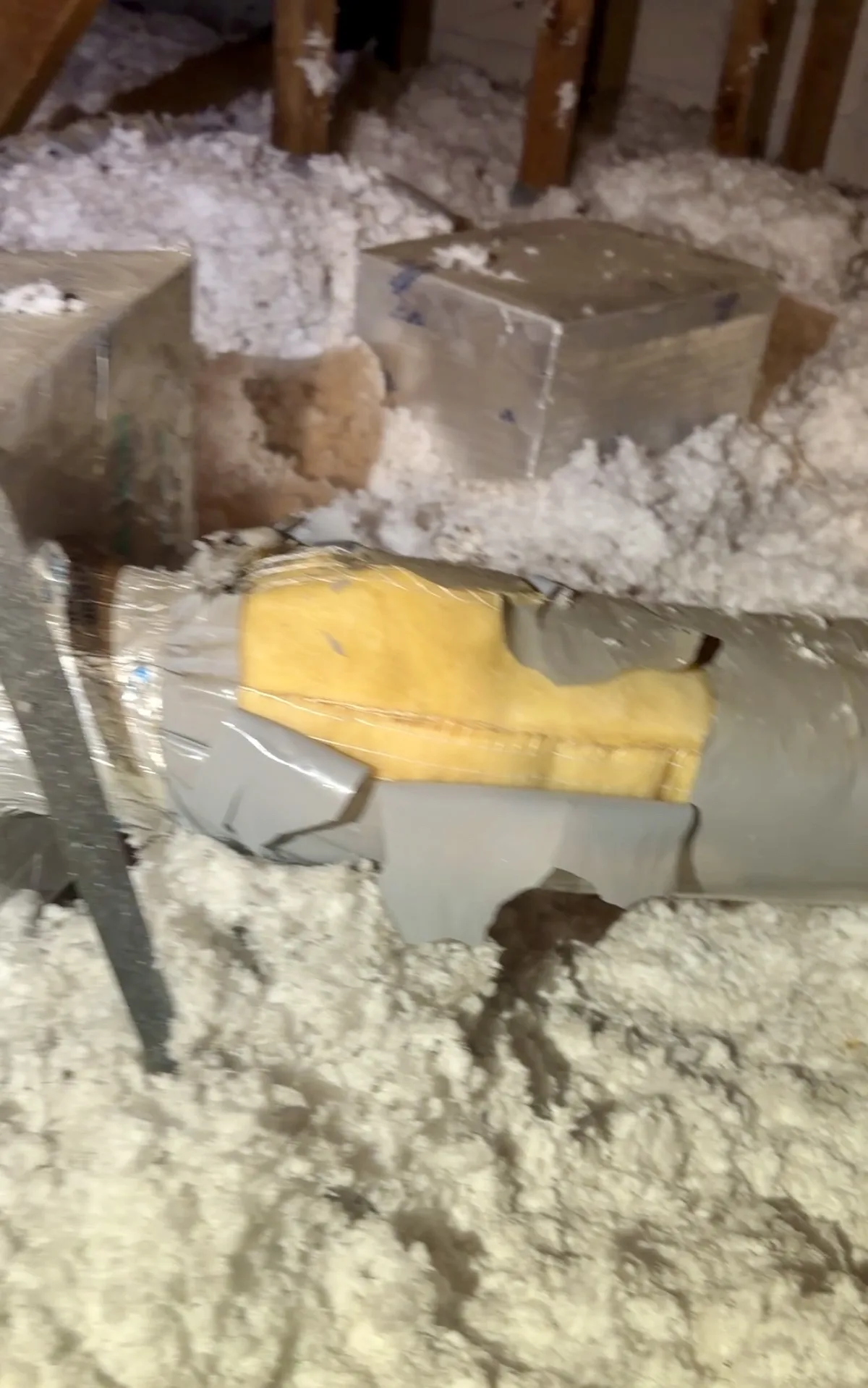
Then the attic takes over. A South Florida attic cycles to 130–150°F all summer, then cools at night, then does it again the next day. Tape adhesive cannot take a decade of that. It dries, curls, and lets go — usually at the plenum connections and takeoffs, where pressure is highest. The flex duct itself is often still in decent shape; what fails is every place two pieces were joined. That is how a fifteen-year-old Parkland home leaks like a forty-year-old one: newer home, old problem.
In a multi-system home, the signature of a leak is lopsided comfort. Watch for:
Sun exposure can warm a west-facing room in the evening, and a closed vent can mimic a weak run. A leak is different: it hits the same rooms, on the same system, at every setting, every day. When the pattern never moves, start with that system's ductwork.
Set one system's fan to "on" and check that system alone — in a two- or three-system home, isolating which one leaks is half the diagnosis. Go up early, before the attic heats up, and run your hand slowly around each joint and takeoff: a supply leak feels like a cool jet escaping; a return leak feels like suction.
Look for the builder's fingerprints: tape hanging loose or curled, dust streaks fanning out from a joint, flex duct sagging or pulled partly off its collar. A tissue strip held near a joint flutters where air is escaping. Runs buried over a vaulted ceiling take a professional inspection, tracing each system from the air handler out.
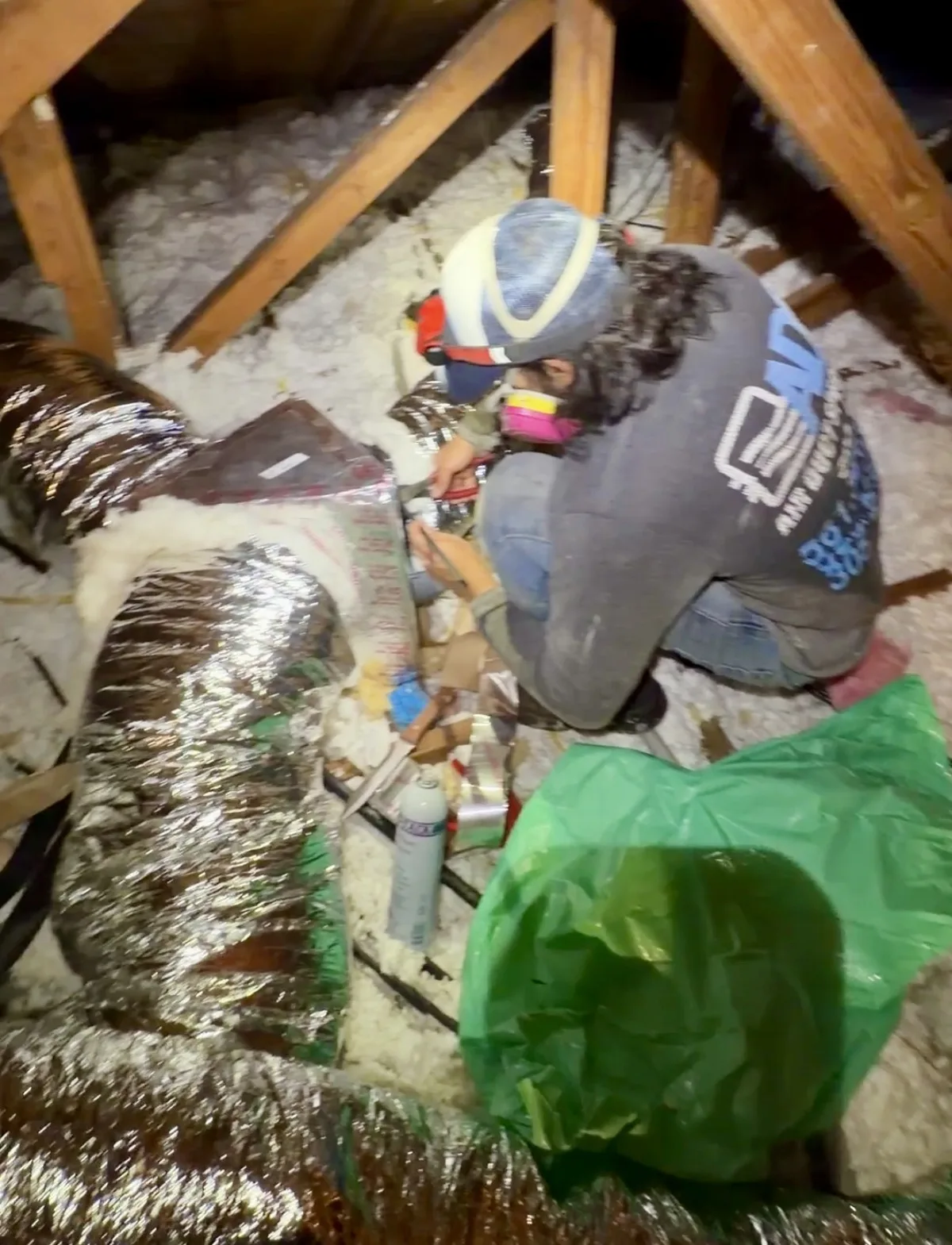
Sealing air duct leaks the way they should have been sealed at build time means UL 181M code-standards duct sealant at every joint, takeoff, and plenum connection, with fiberglass mesh worked in over wider gaps. UL 181M code-standards duct sealant stays flexible as it cures, so it moves with the duct through the daily heat cycles instead of letting go like tape adhesive. More tape over failed tape just restarts the same countdown.
Honesty is part of the job. If runs are torn, crushed under attic storage, or disconnected, sealing is not the answer for those sections — they get repaired or replaced, and we show you the photos so you can see which is which. In most Parkland homes, though, the duct material has years left. It is the connections that quit, and connections can be sealed properly, once.
Sealing reachable joints is priced by system size and attic layout — big Parkland attics are usually workable, which helps. Every job starts with a free on-site estimate, and what we quote is what you pay: no hidden fees, no upselling, ever.
When ductwork has failed beyond its joints — insulation gone, flex torn in multiple places — the honest options are re-insulation, quoted exactly on a free on-site estimate, or full duct replacement, quoted exactly on a free on-site estimate for an average smaller residential home, varying on home sizing, layout, and materials required. A larger multi-system home is quoted per system at the free estimate, so you can fix the leaking system now and plan the rest with real numbers.
Air Duct Specialists LLC serves Parkland and all of Broward County. Licensed CAC1825166. Fully insured. 350 five-star reviews. Same-day service, 7 days a week, 7am–11pm. Free estimates — what we quote is what you pay.
📞 (954) 302-1550 — BrowardWhy are ducts leaking in my Parkland home if it was only built in the 2000s or 2010s?
Most Parkland subdivisions were built fast, with long flex-duct runs joined with foil or cloth tape instead of UL 181M code-standards duct sealant. After ten to fifteen summers of attic heat cycles reaching 130 to 150 degrees, that tape dries out and lets go at the joints. The connections fail first — the duct material itself is usually fine.
Why is one wing or the upstairs of my Parkland home always hot?
Large Parkland homes often run two or three separate AC systems, each feeding its own zone. A leak in one system's runs starves only the rooms it serves, so one wing or the upstairs stays warm while the rest cools normally. That one-sided pattern points at that system's ductwork, not the thermostat.
What are the signs my air ducts are leaking?
Rooms that never reach the thermostat setting, weak airflow from far vents, electric bills climbing with no change in habits, dust around registers, a faint hiss near duct joints, and longer run times than the system used to need. A leak hits the same branch every time.
How are duct leaks found?
Start with what you can reach: run the fan, feel along joints and seams for escaping air, and hold a tissue strip near each connection — it flutters at a leak. Look for peeling tape, dust streaks, and disconnected sections. Leaks you cannot reach take a professional inspection, tracing the full run system by system.
How are leaking air ducts sealed?
Reachable joints are sealed with UL 181M code-standards duct sealant, a brush-on sealant that stays flexible as it cures, with fiberglass mesh over larger gaps. Foil or cloth tape alone is not the fix — attic heat breaks its adhesive down, which is how most of these leaks started. Torn or crushed sections are repaired or replaced, not sealed over.
How much does it cost to fix leaking ducts in Parkland?
Sealing reachable joints is priced by the size of the system and attic access, after a free on-site estimate. When ductwork has failed beyond sealing, re-insulation and full duct replacement are both priced on a free on-site estimate based on home sizing, layout, and materials required.
Are you licensed and insured?
Yes — Air Duct Specialists LLC is a licensed Florida air conditioning contractor, license CAC1825166, and fully insured. Our certified techs do the work — never subcontractors — and you can verify the license through the Florida DBPR before any work begins.