★★★★★
350
☰
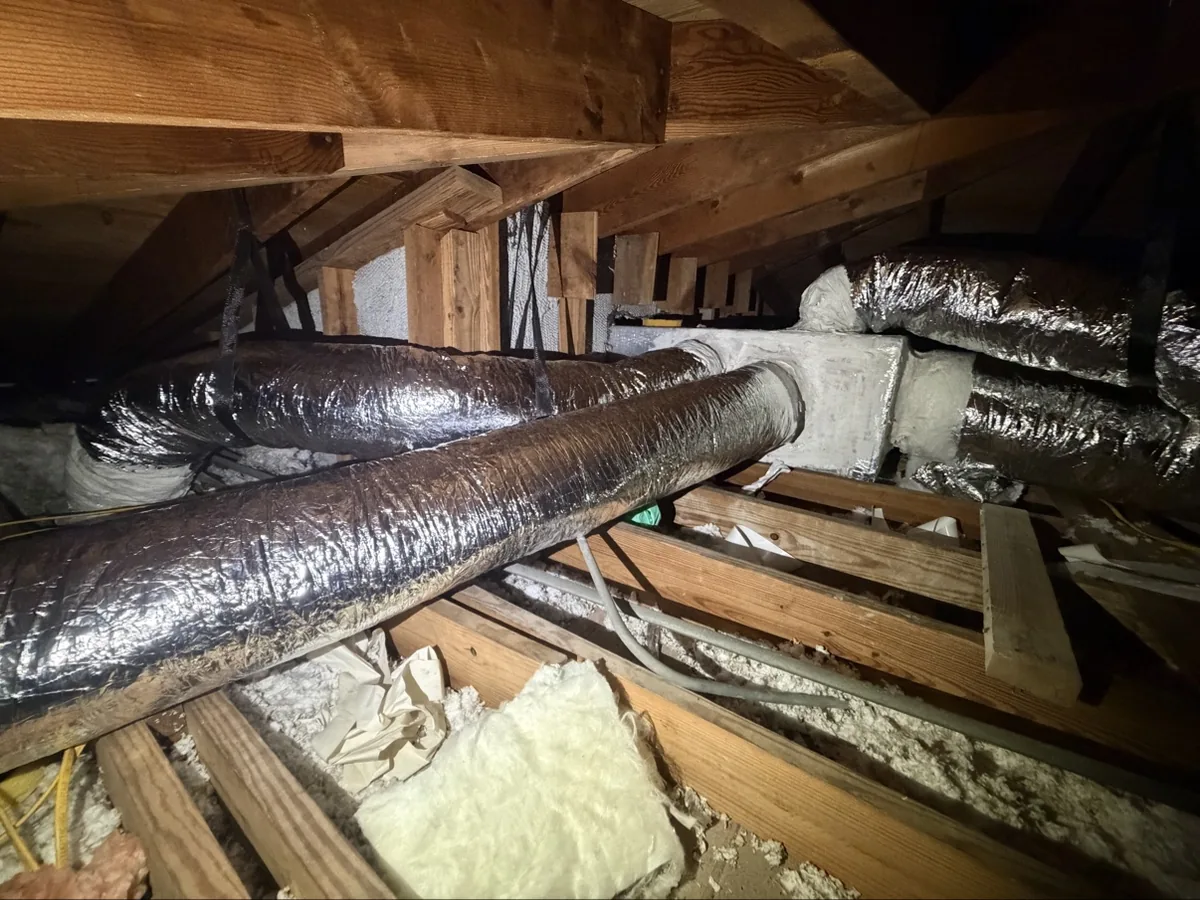
In one of Florida's fastest-growing cities, the uncomfortable room is often blamed on the air conditioner. In Tradition, Torino, and St. Lucie West, we would look in the attic first. A lot of production homes here were built fast, and the ductwork shows it — runs taped instead of sealed, flex sagging between hangers, and register boots that were never properly sealed to the ceiling.
Air duct leaks in Port St. Lucie, FL do not only happen in old houses. We find them in homes that are five, ten, or fifteen years old — homes where the roof, the windows, and the AC unit are all still in good shape. The weak link is hidden above the ceiling. Air Duct Specialists now serves Port St. Lucie and the Treasure Coast, and the pattern we see in growth subdivisions here is consistent: the equipment is fine, but a share of the cooled air never makes it into the rooms it was meant for.
That surprises people, and it should. A newer home is supposed to be tight and efficient. But efficiency depends on details nobody sees at closing — how each joint was sealed, how each run was supported, and whether the boot at every register was actually closed off against the drywall. When those details were rushed, the house leaks from day one. It just takes a few Florida summers for anyone to notice.
Port St. Lucie grew by whole neighborhoods at a time. Through the 2000s, 2010s, and into the 2020s, crews moved from one house to the next on tight schedules. Ductwork is installed early, buried under insulation and drywall work, and rarely inspected as closely as the finishes a buyer can see. Speed leaves a signature, and it looks like this:
None of this means the home was built badly overall. It means one trade, working fast and out of sight, left work that needs finishing. The good news is that finishing it is usually a sealing job, not a rebuild.
If we had to pick one leak that defines Port St. Lucie production homes, it is the leak at the boot. Stand under a register and the air feels decent. But above that same register, in the attic, cooled air can be spilling out around the boot and across the top of the drywall. The room gets what is left, which is why the vent can feel “on” and the room still never catches up.
Multiply that by eight, ten, or twelve registers and the loss stops being a small defect. Every supply leak sends paid-for cooling into a hot attic, and every return-side gap does the opposite damage — pulling hot, dusty attic air into the system and sending it into your rooms. That is why a home with leaky boots often has three complaints at once: uneven rooms, a system that runs and runs, and dust that keeps coming back around the vents.
Homeowners usually call about the equipment first, and that is understandable — the AC is the part they can see and hear. But watch the pattern before you replace anything. A failing system tends to struggle everywhere. A duct leak is more specific: the same room is warm, the same vent is weak, and lowering the thermostat just makes the rest of the house colder while that room barely moves.
Other signs point the same way. Bills rise even though your habits have not changed. The system takes longer to reach the set temperature on an ordinary afternoon, not just on the hottest day of the year. You may hear a faint hiss near a ceiling or wall when the house is quiet. And if the leak is on the return side, humidity can creep up indoors, because the system is mixing cooled air with hot attic air it was never supposed to touch.
There are simple checks you can do yourself. With the fan running, compare airflow at every register — your hand will find the weak ones quickly. Look for dust streaking around a register, which often marks air moving where it should not. If you go into the attic, go early, bring a light, and feel along accessible joints for a jet of cool air. Do not tear into anything. Those checks tell you whether to call; the sealing work is what fixes it.
The fix for air duct leaks in Port St. Lucie is methodical rather than dramatic. We start at the air handler and plenum, work outward through every takeoff, elbow, and joint we can reach, and finish at the register boots — sealing each one to the drywall so the air has nowhere to go except into the room. The sealant is UL 181M code-standards duct sealant, brushed on thick. It cures flexible, fills the irregular gaps that real framing leaves behind, and holds in attic heat in a way cloth tape simply does not. Gaps wider than about a quarter inch get fiberglass mesh pressed into the wet UL 181M code-standards duct sealant, then a second coat over the top.
While we are up there, we also look at support and condition. A sagging run gets lifted and supported properly so it stops pulling on its own connections. Crushed or torn sections get called out honestly — sealing a joint will not rescue duct that is physically damaged. And because return leaks drag attic dust across the coil, we check the coil and blower condition too, so you know the full picture before you approve anything.
For most newer Port St. Lucie homes, sealing the accessible joints and boots is the right-sized repair, and it is priced after we see the system — a free on-site estimate gives you the exact figure, and what we quote is what you pay. No hidden fees, and no upselling a replacement when a sealing job will do the work.
Sometimes the inspection finds more. If the duct insulation has failed across the system, re-insulation is priced on a free on-site estimate. If runs are torn, crushed, badly undersized for the rooms they feed, or laid out so poorly that the design itself is the problem, a full duct replacement is priced on the same free estimate based on home sizing, layout, and materials required. We will tell you plainly which situation you are in — in a five-year-old house, replacement is the exception, not the pitch.
Air Duct Specialists LLC is now serving Port St. Lucie and the Treasure Coast. Licensed CAC1825166. Fully insured. 350 five-star reviews. Same-day service, 7 days a week, 7am–11pm. Free estimates — what we quote is what you pay.
📞 (561) 331-6777 — Treasure CoastWhy does my nearly new Port St. Lucie home already have duct leaks?
Because of how fast the ductwork went in. In many Tradition, Torino, and St. Lucie West production homes, flex runs were taped instead of sealed to UL 181M code standards, left sagging between hangers, and connected to register boots that were barely sealed to the ceiling drywall. The system passed when it was new, then attic heat and normal settling opened those joints within the first few years.
What is a leaking register boot?
The boot is the metal fitting that connects a duct run to the ceiling register in a room. If the gap between the boot and the drywall is not sealed, cooled air blows straight into the attic instead of down into the room. When that happens at several registers at once, rooms feel uneven even though the air conditioner itself is working normally.
What are the signs my air ducts are leaking?
Uneven temperatures from room to room, weak airflow at some registers, longer run times, rising electric bills without a change in habits, and extra dust around vents. In a newer Port St. Lucie home, the pattern to watch is one or two rooms that are always warmer than the rest, in every season and at every thermostat setting.
How are leaking air ducts sealed?
Accessible joints, seams, takeoffs, and register boots are sealed with UL 181M code-standards duct sealant, reinforced with fiberglass mesh on larger gaps. UL 181M code-standards duct sealant stays flexible as it cures and fills irregular openings that tape cannot hold. Ordinary cloth duct tape is not the fix — attic heat and pressure cycles loosen its adhesive, often within a season.
When is sealing not enough and the ducts need replacing?
Sealing fixes joints and connections. It does not fix flex duct that is torn, crushed, badly sagging, or installed so poorly that the layout itself starves rooms of air. In that case re-insulation or a full duct replacement for an average smaller residential home is the honest answer — both quoted on a free on-site estimate, varying on home sizing, layout, and materials required.
Does Air Duct Specialists now serve Port St. Lucie?
Yes — Air Duct Specialists LLC is now serving Port St. Lucie and the Treasure Coast, with same-day service 7 days a week, 7am–11pm, and free estimates. We are a licensed Florida air conditioning contractor, license CAC1825166, fully insured, with 350 five-star Google reviews, and our own certified techs — never subcontractors.