★★★★★
350
☰
Coral Gables ductwork was built up over decades — metal seams, slip joints, and add-on runs that now bleed conditioned air into a 140-degree attic at every connection. Here's where that air escapes, what sealing every joint to code actually fixes, and what sealing honestly cannot.
Air duct sealing in Coral Gables, FL is an energy story before it is anything else. In the older homes around the Granada golf course, in the French and Dutch South African sections, out toward Gables by the Sea, the duct systems were rarely installed all at once. An original metal trunk from the home's early decades, flex runs added for a remodel, a new branch for an addition — each era left its own joints behind. Every seam and slip joint that has aged, loosened, or was only ever taped leaks a little of the air you paid to cool and dry. Across a big Gables home, those little leaks are the system.
The equipment usually gets the blame — and the replacement quote. But when the air handler is sound and the rooms still will not hold temperature, the loss is happening in the attic, one connection at a time. Sealing is the service that closes those connections for good.
Supply leaks mean the system runs longer to satisfy the thermostat, because part of every cycle's cooled air never reaches a room. That is longer run time, higher bills, and more wear — to air-condition the attic. Return leaks are the humidity problem: hot attic air drawn into the return bypasses nothing and loads everything, so the house feels clammy even at a temperature that should feel dry, and the coil and filter take on attic dust they were never meant to handle.
In a Coral Gables estate, the waste scales with the house. Multiple systems, long runs across wide floor plans, dozens of joints per system — the total leakage is rarely one big hole. It is the sum of every connection nobody ever sealed to code.
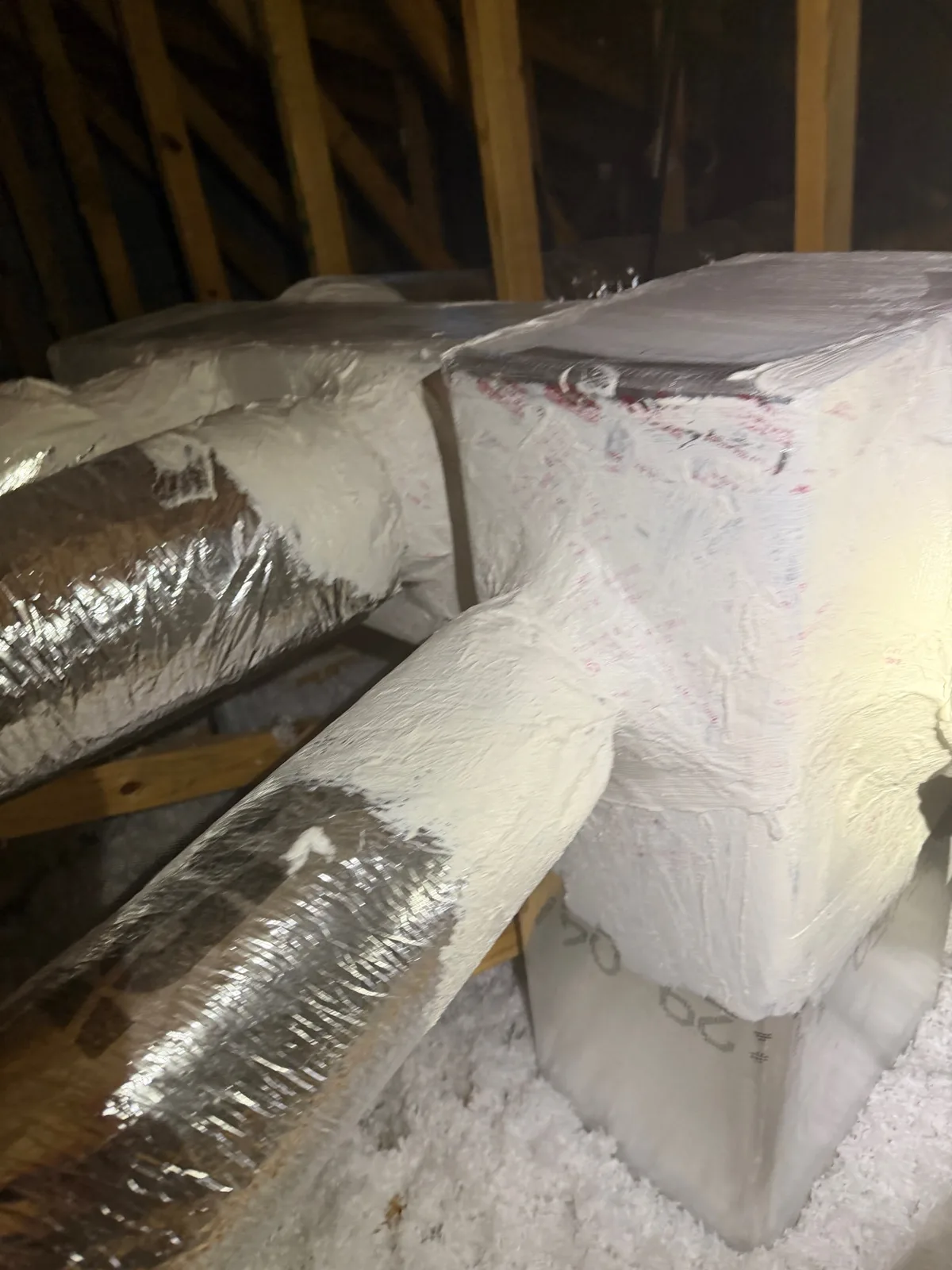
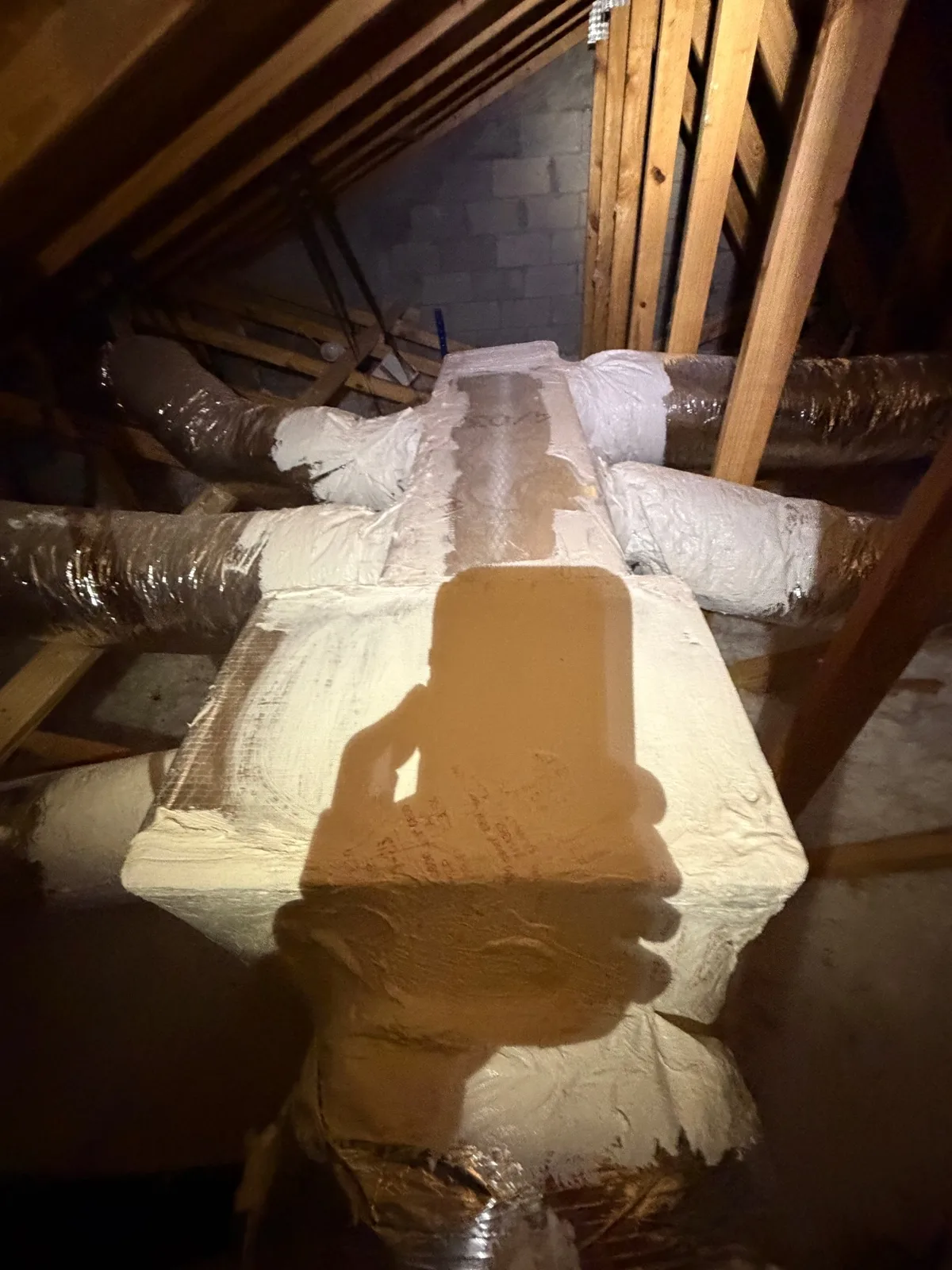
We seal joint by joint, by hand, from the attic side — not with a shortcut sprayed in and hoped for. Every accessible connection is inspected, mechanically secured if it has worked loose, and sealed to UL 181M code standards with UL 181M-rated duct sealant: plenum, trunk seams, slip joints, takeoffs, collars, and boots. Tape alone is not a seal — it dries out and lets go in attic heat, which is how many of these joints failed in the first place. Before-and-after photos show you the connections we sealed.
Afterward, the changes are plain: far vents blow at their designed strength, rooms even out, the system reaches the thermostat setting and cycles off instead of grinding, and indoor humidity settles because the equipment is finally moving sealed, dehumidified air instead of attic air. Sealing is also a required part of any repair or installation done right — new work that is not sealed to code is not finished work.
Sealing closes gaps. It does not rebuild ducts. A run that is torn, crushed flat, or brittle along its length needs repair or replacement of that section first. Insulation that has failed along a run will still let that duct sweat no matter how tight its joints are. And a branch that was undersized or routed wrong when it was added will still underdeliver — sealing makes a sound system tight; it cannot redesign a flawed one. We will show you, with photos, which of those situations your attic is actually in before recommending anything beyond sealing.
Every home is different, so there is no single number that fits every Coral Gables house. What shapes the work is the size of the home and how many systems it runs, how many joints and seams need sealing across those systems, how tight or finished the attic access is in an older Gables home, and whether any section needs repair before it can be sealed.
Call for a free estimate and an exact price before any work starts. What we quote is what you pay — no hidden fees, and the same price for everyone.
Air Duct Specialists LLC seals ductwork across Coral Gables and Miami-Dade County — every joint sealed to UL 181M code standards, with before-and-after photos on every job. Licensed CAC1825166. Fully insured. Same-day service, 7 days a week, 7am–11pm. 350 five-star reviews.
📞 (305) 885-9911 — Miami-DadeWhat are the signs my Coral Gables home needs air duct sealing?
Rooms that stay warmer than the thermostat setting, weak airflow at the far vents, a system that runs longer than it used to, indoor humidity that will not settle, and power bills creeping up with no change in habits. In Coral Gables attics the usual sources are aged metal seams, loose slip joints, and connections that were taped instead of sealed.
Where do Coral Gables duct systems leak the most?
At the connections — the plenum at the air handler, metal trunk seams and slip joints, branch takeoffs, and the collars and boots at each register. Older Coral Gables systems have more of these joints than most, because the ductwork was built up and added onto over decades.
Will air duct sealing lower humidity in my Coral Gables home?
It helps, and often noticeably. Supply leaks waste cooled, dehumidified air, and return leaks pull hot, humid attic air straight into the system. Sealing both sides means the equipment can actually dry the air it delivers instead of fighting attic air all day.
What can air duct sealing not fix?
Sealing closes gaps at joints and seams. It cannot fix a torn or crushed run, insulation that has failed along the duct, or a run that was undersized or routed wrong from the start. Those need repair or replacement first — then sealing the finished work. We will show you which situation your attic is in, with photos.
How much does air duct sealing cost in Coral Gables?
Every home is different, so there is no single number that fits. Cost depends on the size of the home, how many systems it runs, how many joints and seams need sealing, attic access, and whether any section needs repair first. Call for a free estimate and an exact price before any work starts. What we quote is what you pay.
Are you licensed and insured?
Yes — Air Duct Specialists LLC is a licensed Florida air conditioning contractor, license CAC1825166, and fully insured. Our own certified technicians do the work — never subcontractors. You can verify the license through the Florida DBPR.