★★★★★
350
☰
East Boca homes sit in the most humid, salt-laden air in Palm Beach County — and their vents sweat more than most. Here's what's actually happening at your registers, the five reasons condensation forms, and how to stop it for good.
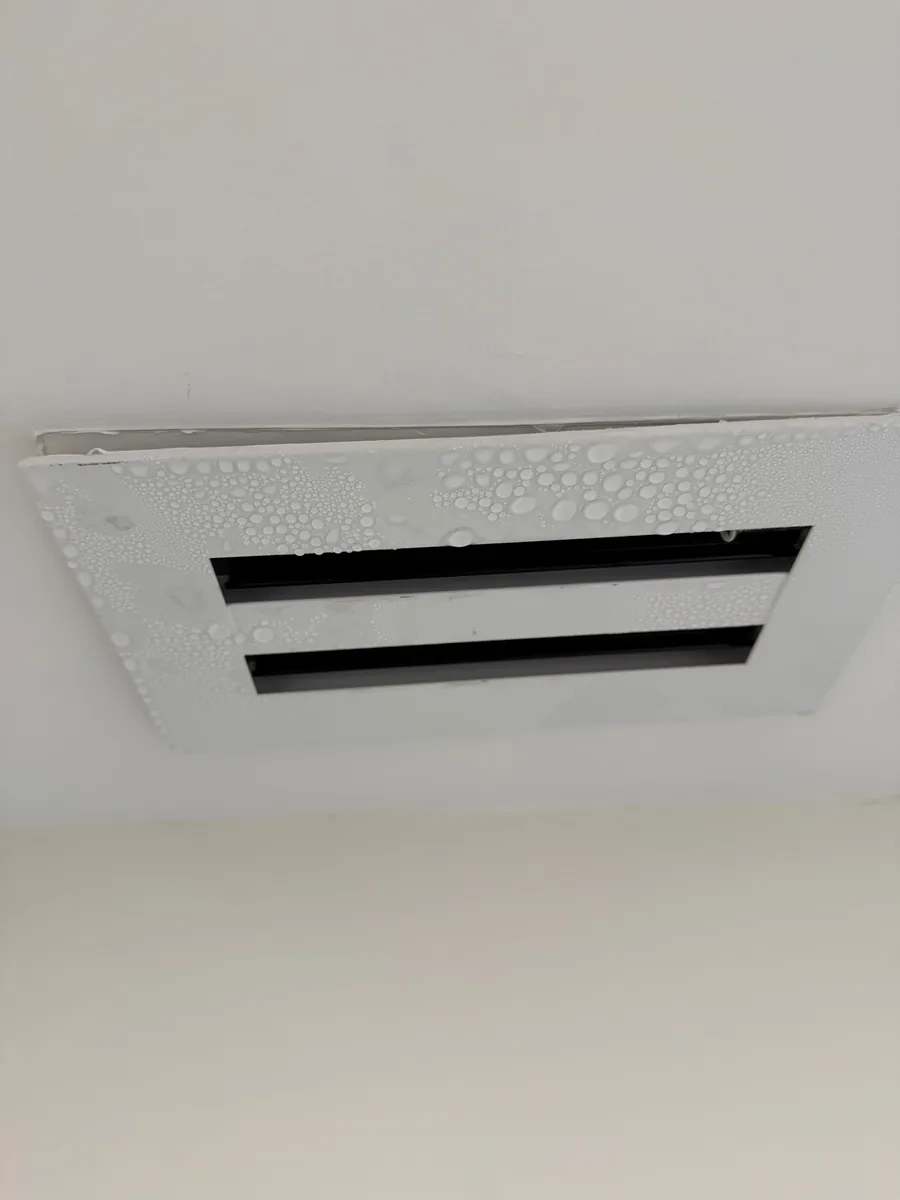
Air vent condensation in Boca Raton is a daily fact of life east of the Intracoastal — 33486, the barrier-island side, the waterfront homes along the A1A corridor and the canals. Condensation beads up on the register, sometimes enough to drip. Towel it off in the morning, and it's back by afternoon. It's the single most common air vent complaint we get from East Boca, and it's not a quirk of your house. It's physics, and it's telling you something about your ductwork.
Air vent condensation in Boca Raton isn't mysterious once you know the two ingredients: cold surfaces and humid air. East Boca has both in abundance. This guide explains what condensation actually is, the five reasons your vents are sweating, how to stop it — and why you shouldn't let it ride, because standing moisture is exactly what mold and bacteria need to take hold.
Think of a cold drink sweating on a humid afternoon. The glass doesn't leak — warm, moist air touches the cold surface, the air cools past its dew point, and water droplets form. Your air vent does exactly the same thing. When the temperature of the vent or the duct behind it falls below the dew point of the surrounding air, condensation starts. In South Florida that dew point stays high for most of the year, which is why vents can sweat even on days that don't feel that hot.
A little condensation on the hottest, most humid afternoons can happen in any home. The problem starts when it's frequent, heavy, or dripping — because that means the cold surface is staying too cold, the air is staying too humid, or the barrier between them (your duct insulation) has broken down. One of those is always the answer. Usually it's more than one.
Boca Raton isn't uniformly humid — the 33486 corridor east of the Intracoastal gets the worst of it. Ocean breeze carries constant moisture and fine salt aerosol straight into homes through door and window gaps. Coastal homes are often designed to capture the view, which can mean less ventilation in exactly the rooms that need it most. And many East Boca homes were built in the 1970s through the 1990s, when R-4 and R-6 duct insulation was standard and plain duct tape was the sealant of choice — both long since out of their useful life.
The salt adds its own damage: constant salt aerosol corrodes metal vent components, duct fittings, and fasteners faster than inland, and corroded fittings leak conditioned air while letting humid air in — both of which make condensation worse. Seasonal homes make it tougher still: a house closed up for months with no AC running to pull moisture out becomes a humidity box, and the first thing the system does on return is pump cold air through a hot, wet house. Condensation is guaranteed.
In the order we actually find them on East Boca service calls:
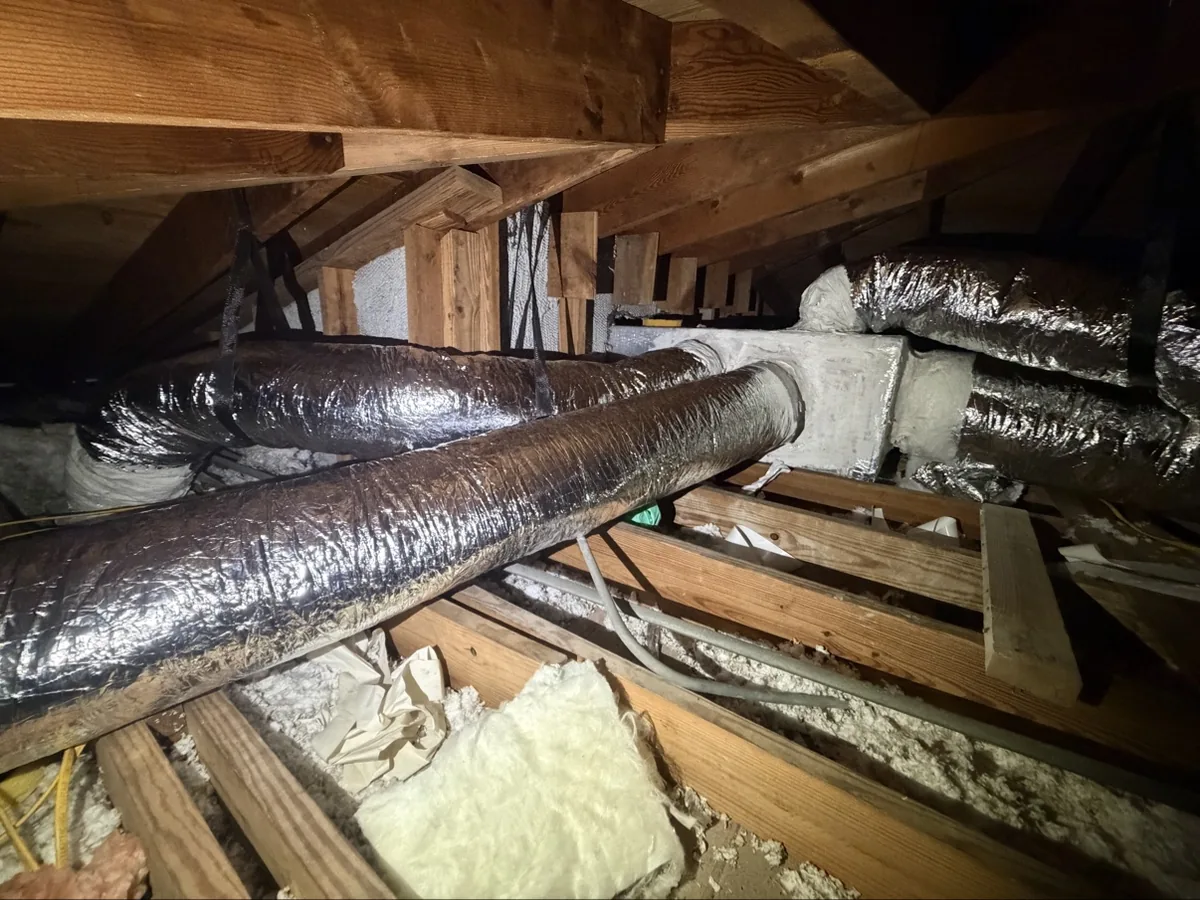
1. Failed duct insulation. The number-one cause. R-4/R-6 insulation that's compressed, torn, or crumbled can't keep cold duct air separated from hot attic air. The duct surface goes cold, attic humidity condenses on it, and the water runs down to the register — or soaks straight into the ceiling. Any ductwork in an unconditioned space should carry R-8 minimum per Florida's current standard.
2. Dirty or clogged air filters. A choked filter starves the system of airflow, which makes the coil and the supply air colder than they should be — colder surfaces condense more. Filters in East Boca should be checked every 30 to 90 days, more often with pets or heavy summer use.
3. Leaky duct joints. Every unsealed joint lets cold air escape and pulls warm, humid attic air into the system. Leaks also make the system work harder, which cools the remaining air further. Ducts sealed with old cloth tape — dried out and failing in every attic we open — are condensation machines.
4. Indoor humidity running high. The recommended range for Florida homes is roughly 45 to 55 percent. When indoor humidity sits at 60 percent or higher, the dew point rises with it, and even a properly installed vent can start to sweat. Short-cycling AC systems — ones that cool the air but shut off before removing enough moisture — make this worse.
5. Restricted airflow at the register. Furniture blocking vents, closed-off rooms, or crushed duct runs all reduce airflow, which leaves the air inside the duct colder and more likely to condense where it meets warm room air.
Start with the free and easy, then work up to the structural — in that order:
Keep filters clean and vents clear. A fresh filter and open registers restore normal airflow, which raises the vent temperature back into the safe zone. It's the cheapest fix on this list and solves more sweating vents than most people expect.
Bring indoor humidity down. Aim for 45 to 55 percent. A properly sized, properly running AC does most of this on its own; a whole-home dehumidifier covers the rest in homes that sit closed up or run short cycles. Lower humidity raises the dew point threshold in your favor.
Seal the duct joints. Every joint sealed with mastic or UL 181-listed products — never plain cloth tape — stops the air leaks that drive condensation and energy waste at the same time. This is the fix a lot of $99 "duct cleanings" skip entirely.
Bring duct insulation to R-8. If the insulation has failed — torn, compressed, shedding — spot fixes won't hold. Re-insulating the system (~$1,000 to $2,700) or replacing failed ductwork with R-8-insulated runs ends condensation at its source and is the fix that actually lasts.
Don't spray foam the vent. It keeps coming up in DIY forums, and it's the wrong move: foam around a register opening traps moisture and creates a dam where water collects and feeds growth. Insulate the duct in the attic, not the vent in the room.
A sweating vent is annoying. What's happening because of it is worse. Dripping vents soak ceiling drywall — we've seen spotting, softened drywall, and paint bubbling in East Boca homes where a sweating register was ignored for a season. And wherever moisture sits, growth follows: the EPA notes that mold can begin colonizing a damp surface in as little as 24 to 48 hours.
That's the urgency behind the fix. Condensation is the moisture source; sweating vents plus condensation inside the duct are exactly how mold and bacteria get their foothold in a duct system. The ceiling repair you'll pay for in six months is always more expensive than the insulation fix you could do today — and the musty odor that shows up in between is the growth telling you it's settled in. Fix the moisture now and none of the rest gets a chance to start.
Straight ranges, no teaser pricing: air duct cleaning runs $200 to $500 residential. If the cause is failed duct insulation, re-insulating the system is roughly $1,000 to $2,700. And if the ductwork itself is done — torn liners, crushed runs, insulation that's failed throughout — a full duct replacement for an average smaller residential home typically runs $3,500 to $9,500, varying on home sizing, layout, and materials required. The free on-site inspection tells you which of these your home actually needs — and if all it needs is a filter change and sealed joints, that's what we'll tell you.
Air Duct Specialists LLC serves East Boca Raton and all of Palm Beach, Broward, and Miami-Dade. Free on-site estimates, same-day service, licensed & insured. Florida license CAC1825166. 350 five-star Google reviews.
📞 (561) 331-6777 — Palm Beach 📞 (954) 302-1550 — Broward 📞 (305) 885-9911 — Miami-DadeHow do I stop condensation from dripping out of my AC vents?
Condensation only forms where cold and warm humid air meet, so the fix is breaking that meeting point: keep filters clean, hold indoor humidity in the 45 to 55 percent range, seal leaky duct joints with mastic, and bring attic duct insulation up to the R-8 standard. If a vent is already dripping, the insulation or sealing behind it has failed and needs attention — a free inspection will show you exactly where.
Why is my AC vent sweating in Boca Raton even though it's not that hot?
Because it's not the heat — it's the humidity. Condensation forms when a cold vent surface drops below the dew point of the surrounding air. East Boca's coastal air stays humid year-round, so even on a mild day there's enough moisture in the air to condense on a cold register, especially one fed by under-insulated ductwork.
Can condensation on air vents damage my ceiling?
Yes — dripping vents soak ceiling drywall, and chronic moisture around duct boots leaves dark spotting, softens the drywall, and creates the damp conditions mold and bacteria need. The EPA notes mold can begin colonizing a damp surface in 24 to 48 hours. Ceiling damage from a sweating vent is one of the most common reasons Boca Raton homeowners end up calling us.
Does salt air make air vent condensation worse in East Boca?
Indirectly, yes. Homes east of the Intracoastal pull salt aerosol across the system every day, which corrodes metal vent components and duct fittings faster than inland. Corroded fittings leak conditioned air and let humid air in — both of which make condensation worse. Monthly fresh-water rinsing of the outdoor condenser helps, and sealing duct joints removes the indoor side of the problem.
Should I add insulation around my air vents to stop condensation?
The insulation belongs on the ductwork in the attic, not sprayed around the register. All ductwork in an unconditioned space should carry R-8 minimum insulation per Florida's current standard, with seams taped and joints sealed. Spray foam around a vent opening can actually trap moisture and create a dam where water collects. Do the duct, not the vent.
How much does it cost to fix sweating vents in Boca Raton?
It depends on the cause. Air duct cleaning runs $200 to $500 residential; re-insulating ducts with failed insulation is roughly $1,000 to $2,700; and a full duct replacement for an average smaller residential home typically runs $3,500 to $9,500, varying on home sizing, layout, and materials required. The estimate is free, and what we quote is what you pay.