★★★★★
350
☰
Big homes on big lots, long attic duct runs, and two or three AC systems working all summer — Southwest Ranches estates give condensation more places to start and more vents to show up on. Here's why it happens, what it means, and what actually fixes it.
Southwest Ranches is not a typical suburb. The homes here sit on acreage, not postage-stamp lots — estate houses, equestrian properties, and sprawling single-story ranches with wings, guest houses, and garages converted to living space. Cooling a house like that takes more than one system: two or three air handlers, zoned controls, and hundreds of feet of ductwork running through a hot attic. When condensation shows up in a house like this, it rarely shows up on one vent. It shows up on many — and that pattern is the clue.
Condensation on vents is simple physics, but in a big multi-system home the physics has more room to work against you. This guide explains why Southwest Ranches homes sweat more than smaller houses, what the pattern of sweating vents tells a trained tech, and when the honest fix is a repair — and when it is new ductwork.
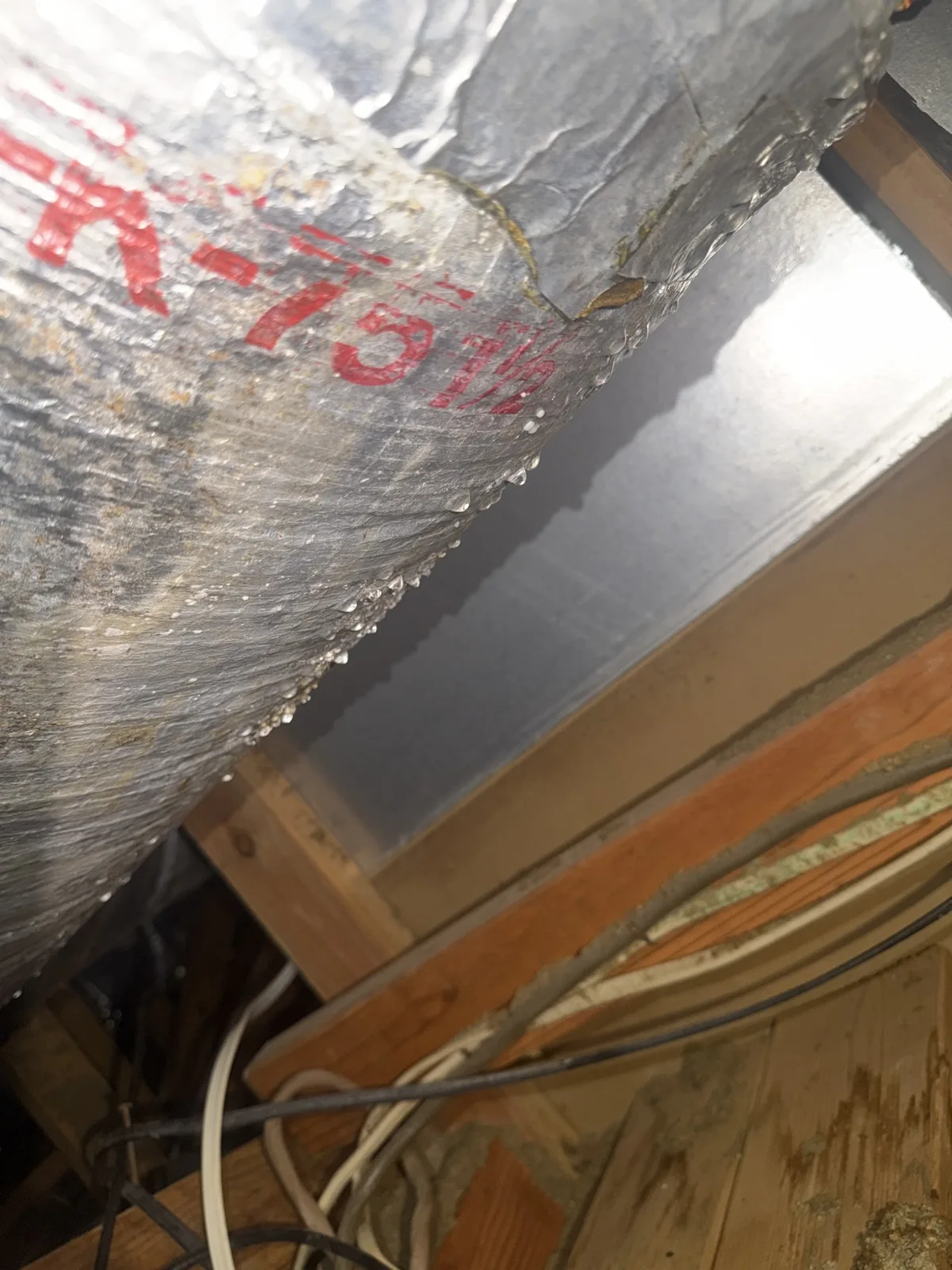
Think of a cold glass of sweet tea on a July afternoon in Broward County. Within minutes the outside of the glass is dripping. Your vents do the same thing. Your air conditioner sends chilled air — typically 55–65°F — through the ductwork, and the metal vent, register, and duct boot cool down to match it. Meanwhile the air around them is warm and humid, especially in a South Florida attic that hits 130–150°F in summer.
Every pocket of air has a dew point: the temperature at which it can no longer hold its moisture as vapor. When a vent's metal surface drops below the room's dew point, moisture in the air condenses onto it as liquid water. The higher your indoor humidity, the higher the dew point — and the easier it is for vents to sweat. That is why condensation is a humidity and insulation problem, not a plumbing leak, and why it gets worse in the months your AC runs hardest.
A little sweating on one vent after a storm or a humid spell is usually not an emergency. Sweating that returns every day, spreads to more vents, or leaves damp rings on the ceiling is the system telling you something has failed — and on a large home, the longer it runs, the more ceiling and ductwork it damages.
A 2,000-square-foot house has one system and a modest run of ductwork. A Southwest Ranches estate can have three systems, multiple zones, and duct runs that stretch the full length of a long, low roofline. That means more surface area for condensation to form on, more boots and joints where cold air can leak, and more insulation that can sag, compress, or tear over twenty-plus years in a hot attic.
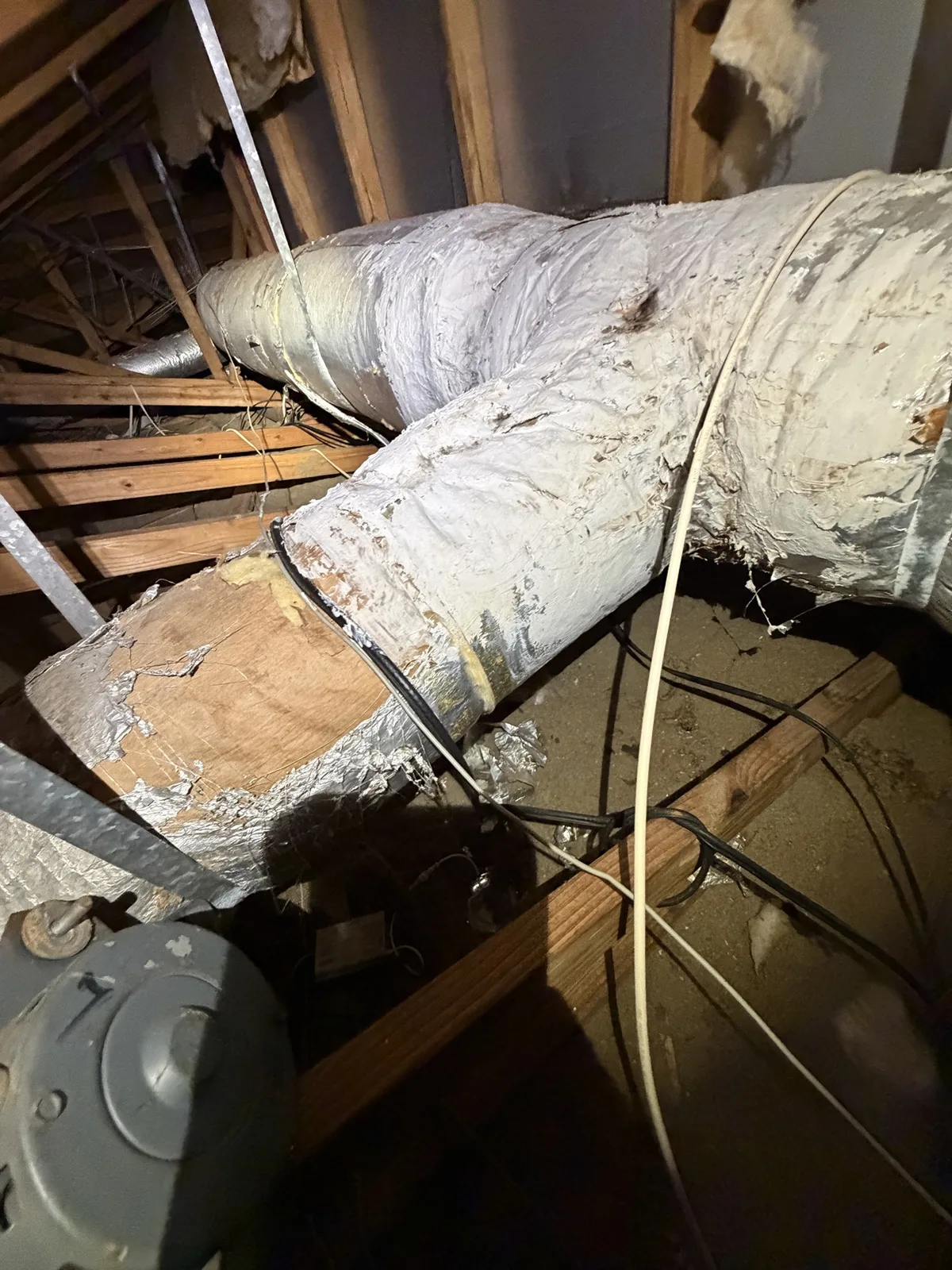
Long runs are their own problem. The farther chilled air travels through a hot attic, the more heat it picks up — and the more the duct surface temperature varies along the run. A section where the insulation has compressed or pulled away from a joint goes cold on the outside, and that is exactly where water beads, drips, and soaks the insulation around it. Wet insulation insulates worse, which makes the next section sweat harder. It is a cycle that feeds itself.
Zoning adds another wrinkle. When one zone calls for cooling while another sits idle, the active zone's ducts run colder than the rest of the system. Vents in that zone can drop below the dew point while the rest of the house looks fine. Homeowners often chase this as a thermostat problem. It is usually a duct and insulation problem wearing a thermostat's clothes.
Sweating vents are a symptom, and like any symptom, the pattern matters more than any single vent. A trained tech reads that pattern before touching a tool:
None of these can be diagnosed from the living room. The answer is in the attic, at the duct — which is why a real inspection means getting up there and looking at the runs, the boots, and the insulation, not just glancing at the vent.
A few simple checks rule out the easy causes, and they cost nothing. Change a dirty filter — restricted airflow is the most common self-inflicted cause of sweating vents. Open every supply vent, including in rooms you rarely use; closing vents does not save energy, it makes the remaining air colder and slower. Set the thermostat fan to AUTO, not ON, so air is not blowing across a cold coil between cycles. And look at the ceiling around each sweating vent for dark rings or stains, which tell you how long the problem has been running.
If sweating continues on multiple vents after those checks, stop guessing. The cause is in the attic, and every week it runs, it soaks more insulation and stains more drywall. On a multi-system estate, one failed section can quietly damage a whole wing before anyone looks up.
Here is the honest version, because this is where homeowners get sold work they do not need — or talked out of work they do. Sometimes the fix is small: reseal a duct boot, replace a short run of failed insulation, correct the airflow, and the sweating stops. A straight-shooting contractor says so and charges for exactly that.
But when the insulation has failed across long runs — torn, compressed, wet, or simply past its life in attic heat — patching one section while the rest keeps sweating is throwing money at a symptom. The duct keeps condensing, the insulation keeps getting wet, and the ceiling damage keeps spreading. At that point the real fix is re-insulation or full duct replacement with new R-8 ductwork, sealed to code, hung and supported properly so it does not sag back into the same problem in five years.
That is also the point where doing nothing gets expensive. Persistent condensation feeds mold and bacteria inside ducts, rots the paper facing on drywall, and stains ceilings that cost far more to repair than the ductwork that caused it. On a Southwest Ranches estate, the ceiling under a long attic run is not a cheap repair.
Straight numbers, no games. Duct re-insulation typically runs roughly $1,000–$2,700. Full duct replacement is typically $3,500–$9,500 for an average smaller residential home, varying with home size, layout, and materials required. A Southwest Ranches estate with multiple systems and long runs will land outside the smaller-home range — that is not upselling, it is arithmetic: more systems, more ductwork, more material and labor.
That is why we give a free on-site estimate instead of a phone quote. A tech gets in the attic, measures the runs, checks every system, and prices the actual job. What we quote is what you pay — no hidden fees, no upselling, ever. Same price for everyone.
Air Duct Specialists LLC serves Southwest Ranches and all of Broward County. Licensed CAC1825166. Fully insured. Same-day service, 7am–11pm, 7 days a week. 350 five-star reviews.
📞 (954) 302-1550 — BrowardWhy do my air vents sweat in Southwest Ranches?
Condensation forms when warm, humid air meets a cold vent or duct surface below the dew point. Large Southwest Ranches homes with long attic runs, older insulation, and multiple AC systems give condensation more surface area and more chances to start — especially in summer, when attics reach 130–150°F.
Is condensation on vents dangerous?
Occasional light sweating on one vent is usually a humidity or airflow issue. Persistent condensation across many vents soaks insulation, stains ceilings, feeds mold and bacteria inside ducts, and wastes energy. On a big estate home, get it inspected before it spreads to drywall and framing.
Why do big homes with multiple AC systems sweat more?
More systems mean more ductwork, longer attic runs, and more boots, joints, and connections — every one a place where insulation can fail or cold air can leak. A single failing section can show up as sweating vents across a whole wing, and one zone running colder than the rest can push its vents below the dew point.
What can I check myself before calling?
Change a dirty filter, open any closed supply vents, set the fan to AUTO instead of ON, and look for dark rings or stains around the vents. If sweating continues on multiple vents, the cause is usually in the attic — failed insulation, a loose duct boot, or leaking connections.
Does fixing vent condensation mean replacing all my ductwork?
Not always. Sometimes resealing a duct boot or replacing a short run of failed insulation fixes it. But when insulation has failed across long runs, re-insulation or full replacement with new R-8 ductwork is the honest fix — patching one section while the rest keeps sweating only delays the ceiling damage.
How much does fixing vent condensation cost in Southwest Ranches?
Duct re-insulation typically runs roughly $1,000–$2,700, and full duct replacement is typically $3,500–$9,500 for an average smaller residential home, varying with home size, layout, and materials. Large Southwest Ranches estates with multiple systems fall outside the smaller-home range, which is why we give a free on-site estimate — what we quote is what you pay.
Are you licensed and insured?
Yes — Air Duct Specialists LLC is a licensed Florida air conditioning contractor, license CAC1825166, and fully insured. You can verify the license through the Florida DBPR before any work begins.