★★★★★
350
☰
In an older Coconut Grove home, new ductwork is not just swapping old flex for new flex. It is sizing, sealing, insulating, and supporting a system that has to survive a 140°F attic, pass inspection, and cool every room evenly for decades. Here is what a to-code installation actually requires — and how to tell whether the contractor quoting you one knows the code or is just winging it.
Coconut Grove homes are some of the most beautiful — and most demanding — in Miami. Old Grove houses along Bayshore Drive, Tigertail Avenue, and the streets off Main Highway were built in eras when ductwork was an afterthought: thin insulation, runs sized by guesswork, and connections sealed with tape that dried out decades ago. Add a South Florida attic that hits 130–150°F in summer, and you get the classic Grove complaints: rooms that never cool evenly, vents that sweat, weak airflow at the far end of the house, and electric bills that climb every summer. New ductwork installation in Coconut Grove fixes the system itself — but only if it is installed to code.
This guide walks through what a to-code installation actually requires in an older Grove home, what shortcuts to watch for, and what it costs — so you can hire with confidence. Done right the first time.
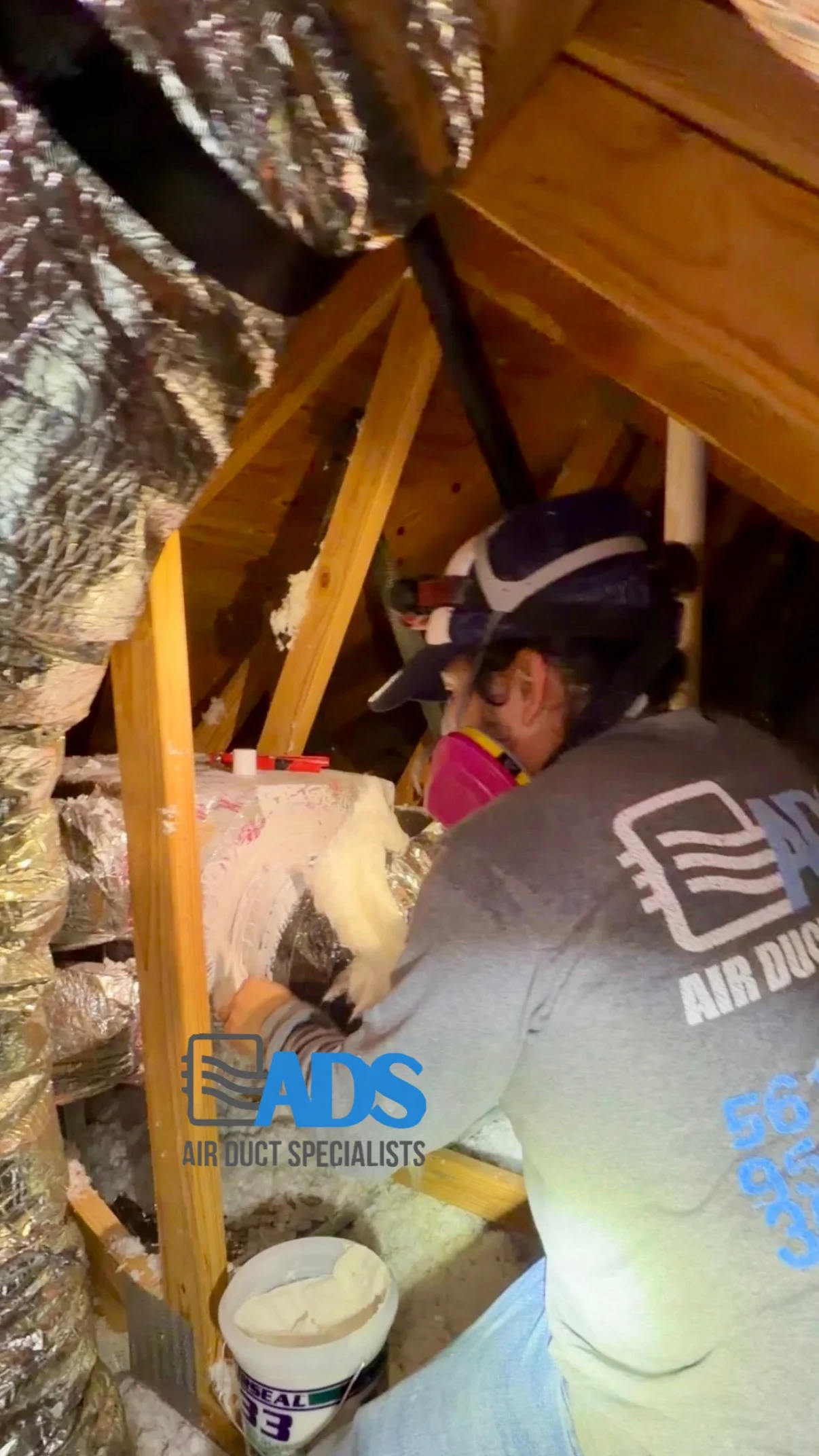
Code is not paperwork for its own sake. Every requirement in the Florida Building Code for ductwork exists because a shortcut failed somewhere. A to-code installation has five non-negotiables. First, ducts are sized to the home's actual heating and cooling load — room by room — not copied from the old system that never worked right in the first place. An undersized run starves a room of air; an oversized one dumps cold air too fast and never dehumidifies properly. Second, every joint, seam, and connection is sealed with mastic sealant or UL 181-listed closure products — never the cloth "duct tape" from the hardware store, which dries, cracks, and peels in a hot attic.
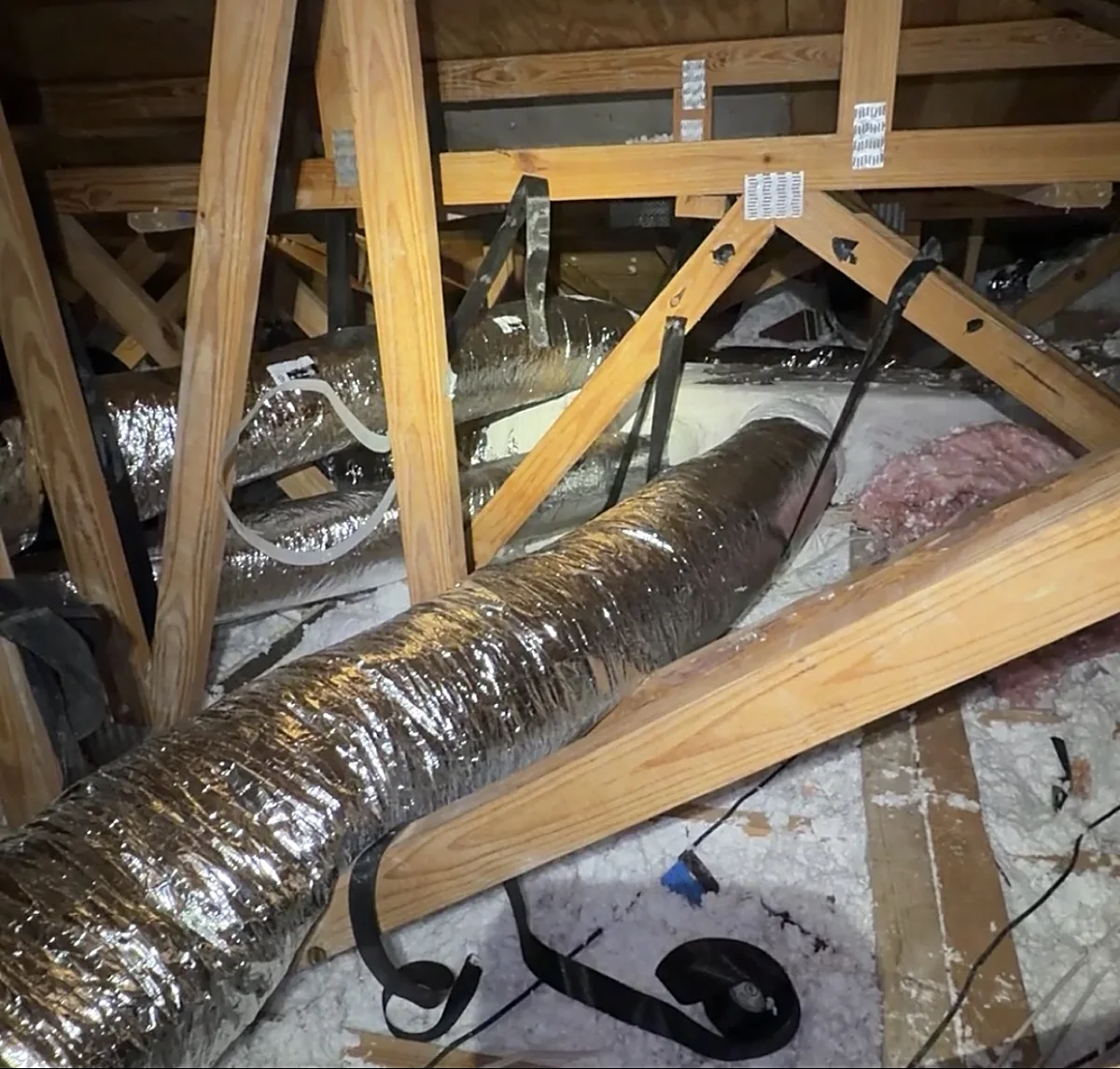
Third, ducts in an unconditioned attic are insulated to the current R-8 standard, so the 55°F air inside the duct does not lose its cooling before it reaches your rooms — and so the outside of the duct stays warm enough not to sweat. Fourth, runs are installed straight, supported, and hung at regular intervals so flex duct does not sag, kink, or crush under its own weight; a sagging run is a choked run. Fifth, the finished system has to meet the code's duct leakage limits — Florida requires duct leakage testing on most new installations, and a system sealed properly the first time passes it without callbacks and rework.
If a contractor cannot explain those five points in plain language, they are not installing to code. They are installing to habit.
The Grove's older housing stock adds complications a new subdivision never sees. Attics are often low, tight, and full of decades of wiring, plumbing, and prior remodels — running straight, supported ductwork through them takes planning, not brute force. Many homes have had additions bolted on over the years, each with its own duct run tapped off the original trunk, so the system is unbalanced from the start. Tile roofs hold heat longer into the evening, keeping attics hotter for more hours. And in the Grove's canopy-shaded streets, humidity hangs in the air, so any duct surface that falls below the dew point sweats — staining ceilings and feeding growth inside the system.
A proper installation starts with an assessment of all of that: the existing trunk layout, which rooms are starved, where the old runs sag or leak, and what the attic will actually allow. That assessment is free from us, and it comes with photos of your own system — because you should see the kinked run and the failed insulation before you approve replacing them.
The shortcuts we see most in older homes are always the same. Ducts copied size-for-size from a system that never cooled the house. Flex runs draped across joists instead of hung, so they sag within a year. Connections wrapped in cloth tape instead of mastic. Insulation compressed where a worker stepped on it, or left off entirely at the boots — the exact spots where condensation forms first. And no leakage test, so nobody ever finds out the system leaks 20 percent of its air into the attic until the bills arrive.
Every one of those shortcuts costs you twice: once in the installation you paid for, and again in the energy, comfort, and repairs that follow. A to-code install costs what it costs because it is done once, properly. That is the whole point of "done right the first time."
Full duct replacement for an average smaller residential home typically runs $3,500–$9,500, varying on home sizing, layout, and materials required. Larger Grove homes with more runs, longer trunk lines, or difficult attic access run higher — which is exactly why the estimate is free and on-site, not a phone guess. If your ducts are structurally sound but the insulation has failed, re-insulating them to the current standard is roughly $1,000–$2,700. And if moisture has already led to buildup inside the system, a whole-system cleaning runs $200–$500 residential.
For most average homes, a full installation takes at most 1–2 days. Larger homes and homes with restricted attic access can take longer — we give you the straight timeline on the estimate, before work starts. What we quote is what you pay: no hidden fees, no upselling, ever. Same price for everyone.
Air Duct Specialists LLC serves Coconut Grove and all of Miami-Dade, Broward, and Palm Beach. Licensed CAC1825166. Fully insured. Same-day service, 7am–11pm, 7 days a week. 350 five-star reviews. Done right the first time.
📞 (305) 885-9911 — Miami-DadeWhat does a to-code new ductwork installation require in Coconut Grove?
Load-based sizing, R-8 attic insulation, mastic or UL 181-listed sealing at every connection, straight supported runs, and a system that meets the code's duct leakage limits — with permits and inspections where required.
How long does a new ductwork installation take?
At most 1–2 days for most average homes. Larger homes and restricted attic access can take longer.
How much does new ductwork installation cost in Coconut Grove?
Full replacement for an average smaller residential home typically runs $3,500–$9,500, varying on home sizing, layout, and materials required. Re-insulation is roughly $1,000–$2,700. The estimate is free.
Why do older Coconut Grove homes need new ductwork?
Original systems with thin R-4/R-6 insulation, sagging flex runs, and dried-out tape seals lose air, sweat, and leave rooms uneven — a to-code replacement fixes the system, not just the symptom.
Is Air Duct Specialists licensed and insured?
Yes — license CAC1825166, fully insured, verifiable through the Florida DBPR before any work begins.
How fast can you come to Coconut Grove?
Seven days a week, 7am–11pm, same-day service, average arrival 35–45 minutes. Call (305) 885-9911.