★★★★★
350
☰
Water beading on a ceiling vent in Stuart is rarely just a humid day. River air, salt-air corrosion, and older ranch ductwork stack the deck toward condensation. Here's how to read the pattern — and tell a humidity fix from a duct problem.
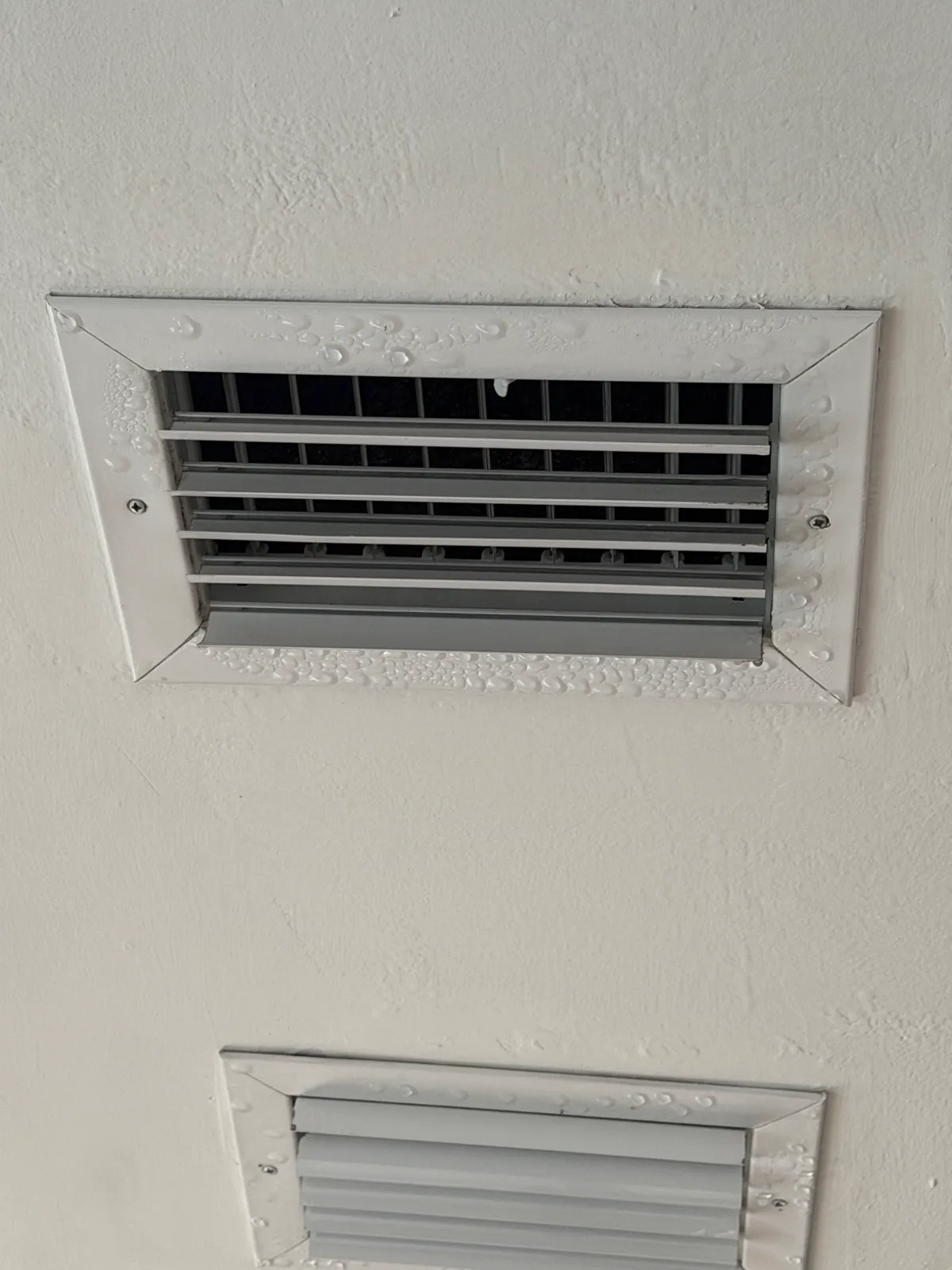
Sweating air vents in Stuart, FL have a coastal twist. Homes in Sewall's Point, Port Salerno, and along the St. Lucie River live in air that is humid even by Florida standards — river and ocean moisture, afternoon storms off the Atlantic, and older ranch homes whose ductwork has spent decades in a hot attic. When vents bead with water, drip onto the floor, or leave rings on the ceiling, that moisture is trying to tell you something specific.
This guide explains what a trained technician reads in a sweating vent that an untrained eye misses, the causes we find most often in Stuart homes — including what salt air does to vent boots and registers over time — the checks you can do yourself, and where the line falls between a humidity fix and a duct repair.
A vent sweats for the same reason a cold glass sweats on a dock in August: its surface is colder than the dew point of the air touching it. Cold supply air chills the metal register and the duct boot behind it, and humid room air gives up its moisture on that cold metal. A faint mist on the single most humid afternoon of the year can be ordinary Florida physics. Vents that drip, sweat day after day, or stain the ceiling around them mean the balance is off — either the home's air is carrying too much humidity, or cold duct surfaces are exposed to humid air they were insulated against.
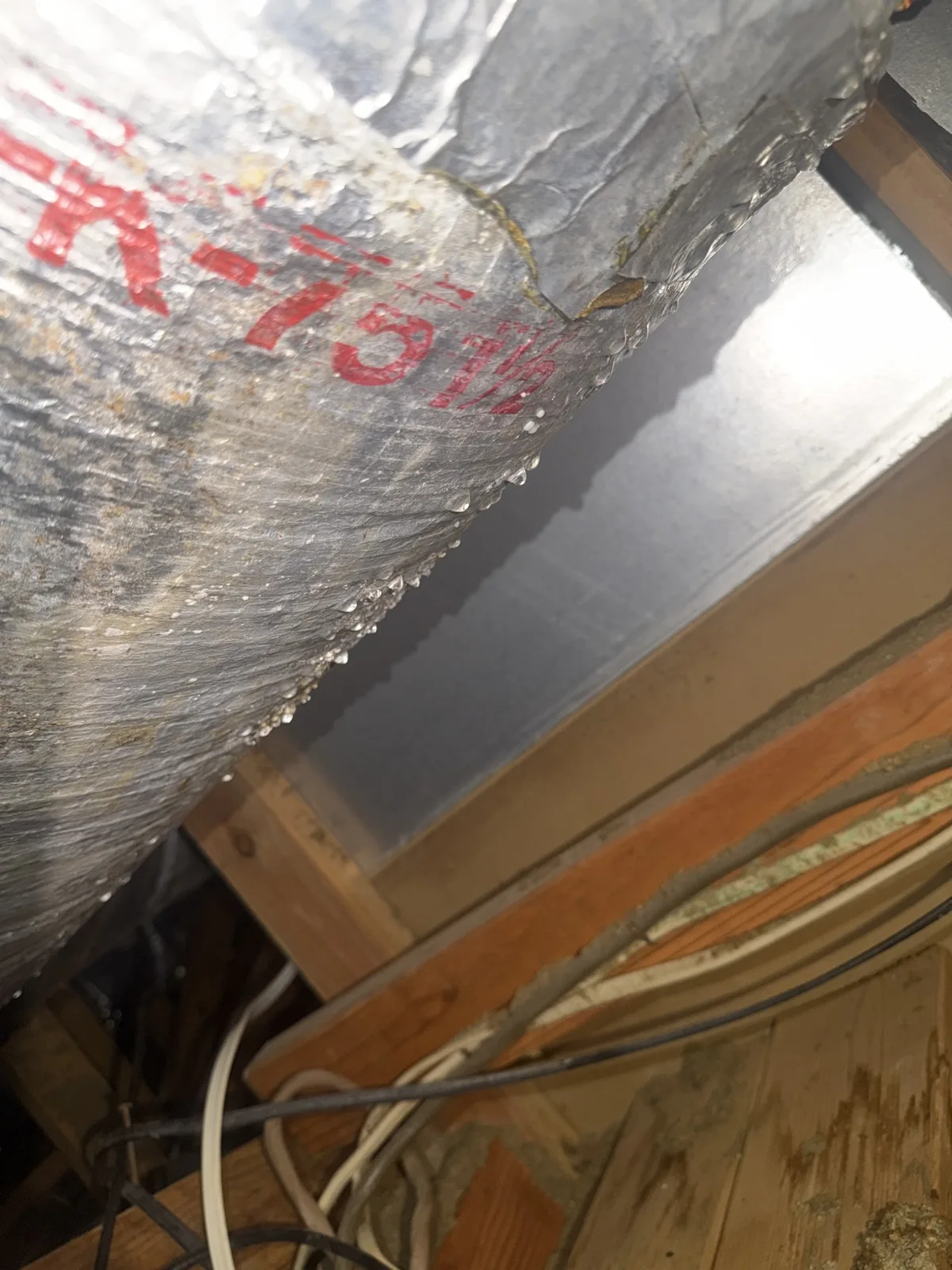
The trained-eye part is location. Sweating at the vents farthest from the air handler points at the duct run. Sweating at every vent points at house-wide humidity or the equipment. Sweating at one vent, with a rusting boot, points at that connection. Same symptom, three different fixes — which is why wiping the vent dry and hoping is not a plan.
Notice what is not on that list: the vent grille itself. Replacing a register without fixing insulation, sealing, airflow, or humidity changes nothing but the grille.
Four quick checks narrow it down. First, change a gray, loaded filter and watch the vents for two days. Second, open every supply vent in the house — closing vents to push air elsewhere raises pressure and makes sweating worse. Third, map the pattern: which rooms sweat, and is it the far rooms, one room, or the whole house? Fourth, run bathroom exhaust fans during showers and give the system time to dry the house after doors have stood open to the lanai. If sweating survives those basics, the cause is in the attic or the equipment, and that takes a technician, not a towel.
Left alone, a sweating vent follows a predictable path in a Stuart home. First the register beads and occasionally drips — easy to wipe, easy to ignore. Then the paint and drywall around the register start to show it: a faint ring, a bubble in the paint, a stain that comes back every time you repaint it, because the moisture source never left. Inside the ceiling, the boot and the first foot of duct stay damp through the cooling season, and damp insulation and dust are exactly what growth feeds on. By the time the stain is obvious from across the room, the repair is no longer just a duct repair — it is drywall and paint on top of it. That progression is why we treat regular dripping as a call-now problem rather than a look-later one: the early fix is sealing and insulation, the late fix is that plus a ceiling.
There is also an energy cost running quietly underneath. A boot or joint wet enough to stain a ceiling is usually leaking conditioned air into the attic at the same time. You are paying to cool the attic, the system runs longer to hold temperature, and longer runtimes in humid air mean more hours every day where cold surfaces sit below the dew point. Fixing the leak and the insulation breaks that cycle at both ends.
Here is the honest split we give Stuart homeowners. Light, house-wide sweating that tracks the worst humidity days is usually a humidity and maintenance answer: a clean coil, a clear drain line, correct airflow, and a system that runs long enough to dry the air. Sweating concentrated over one wing, following one duct run, or arriving with ceiling stains, a musty start-up odor, or a rusting boot is a duct answer: resealing, re-insulating, or replacing the failed run.
We will show you which one you have, with photos from your own attic. Before-and-after photos come with every job — and if your ducts are fine, that is what we will tell you. No upselling, ever.
Every home is different, so there is no single number that fits every property. What the work involves depends on how many vents and runs are affected, whether the fix is sealing and re-insulating or replacing a failed duct run, attic access, and the size and layout of the home — a compact ranch and a waterfront home in Sewall's Point are not the same job.
Call for a free estimate and an exact price before any work starts. What we quote is what you pay — no hidden fees.
Air Duct Specialists LLC diagnoses and fixes sweating vents across Stuart and Martin County — ranch homes, riverfront homes, and waterfront estates. Licensed CAC1825166. Fully insured. Same-day service, 7 days a week, 7am–11pm. 350 five-star reviews.
📞 (561) 331-6777 — Palm BeachWhy are my air vents sweating in my Stuart home?
Condensation forms when cold supply air chills the metal vent below the dew point of the humid air in the room. In Stuart, river and ocean humidity, failing insulation on older ranch ductwork, and unsealed vent boots are the usual drivers. Vents that sweat most afternoons — not just on the most humid day of the year — are telling you something in the system needs attention.
Does salt air make vent sweating worse?
It contributes over time. Near the coast, registers, vent boots, and fasteners corrode faster, and a corroded, ill-fitting boot leaks cold air and lets humid attic air reach cold metal — so it sweats sooner and stains the ceiling faster than a sound connection.
Is a sweating vent dangerous?
The water itself is a symptom, but what it does over time is the problem. Repeated condensation stains and softens ceiling drywall, feeds growth around the vent boot and inside nearby ductwork, and rusts registers and boots. Caught early it is usually a sealing, insulation, or airflow fix. Ignored for seasons, it can become a ceiling repair on top of the duct repair.
Can I stop vent sweating myself?
Start with the basics: keep the filter clean, keep supply vents open, run bathroom exhaust fans during showers, and avoid setting the thermostat extremely low, which chills vents further without removing more humidity. If sweating continues after that, the cause is usually in the attic — insulation, duct leaks, or airflow — and that takes a technician.
Why do only some of my vents sweat?
Location is the clue. Vents at the end of the longest duct runs sweat first because those runs are the most exposed to hot attic air. One sweating vent with a rusting boot points at that connection. Every vent sweating points at house-wide humidity or an oversized system that short-cycles and never dries the air.
How much does it cost to fix sweating air vents in Stuart?
Every home is different, so there is no single number that fits. Cost depends on how many vents and runs are affected, whether the fix is sealing and re-insulating or replacing a failed duct run, attic access, and the size of the home. Call for a free estimate and an exact price before any work starts. What we quote is what you pay.
Are you licensed and insured?
Yes — Air Duct Specialists LLC is a licensed Florida air conditioning contractor, license CAC1825166, and fully insured. Our own certified technicians do the work — never subcontractors. You can verify the license through the Florida DBPR.