★★★★★
350
☰
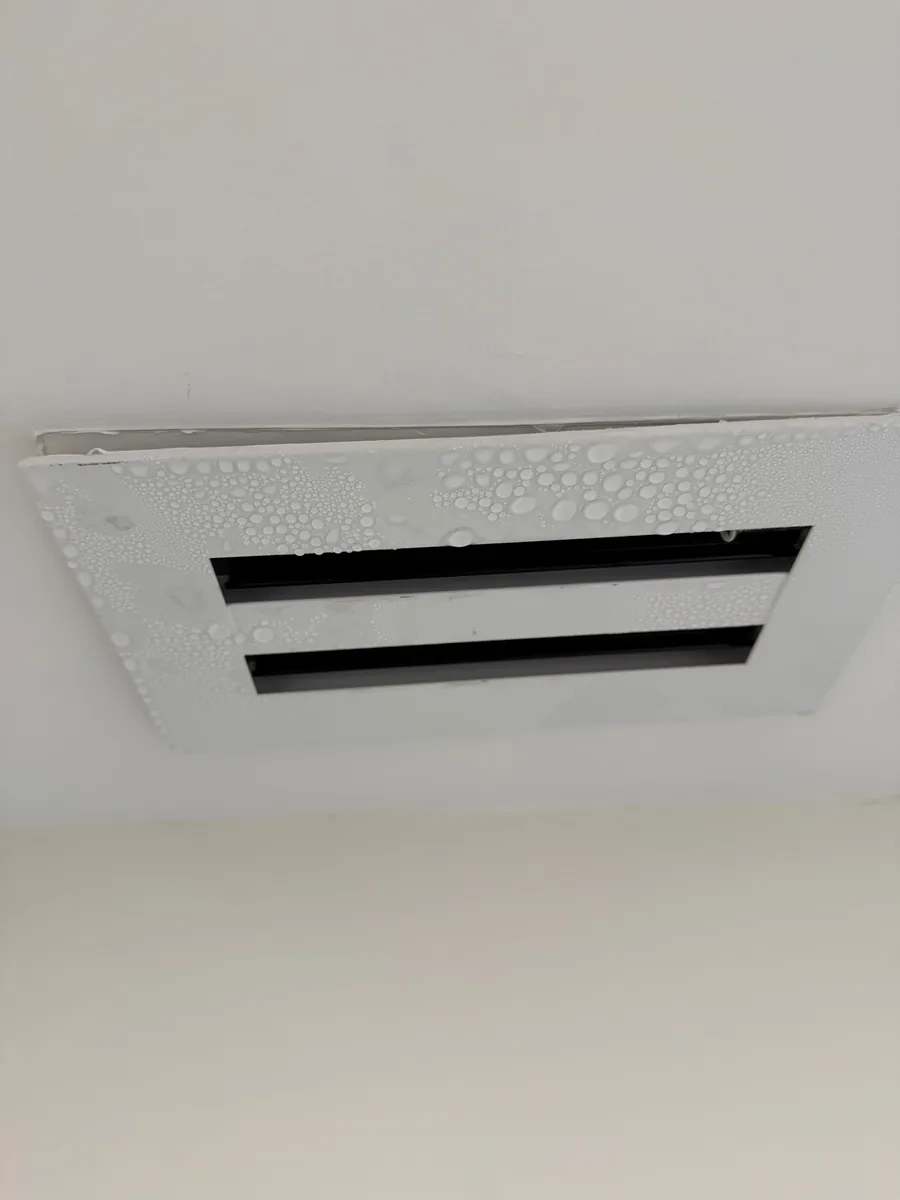
Sweating is a warning. Dripping is the warning ignored. In Boca Raton, a vent that has gone from beading to dripping has crossed from a condensation problem into a water problem — and the ceiling stain that follows is the cheapest part of it. Here is the progression, the causes, and when a repair still saves the duct run.
Water dripping from air vents in Boca Raton, FL is not a separate problem from sweating vents. It is the next chapter of the same problem, and that is what makes it useful to understand as a progression. Stage one is beading: humid air meets a cold vent or duct surface and water forms, the way a cold glass sweats on a Boca afternoon. Stage two is dripping: enough water has collected, or the drainage has failed, that water leaves the surface and falls. Stage three is staining: the water has soaked into drywall, and the ceiling now carries a dark ring that paint will not permanently cover. Stage four is damage: insulation soaked and useless, framing damp, mold growing in a cavity you cannot see. The question a dripping vent asks is not whether to act, but how far along the progression you already are — and whether the duct run can still be saved by a repair.
Boca Raton accelerates every stage. Summer humidity runs 70–90%, attics hit 130–150°F, and air conditioners run 10 to 12 months a year, producing gallons of condensate a day. That volume is normal — the system is designed to drain it away. Dripping means that design has broken somewhere.
A dripping vent has, in most Boca homes, one of four causes. A real inspection tells them apart, because the fixes are completely different:
One diagnostic that helps before anyone arrives: does the drip happen only while the AC is running? If yes, the cause is almost certainly in the HVAC system — drainage, coil, or insulation. If water drips constantly, whether the system runs or not, suspect plumbing or a roof leak affecting the ductwork or ceiling above the vent. That distinction saves a wasted service call in the wrong trade.
There are two checks a homeowner can safely make while waiting for an inspection. First, the filter: if it is visibly dirty or clogged, replace it. A clogged filter is the single most common and most preventable cause of a frozen coil, and a fresh filter sometimes stops the drip cycle on its own. Second, the drain line's outdoor end: if you can reach it safely, check for visible blockage at the termination. A wet/dry vacuum on the outdoor end can pull a minor clog free, though a clog deeper in the line needs a technician.
Where DIY stops: do not open the air handler, do not add refrigerant, do not pour chemicals down the drain line beyond a standard vinegar flush at the access point, and do not paint over the stain and call it fixed. A stain that keeps returning after painting is water still arriving, and every week it arrives is a week of damage inside a ceiling you cannot see. If the dripping is heavy, turn the system off and put a bucket under the vent — running a system that is actively overflowing only adds water to the problem.
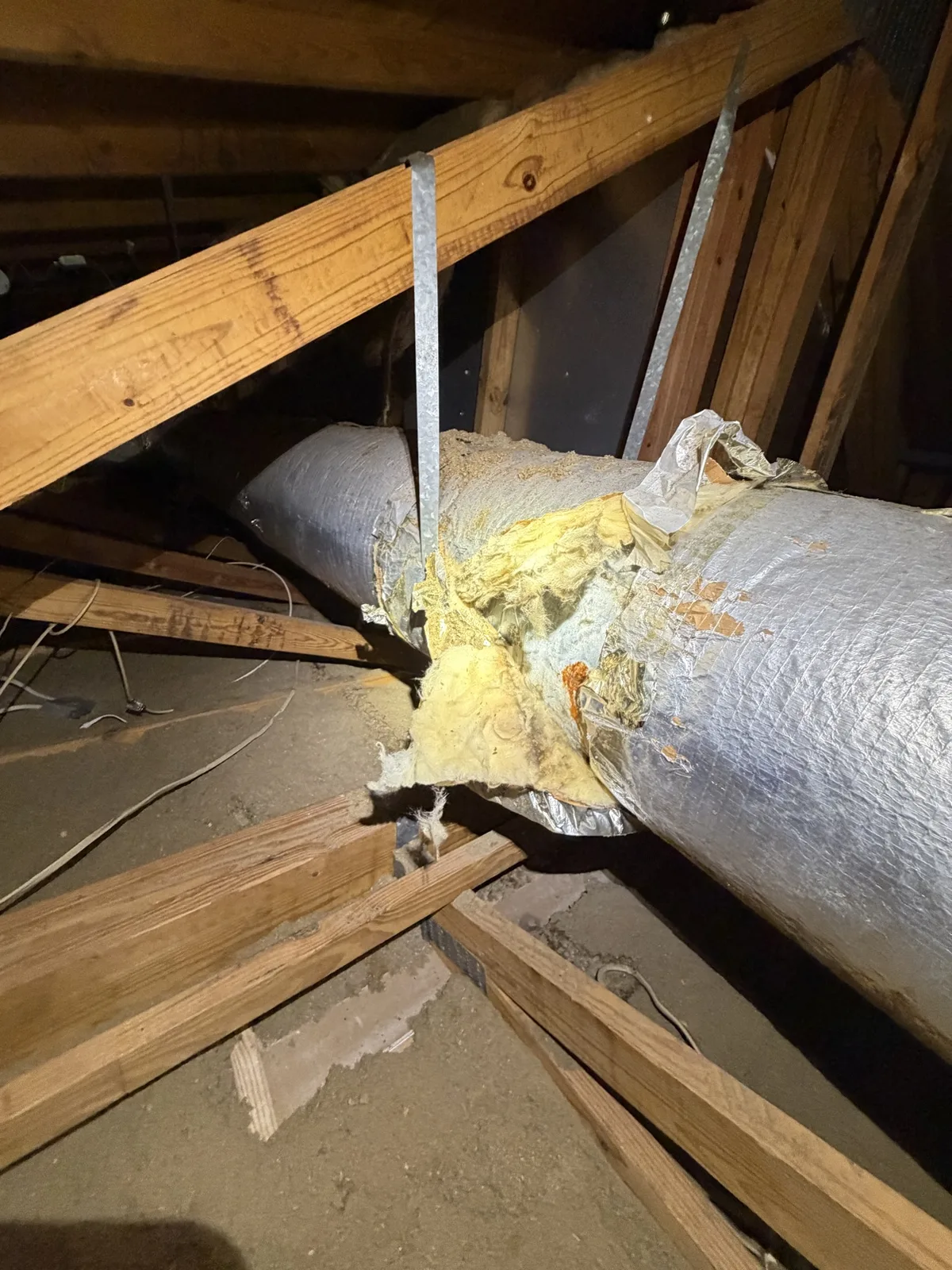
This is the honesty check the progression demands. A clogged drain line, a dirty filter, and a leaking boot or joint are repairs, and they are worth doing promptly — sealing boots and joints with UL 181M code-standards duct sealant is a required repair when ducts or vents are sweating or moisture is present. Re-insulating a run whose insulation has failed but whose duct is sound is also a repair, quoted on a free on-site estimate. But a run that is torn, crushed, or soaked through across its length, or a boot rusted through by years of coastal moisture, is not repaired by sealing around it. That run is done, and the honest answer is replacement — full duct replacement for an average smaller residential home, quoted on a free on-site estimate and varying with size, layout, and materials.
The difference between those two answers is one inspection, and it is free. The worst outcome is not the replacement quote; it is the year of dripping, staining, and mold growth that happens while a homeowner hopes a cleaning or a coat of paint will hold. Dripping is the system telling you, in the clearest language it has, that the time to look inside is now.
Air Duct Specialists LLC serves Boca Raton and all of Palm Beach County. Licensed CAC1825166. Fully insured. 350 five-star reviews. Same-day service, 7 days a week, 7am–11pm. Free estimates — what we quote is what you pay.
📞 (561) 331-6777 — Palm BeachWhy is water dripping from my air vent in Boca Raton?
The most common causes are a clogged condensate drain line, a frozen evaporator coil that has thawed, failed duct insulation letting humid attic air condense on cold ducts, or a cracked or rusted drain pan. A vent that drips only while the AC runs points to the HVAC system; a leak that runs constantly points to plumbing or a roof problem instead.
Is a dripping vent an emergency?
Treat it as urgent, not panicked. Water is actively damaging drywall, insulation, and framing while it drips, and damp cavities grow mold fast in Boca humidity. Put a bucket under it, turn the system off if the dripping is heavy, and get an inspection the same day.
Can I fix a dripping vent myself?
Two safe DIY checks: change a dirty filter, which can freeze a coil, and check whether the condensate drain line's outdoor end is visibly blocked. Do not open the air handler, do not add refrigerant, and do not ignore a drip that keeps coming back after a filter change.
When does a dripping vent mean the duct run is done?
When the insulation has failed across the run, the duct is torn or crushed, or the boot has rusted through, cleaning and sealing no longer hold. That is the replacement conversation — full duct replacement quoted exactly on a free on-site estimate for an average smaller residential home — and an honest inspection names it.
How much does it cost to fix a dripping vent in Boca Raton?
It depends on the cause: a drain-line clearing is the simplest fix, re-insulation is priced on a free on-site estimate, and full replacement is priced on the same estimate based on scope. A free on-site estimate names the exact repair — what we quote is what you pay.
Are you licensed and insured?
Yes. Air Duct Specialists LLC is a licensed Florida air conditioning contractor, license CAC1825166, and fully insured.