★★★★★
350
☰
Next to Jupiter Island, Hobe Sound's beachside estates ask a lot of their air conditioning — and salt air plus a house that sits closed for months is a coil's worst case. Here is the chain reaction a dirty coil sets off, step by step, and why regular maintenance that includes coil cleaning is what breaks it.
If you are looking into AC coil cleaning in Hobe Sound, FL, there is a good chance your system has already warned you: a room that will not cool, ice on the refrigerant lines, or a unit that runs all afternoon and barely moves the thermostat. In Poinciana Gardens, Heritage Ridge, and the beachside streets near Jupiter Island, that warning often arrives at the worst moment — the week the owners return to a seasonal estate that has sat closed for months, set the thermostat low, and expect the house to be ready.
The evaporator coil is where your air actually gets cold, and it is also where a slow, expensive chain reaction starts. This page walks through that chain in order — dirty coil, restriction, pressure, airflow loss, freeze-up, compressor strain — and what regular AC maintenance does to prevent every link in it.
Every bit of air your system cools has to pass through the evaporator coil — a dense grid of fins inside the air handler. When the coil is clean, air moves across it freely and picks up the cold. When dust, grime, and growth build up on those fins, they create a restriction across the coil. The air has to fight its way through a narrower, dirtier path, and that fight shows up as higher static pressure in the system.
Higher static pressure means the blower has to work harder to move the same amount of air — and it loses. Airflow through the system drops. Less air across the coil means less heat absorbed from your home on every pass, and that is where the next, worse problem begins. This is the core of the chain, and it is why AC coil cleaning in Hobe Sound, FL is not cosmetic work. It removes the restriction that starts everything else.
An evaporator coil needs steady airflow to stay at the right temperature. Starve it of air and the coil gets too cold — cold enough that the moisture it pulls from humid Florida air stops draining away as water and starts freezing onto the coil instead. Ice builds on the coil and can climb onto the refrigerant lines. That ice is itself another restriction, so airflow drops further, the coil gets colder still, and the system spirals until it is running hard and cooling almost nothing.
If you find ice on your coil or lines, the right move is simple: turn the system off, let it thaw completely, and do not just restart it and hope. The freeze-up is a symptom. Until the dirty coil underneath it is cleaned, the ice will be back — usually on the next hot afternoon, when you need the system most.
While all of this is happening inside the air handler, what you feel in the house is simpler: cooling suffers. Rooms stay warm. The thermostat sits a few degrees above where you set it. Runtimes stretch — the system runs longer and longer cycles trying to catch up, and your electric bill climbs for comfort you are not actually getting.
The real damage is being done to the compressor. The compressor is the heart of the system and the most expensive component in it. A restricted, freezing coil forces it to run longer, hotter, and under more strain on every single cycle. Energy is wasted, efficiency falls off, and the system's service life gets shorter. A dirty coil never stays a small problem — it quietly taxes the whole system until something expensive gives out.
Hobe Sound is harder on coils than most of Martin County, for two reasons that compound each other. First, salt air: beachside properties breathe it year-round, and it corrodes coil fins and fittings while it feeds the grime that builds on them. A corroded, dirty coil restricts airflow sooner and cleans up harder than an inland coil of the same age. Second, the seasonal pattern: many Hobe Sound estates sit closed for months with the system off or barely running. Dust settles, growth takes hold in a stale, humid air handler, and the coil sits in the dark getting worse while no one is there.
That combination produces the classic Hobe Sound freeze-up story — the house is opened, the AC is set low for arriving owners and guests, and a coil that cannot breathe freezes under the sudden full load, sometimes within the first day or two. A maintenance check before the house opens up is cheap insurance against a very inconvenient first week, and it is why seasonal homes here should never skip the pre-season visit.
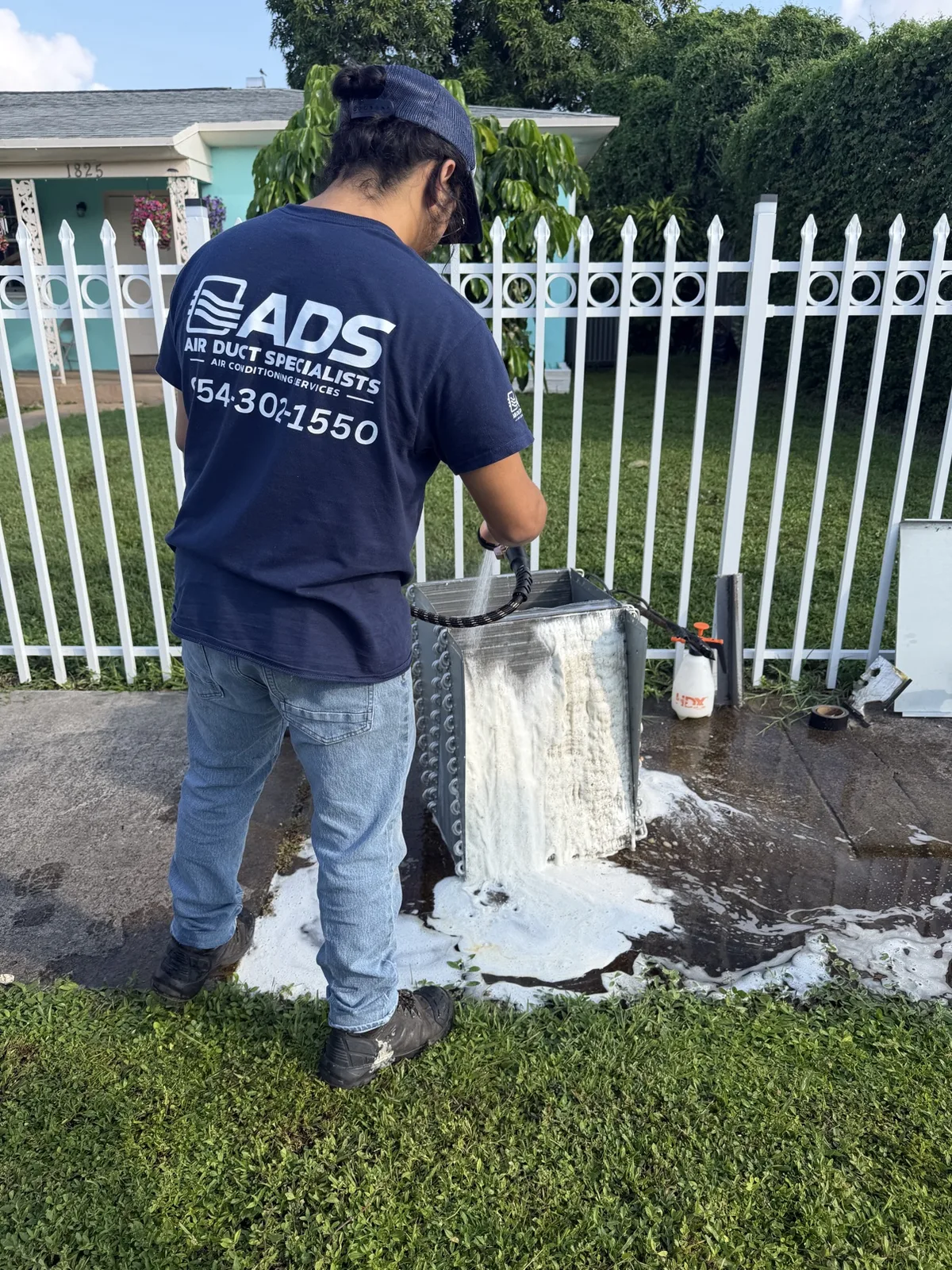
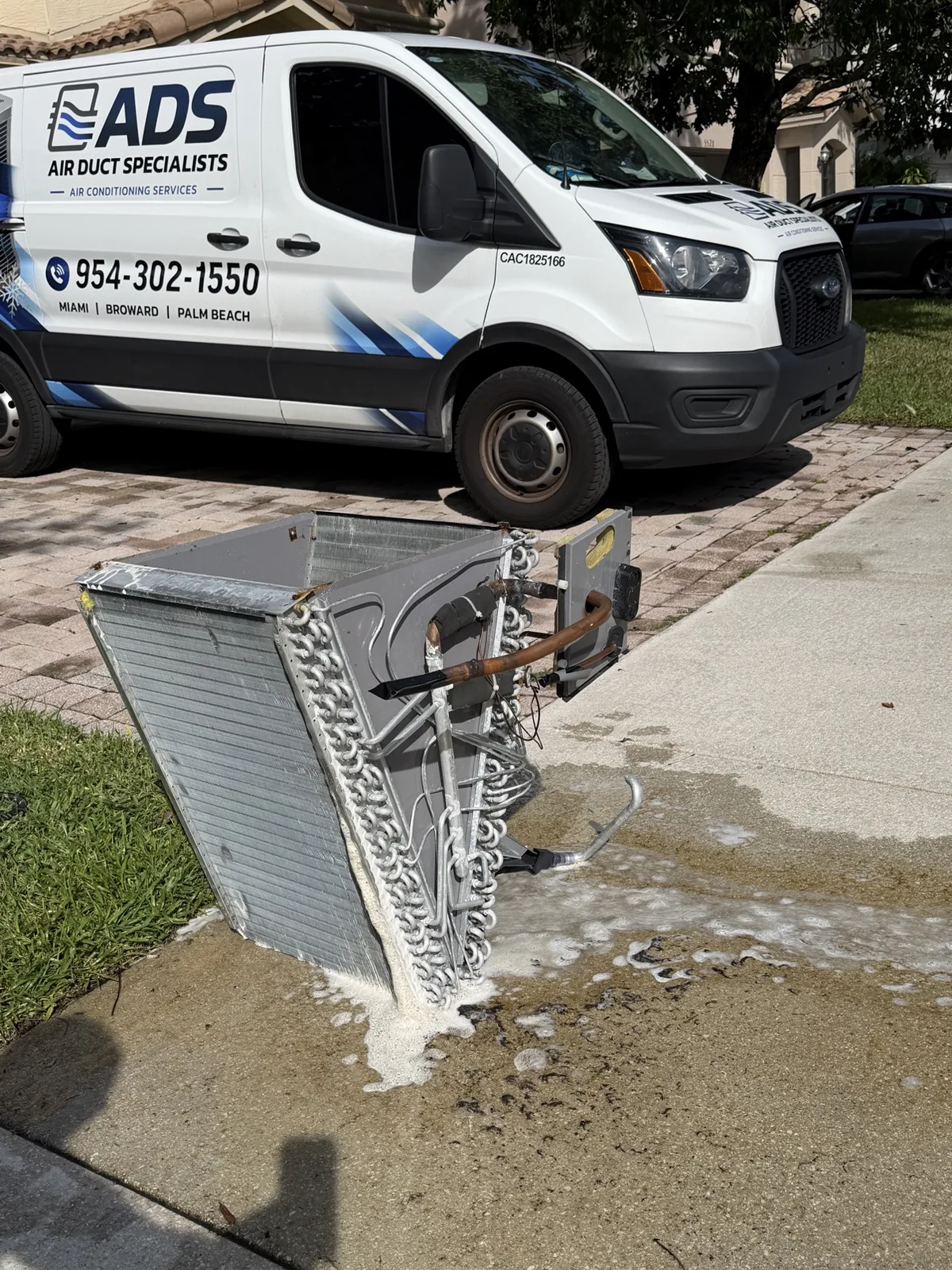
Proper coil cleaning is part of a real maintenance visit, not a spray-and-go. When our techs service a Hobe Sound system, the visit covers:
That is the whole point of regular AC maintenance that includes evaporator coil cleaning: it prevents the chain reaction at the first link. Clean coil, normal static pressure, full airflow, no freeze-up, no compressor strain — and a system that holds its efficiency and lasts the years it was built to last. In a large estate with more than one system, that one visit covers every system's coil, so nothing gets skipped and left to freeze up later.
We will not invent a flat price for your home sight unseen — the honest figure depends on how many systems your property runs and how each coil has to be accessed. What we can tell you plainly: coil cleaning is handled as part of regular maintenance, and we give you a free estimate with exact pricing before any work begins. No hidden fees, no upselling, ever — what we quote is what you pay.
Air Duct Specialists LLC serves Hobe Sound and Martin County. Licensed CAC1825166. Fully insured. 350 five-star reviews. Service 7 days a week, 7am–11pm. Free estimates — no hidden fees, no upselling.
📞 (561) 331-6777What happens if you never clean your evaporator coil?
Buildup on the coil creates a restriction across the coil, static pressure rises, and airflow drops. With less air moving, the coil gets too cold and can freeze over with ice. Cooling falls off, rooms stay warm, runtimes get longer, and the compressor strains under the extra load. Left alone, that strain wastes energy on every cycle and shortens the life of the whole system.
Can a dirty coil really make my AC freeze up?
Yes. When dirt chokes airflow across the coil, the coil temperature falls below freezing and moisture in the air turns to ice on the coil and refrigerant lines. Once ice forms, airflow drops even further and cooling can stop almost completely. If you see ice, turn the system off and let it thaw, then have the coil inspected and cleaned — the freeze-up will keep coming back until the restriction is removed.
How often should coils be cleaned in Hobe Sound?
For most Hobe Sound homes, having the evaporator coil inspected and cleaned as part of regular AC maintenance once a year is the right rhythm. Beachside homes load coils faster because of salt air and corrosion, and seasonal estates that sit closed for months should have every system checked before the house is opened back up — a coil that sat in a closed, humid air handler all summer is a freeze-up waiting for the first full-load week.
Is coil cleaning part of regular AC maintenance?
It should be. A real maintenance visit includes inspecting the evaporator coil and cleaning it when it needs it, along with the filter, drain line, blower, and electrical checks. Coil cleaning is not an exotic add-on — it is one of the core jobs that keeps a system efficient, prevents freeze-ups, and protects the compressor, which is the most expensive part of your system to replace.
How much does AC coil cleaning cost in Hobe Sound, FL?
We do not quote a flat coil-cleaning price sight unseen, because the honest figure depends on the size and number of systems in the home and how the coil has to be accessed. Coil cleaning is handled as part of a maintenance visit, and we give you a free estimate with exact pricing before any work begins — no hidden fees, and what we quote is what you pay.
Is Air Duct Specialists licensed and insured?
Yes. Air Duct Specialists LLC is a licensed Florida air conditioning contractor, license CAC1825166, and is fully insured. We serve Hobe Sound and Martin County 7 days a week, 7am to 11pm, with 350 five-star Google reviews. You can verify the license through the Florida DBPR before any work begins.