★★★★★
350
☰
The system runs, the vents blow, and the house will not cool down. In North Palm Beach that failure always lands at the worst time — guests arriving in Lost Tree Village, season starting on the Intracoastal, a house full of people in Prosperity Farms. Here are the checks worth doing yourself, the real causes a technician has to diagnose, and how we handle it without guessing or upselling.
An AC not cooling in North Palm Beach, FL usually announces itself the same way: the thermostat is set to 74, the system has been running for hours, and the house is sitting at 79 and climbing. The air coming out of the vents feels weak or warm. The outdoor unit may be running, humming, or suspiciously quiet. Whatever the version, the result is the same — a big waterfront home heating up fast, in a climate where the attic above you is 130 to 150 degrees, the glass is pulling in sun all afternoon, and the humidity makes every degree feel worse.
Some of these failures are two-minute fixes you can do yourself. The rest need gauges, meters, and a licensed tech. This guide separates the two honestly, because that is how a service call should start — and in 33408, with older renovated estates near Seminole Golf Club and high-load waterfront homes throughout the village, the honest separation saves real money.
Before you call anyone, run through these four checks. They solve a surprising share of "not cooling" calls, and none of them requires opening anything electrical.
One check deserves its own warning: ice. Look at the refrigerant lines and the indoor unit. If you see ice building on either, turn the system off and leave it off while it thaws — running an iced system strains the compressor and cools almost nothing anyway. Then call. Ice always has a cause underneath it, and that cause does not fix itself.
If the checks above do not restore cooling, the failure is inside the system. These are the causes we actually find on repair calls in North Palm Beach, FL — and every one of them needs instruments to confirm, which is why guessing helps nobody:
Notice what is not on that list: "the system is just old." Age alone does not stop cooling. Something specific fails, wears, leaks, or clogs — and a proper diagnostic finds the specific thing before anyone sells you a remedy for it.
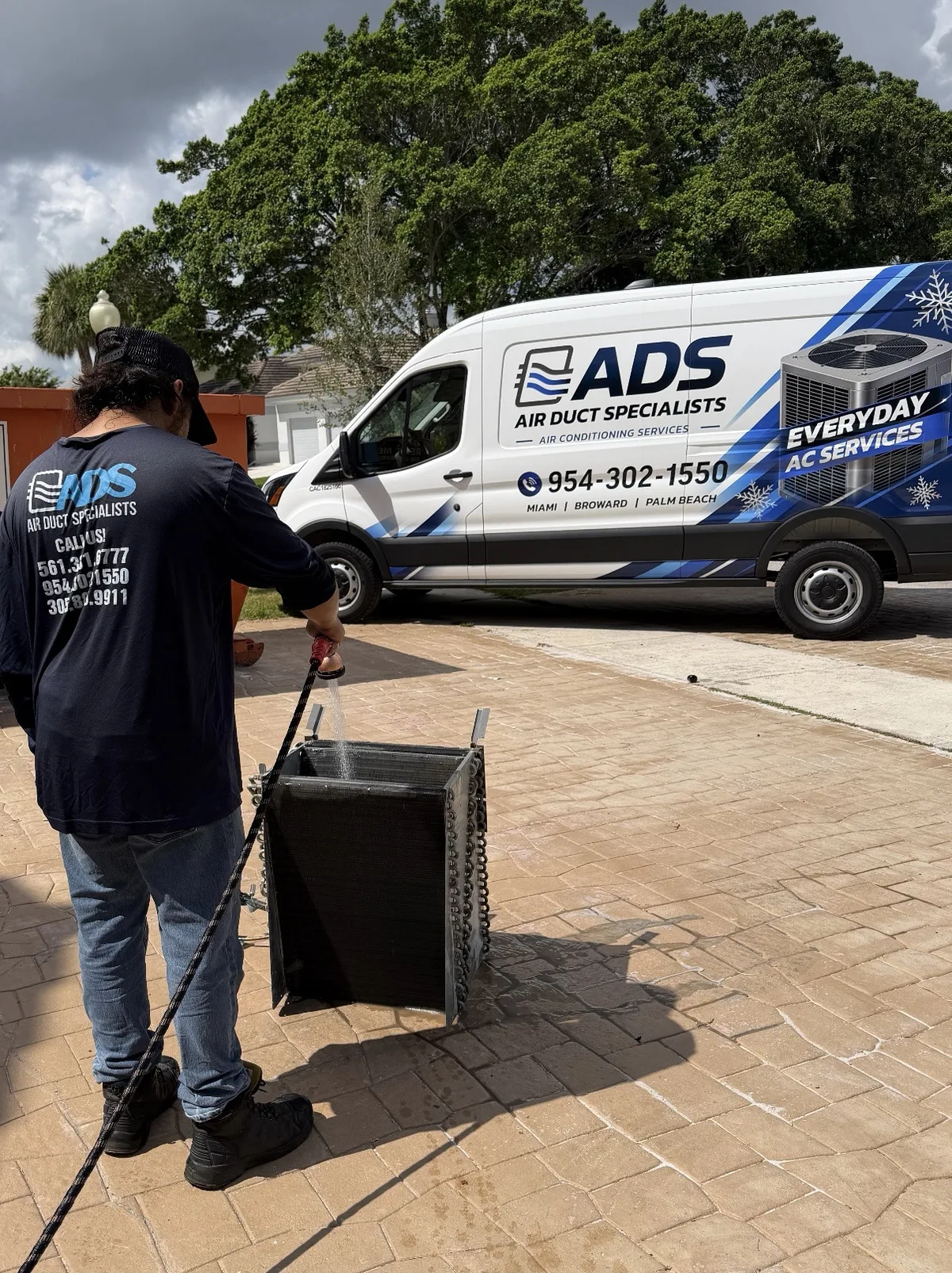
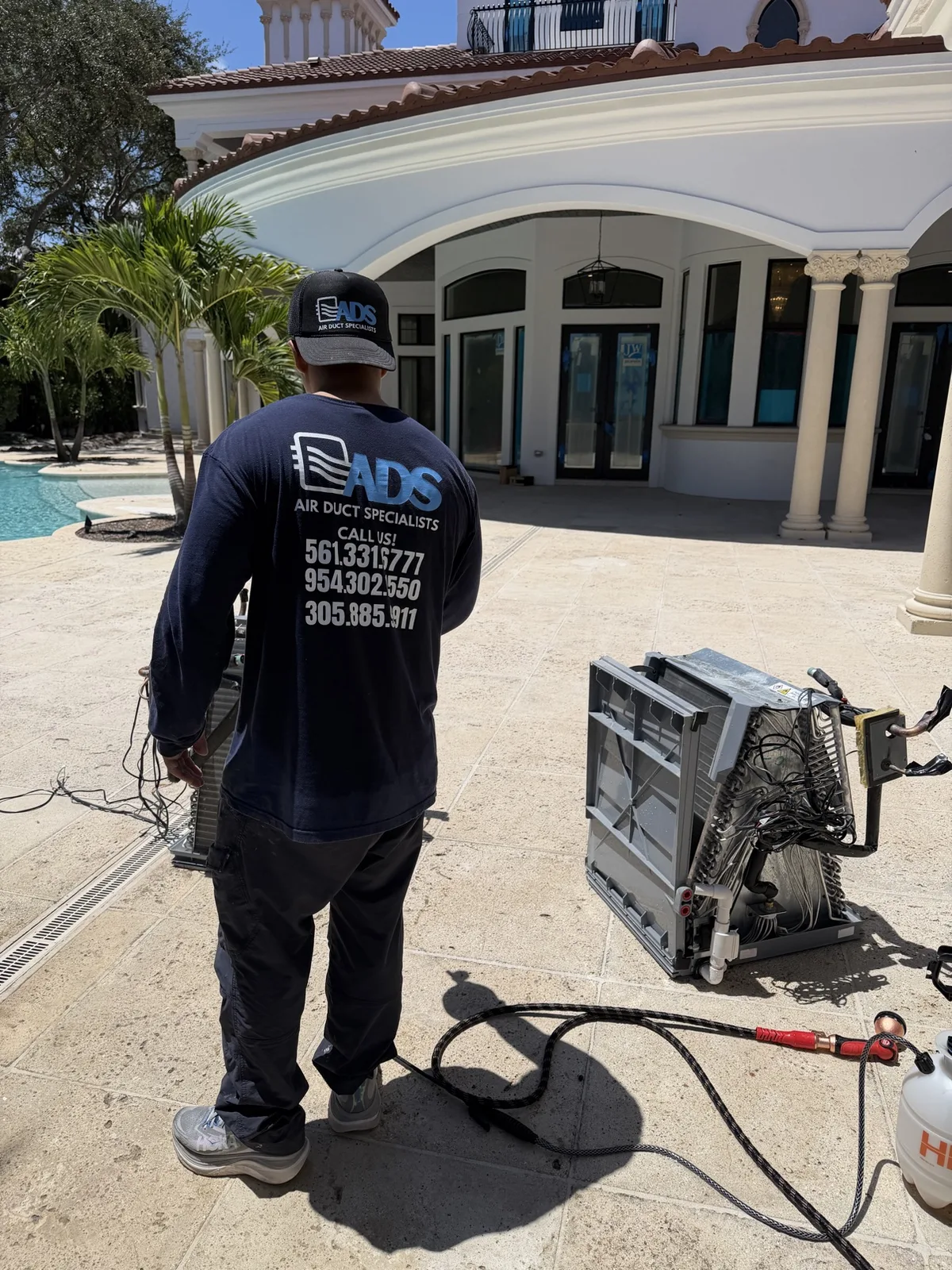
A real diagnostic is a measurement exercise, not an opinion. When our techs run a repair call in North Palm Beach, FL, they check refrigerant pressures against what your specific system should be running, test the electrical side — capacitor, contactor, amp draws, connections — and measure airflow through the system, including the coil and filter condition. Those three readings together point at the actual cause, and the tech shows you what he found before recommending anything.
No guessing, and no upselling — ever. If the fix is a capacitor, we say so. If the system has a refrigerant leak, we show you the readings and talk through finding and repairing the leak rather than just selling you refrigerant. You approve an exact price before repair work begins.
That discipline matters even more at a multi-system North Palm Beach estate. When one zone of a large waterfront home stops cooling, the cause is not always inside the unit that failed — a shared duct problem, a second system quietly losing charge, or an air handler that sat idle in a closed seasonal home can all wear the same disguise. We work through the property system by system, confirm which equipment is actually at fault, and give you one clear report for the whole house.
Here is the straight version. Repair makes sense when the system is reasonably young, the failed part is a modest one, and the rest of the equipment is healthy — a capacitor or blower repair on a solid system is money well spent. Replacement becomes the smarter answer when the math and the age line up against you: a system well into its second decade, a major failure like a compressor, repair costs that approach a real share of what a new system costs, or a unit still running on R-22 refrigerant, which is phased out and expensive to service. Repeat breakdowns are their own verdict — a system that fails every season is not getting more reliable.
We lay out both numbers and give you our honest read, and the decision stays yours. And sometimes the honest answer is bigger than the equipment: when failed ductwork is the real problem — corroded, leaking runs in an older estate — replacing the AC will not fix the rooms that never cooled. We will tell you when the ducts, not the unit, are what the house actually needs.
Anyone who quotes you a firm repair price over the phone before diagnosing your system is guessing with your money. The real cost factors are knowable, though: which part failed, the size of your system and how accessible the equipment is — attic air handlers in big North Palm Beach homes are not all equal — and which refrigerant your system uses, since R-22 and modern refrigerants are very different conversations. That is why we work the way we do: diagnose first, then a free estimate with exact pricing before the repair starts. No hidden fees. What we quote is what you pay.
It is also why pricing for an AC not cooling in North Palm Beach, FL has to start with the diagnosis rather than a menu. The same symptom — a house stuck at 79 degrees — can be a failed capacitor, a refrigerant leak, a frozen coil, leaking ducts, or a compressor at the end of its life, and those repairs live in completely different price worlds. The diagnostic is what tells you which world you are in. Pay for the answer first, then decide on the repair with real numbers in front of you.
Our techs can arrive roughly within the next hour or two. Air Duct Specialists LLC is licensed #CAC1825166, fully insured, with 350 five-star Google reviews. Open 7 days a week, 7am–11pm. Free estimates, no hidden fees, no upselling — ever.
📞 (561) 331-6777 — Palm BeachWhy is my AC running but not cooling the house?
The most common causes are a clogged air filter, a dirty or frozen evaporator coil, low refrigerant from a leak, a failed capacitor, blower problems, or duct leaks dumping cold air into the attic. Start with the safe checks — thermostat on Cool with the fan on Auto, a clean filter, no tripped breaker, and a clear outdoor unit. If none of those fix it, the cause is inside the system and needs a real diagnostic, not a guess.
What should I do if I see ice on my AC lines or coil?
Turn the system off and leave it off. Running an iced-up system strains the compressor and cools almost nothing. Let the ice thaw completely, check that your filter is clean, and then call for service — ice means something underneath is wrong, usually restricted airflow from a dirty coil or filter, a blower problem, or low refrigerant, and it will freeze again until that cause is fixed.
How fast can you get to a North Palm Beach home when the AC stops cooling?
Our techs can typically arrive roughly within the next hour or two, and our average arrival across South Florida is 35 to 45 minutes. We are open 7 days a week, 7am to 11pm, and North Palm Beach is core Palm Beach County territory for us. Call (561) 331-6777 and we will tell you straight what the timing looks like that day.
My North Palm Beach home has several AC systems. Do you check all of them?
Yes. Multi-system waterfront estates are normal in North Palm Beach — main house, guest house, and zoned systems — and when one system stops cooling we check the one that failed and give the others a straight look while we are there, because they share the same age, the same salt-air environment, and often the same maintenance history. You get one honest report for the whole property, not a separate pitch per system.
We just opened our seasonal North Palm Beach home and the AC will not cool. What happened?
Homes that sit closed for months commonly restart with loaded filters, coils that collected dust and grime in a stale air handler, and drain lines that clogged while the house sat empty. Firing the system up under full load can freeze a dirty coil within hours. Turn it off if you see ice, and have the system serviced before the season gets going — a restart check is far cheaper than a compressor.
When is it smarter to replace the AC instead of repairing it?
Replacement is usually the smarter call when the system is well into its second decade, the repair is a major one like a compressor, the system still runs on R-22 refrigerant, or breakdowns have become a pattern rather than an event. If a modest repair gets a healthy younger system back to full cooling, we will tell you to repair it. We give you both numbers and our honest read — the decision stays yours.
How much does AC repair cost in North Palm Beach, FL?
There is no honest flat price before a diagnostic, because the cost depends on which part failed, the size of your system and how accessible it is, and which refrigerant your system uses. What we promise is a free estimate with exact pricing before repair work begins, no hidden fees, and no upselling — you approve the number first, and what we quote is what you pay.