★★★★★
350
☰
From Lost Tree Village to Prosperity Farms and the Seminole Golf Club area, North Palm Beach homes carry some of the heaviest cooling loads in Palm Beach County — walls of glass, high ceilings, and waterfront sun all day. When the ductwork leaks, that expensive cooling never reaches the rooms. Here is how to spot it, why it happens here, and what a code-standards fix actually looks like.
Air duct leaks in North Palm Beach, FL do not announce themselves with a puddle or an alarm. They show up as a primary suite that stays two degrees warmer than the rest of the house, a bill that keeps climbing, and a system that runs through the evening without ever quite catching up. The U.S. Department of Energy estimates the typical home loses 20 to 30% of its conditioned air through duct leaks, gaps, and deteriorated connections — and in a waterfront estate with long duct runs and a 140-degree attic, the loss can be worse. That is cooling you already paid for, dumped where no one lives.
North Palm Beach, 33408, has a particular kind of housing stock. Lost Tree Village and the Intracoastal estates are older, substantial homes — many built in the 1960s and 1970s, then renovated in waves. Prosperity Farms adds larger lots and older homes with long, low attics. Around Seminole Golf Club the pattern repeats: renovated estates sitting on duct systems that are part original, part addition, and rarely sealed as one system. That layered history is exactly where leaks hide.
A supply-side leak is straightforward: cooled air escapes through a gap at a joint, a corroded seam, or a torn section of flex before it reaches the vent, and the room at the end of that run gets whatever is left. The system runs longer to compensate, and your electric bill absorbs the difference.
A return-side leak is the one that matters more on the water. Returns work under suction, so a gap pulls air in instead of pushing it out — hot attic air, dust, insulation fibers, and all the moisture that air carries. In a home sitting on the Intracoastal, that pulled-in air is humid air. Indoor humidity climbs, rooms feel sticky even at the right temperature, and mold gets a steady supply of what it needs on the coil and around the registers. When a North Palm Beach home has both high bills and a humidity problem, leaky returns are where we start looking.
Leaks are consistent, and that consistency is the tell. Watch for:
One caution: a closed damper, furniture over a vent, or a failing blower can imitate a leak for a day. A true leak is there every day, on the same branch, until someone seals it.
Salt-air corrosion of connections leads the list on the water. Salt works on the screws, collars, and folded metal seams that hold a duct system together, and Intracoastal homes get no break from it. Joints loosen as the metal around the fasteners weakens, and pinholes open in seams that looked solid five years ago. The closer the home sits to open water, the faster this happens.
Attic heat does the quieter damage. A North Palm Beach attic in summer runs 130 to 150 degrees. Tape dries out and lets go, flex duct liners get brittle, and every connection in the system expands and contracts daily for decades. Add high cooling loads — big glass, west-facing waterfront walls, systems that run long hours — and the pressure cycles work loose joints faster than they would in a smaller inland home.
Aging ductwork in 1960s–70s estates and their renovations ties the story together. Original metal or early flex runs were often taped, not sealed, when the house went up. Renovations then added rooms, moved handlers, and tied new ductwork into old — and the tie-in joints are the leaks we find most often. A renovated kitchen wing or a converted garage cooled through a patched connection will underperform for years while the homeowner blames the AC unit. The unit is usually innocent. The connection is not.
You can find the worst leaks with no tools. Set the fan to "on," go into the attic early in the morning before it heats up, and bring a flashlight. Move slowly along each run and pass your hand over every seam, elbow, and connection at the plenum and the air handler. Escaping supply air feels like a cool jet; a return leak feels like it is pulling at your palm. A strip of tissue held near a joint will flutter or get drawn in at a leak. While you are there, look for peeling tape, dust streaks fanning out from a joint, disconnected sections, and rust blooming along metal seams.
For a measured answer, a professional duct leakage test seals the registers and returns, pressurizes the system with a calibrated fan, and reports the total leakage in CFM. It catches the leaks no hand can reach — inside walls, chases, and ceilings — and gives you a before-and-after number, so a sealing job can be verified instead of taken on faith.
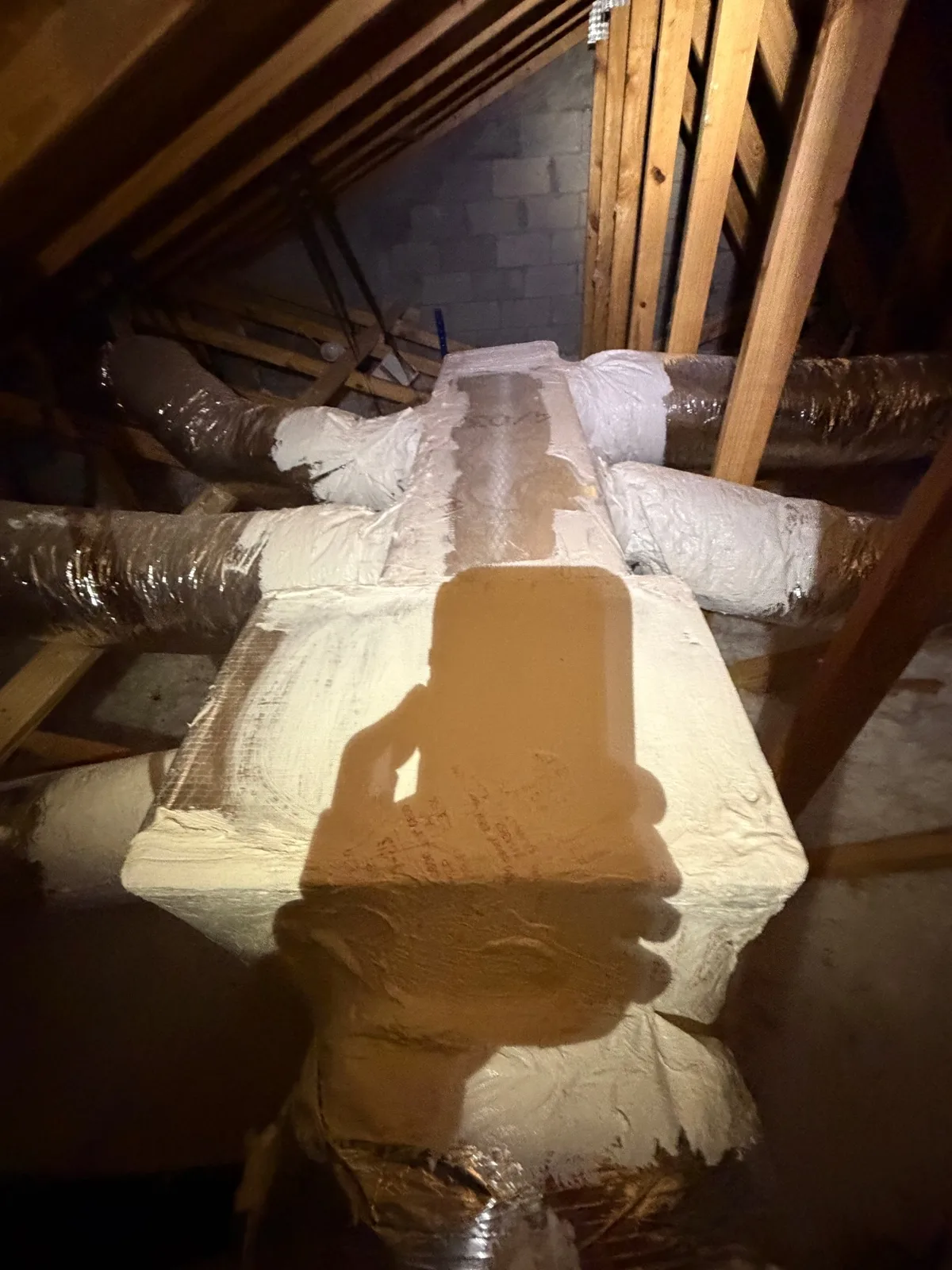
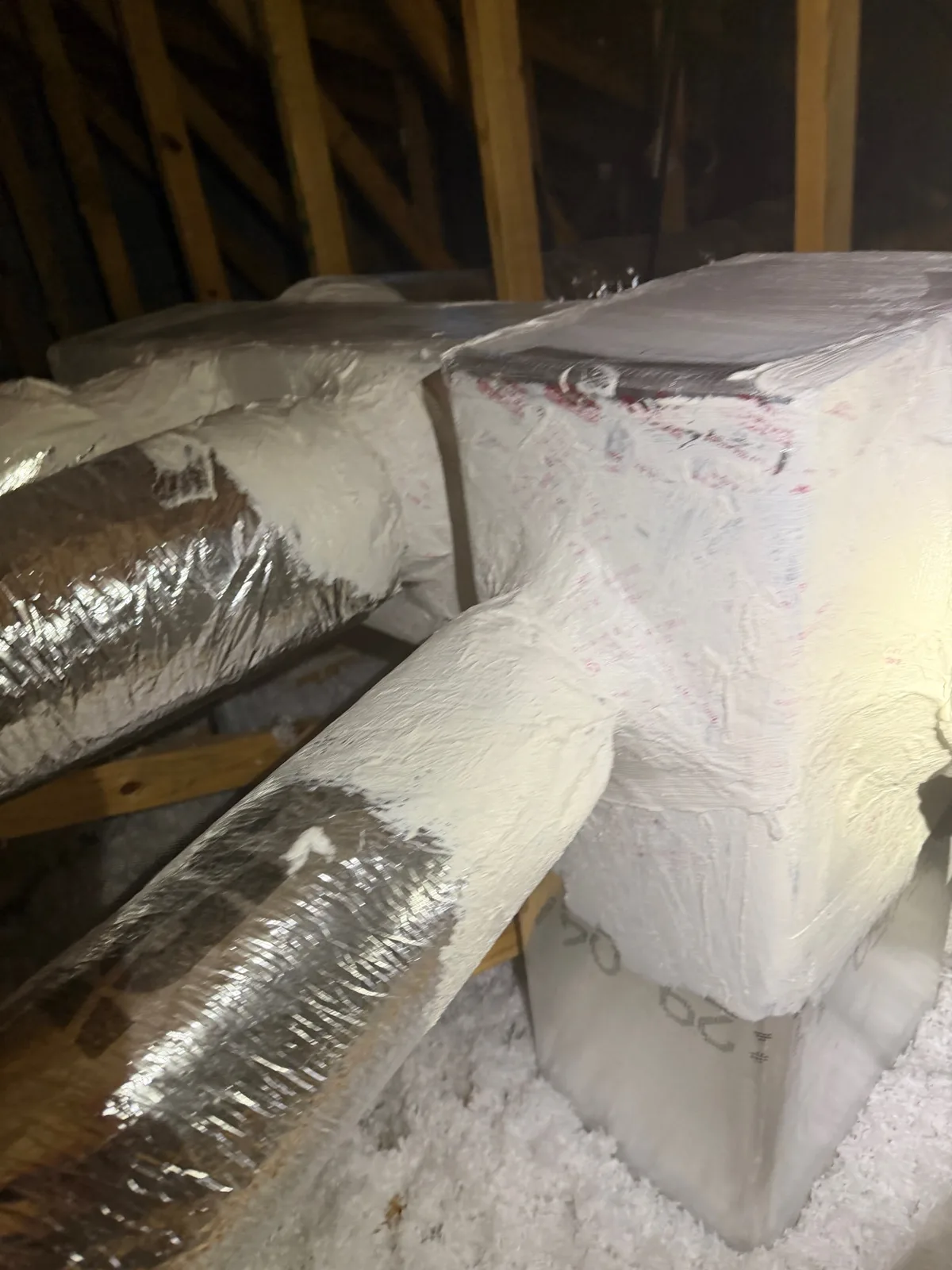
The repair that holds is UL 181M code-standards duct sealant — a thick, brush-on sealant that fills irregular gaps, stays flexible as it cures, and bonds to both metal and flex. Gaps wider than a quarter inch get fiberglass mesh pressed into the wet UL 181M code-standards duct sealant and a second coat over the top. Smooth metal seams take UL 181 foil tape. What does not hold is the cloth duct tape hanging off joints in half the older attics we open: its adhesive gives up under heat and pressure cycles, often within a season, which is how a "fixed" leak comes back.
The work starts where leaks concentrate — the air handler connections and the plenum — then follows every takeoff, elbow, and joint outward, returns included. On waterfront homes, corroded fittings that can no longer hold a seal get replaced rather than coated over; sealant over rust is a short-lived repair and we will tell you so on site. Where insulation has failed around a sealed joint, it gets restored, because a sealed duct in a bare jacket still loses cooling to attic heat.
While we are in the attic, we also check the coil and blower — a system that ran for years with leaky returns has been pulling attic dust and humid air across its coil the whole time, and sealing without cleaning leaves half the problem in place.
Sealing is priced on the size of the system and how much of it can be reached, and the honest way to get a number is a free on-site estimate — what we quote is what you pay, with no hidden fees. When we price air duct leaks in North Palm Beach, FL, sealing sound ductwork is almost always the lowest-cost fix with the fastest payback, because the savings start with the next electric bill.
But sealing has a limit, and we will name it when we see it. Sealing to UL 181M code standards fixes joints and seams; it does not fix flex duct that is torn, crushed, or so old its insulation has lost its value, and it does not fix metal duct that salt air has eaten through. When the ducts themselves are at the end, the honest options are re-insulation or a full duct replacement, both quoted on a free on-site estimate for an average smaller residential home, varying on home sizing, layout, and materials required. Most average homes take at most 1–2 days for a full replacement. Larger waterfront estates take longer and are priced by the free estimate. If your ducts can be sealed and saved, that is what we will recommend — no upselling, ever.
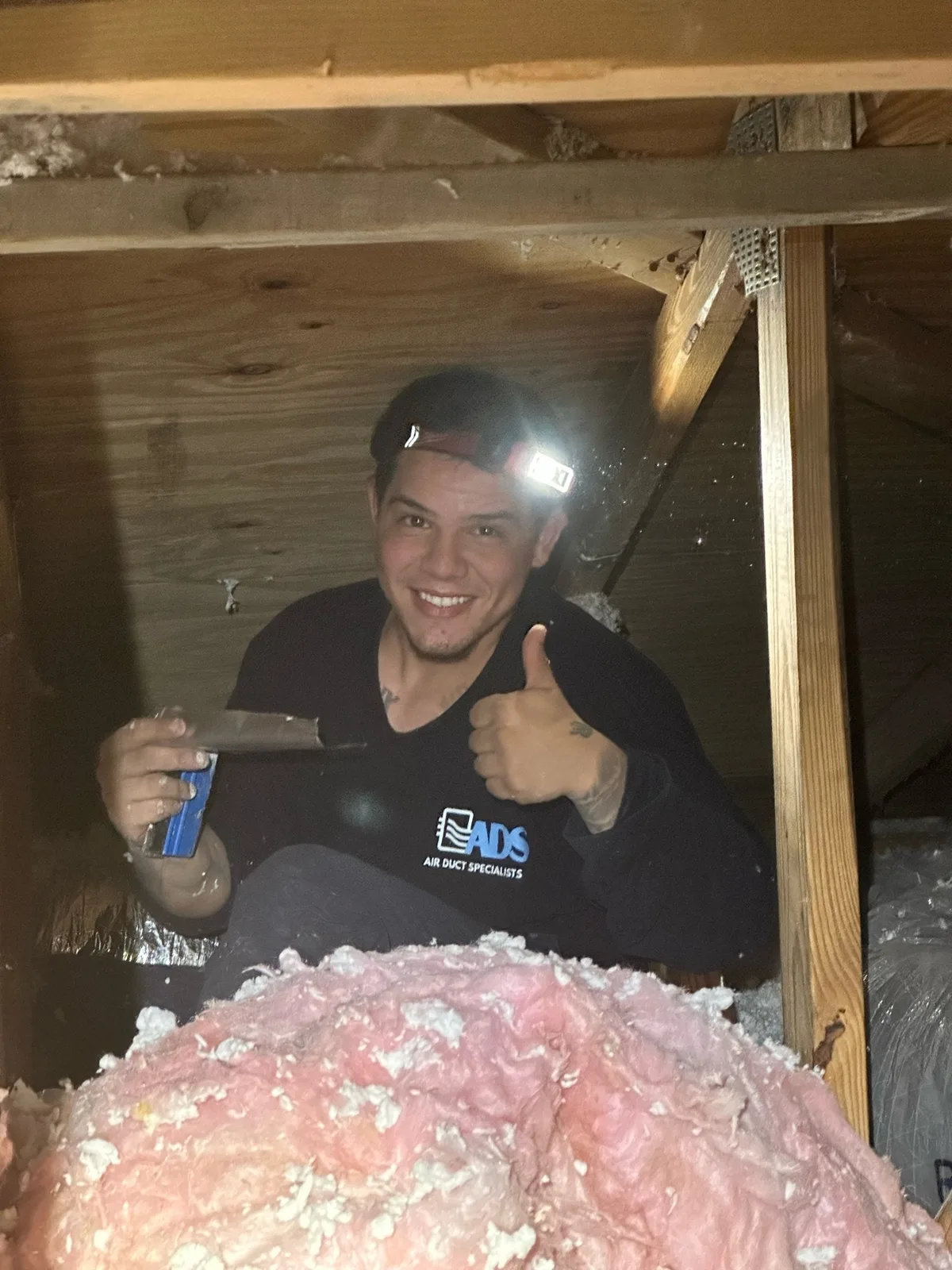
Air Duct Specialists LLC serves North Palm Beach and all of Palm Beach County. Licensed CAC1825166. Fully insured. 350 five-star reviews. Same-day service, 7 days a week, 7am–11pm. Free estimates — what we quote is what you pay.
📞 (561) 331-6777 — Palm BeachWhy are waterfront homes in North Palm Beach more prone to duct leaks?
Homes in Lost Tree Village and along the Intracoastal live in salt air year-round, and salt corrodes the metal seams, screws, and collars that hold duct joints together. Joints open as the metal around them weakens. Renovated estates add another problem — new systems tied into older duct runs that were never sealed to today's standards.
What are the signs my air ducts are leaking?
One room that never cools like the rest, weak airflow at the far vents, electric bills rising without a change in habits, dust building up around registers, a faint hiss near a duct joint, and a system that runs longer than it used to. A leak follows a pattern: the same branch underperforms at every thermostat setting, in every season.
How are duct leaks found in a North Palm Beach home?
Start with what you can reach: run the fan, move along the attic ducts, and feel each seam and joint for escaping air, or hold a tissue strip near the joint and watch for flutter. Look for peeling tape, dust streaks, rusted metal seams, and disconnected sections. For an exact number, a professional duct leakage test pressurizes the system and measures the loss in CFM, including hidden leaks.
How are leaking air ducts sealed?
Accessible joints are sealed to UL 181M code standards with a brush-on sealant that stays flexible and fills irregular gaps, reinforced with fiberglass mesh on larger openings. Smooth metal seams take UL 181 foil tape. Ordinary cloth duct tape is not the fix — attic heat and pressure cycles loosen its adhesive until it peels.
Can leaky ducts cause humidity and mold problems in North Palm Beach?
Yes. A return-side leak pulls hot, moisture-heavy air from the attic straight into the airstream. That extra moisture raises indoor humidity, makes the house feel clammy even when the thermostat is satisfied, and gives mold what it needs on the coil, in the duct lining, and around ceiling registers. Sealing the returns is usually the first fix.
Do you serve North Palm Beach, and are you licensed and insured?
Yes — Air Duct Specialists LLC serves North Palm Beach and all of Palm Beach County, with same-day service 7 days a week, 7am–11pm, and free estimates. We are a licensed Florida air conditioning contractor, license CAC1825166, fully insured, with 350 five-star Google reviews. Our certified techs — never subcontractors — do the work, and the license can be verified through the Florida DBPR.