★★★★★
350
☰
Drive the streets around the Biltmore or Country Club Prado and you are looking at Mediterranean Revival homes from the 1920s, 30s and 40s — built long before central air was standard. The ductwork in those houses came later, fitted into tight attics and low crawl spaces, and much of it has now cycled through decades of South Florida summers. When the seams loosen and the old sealant gives out, cooled air escapes before it ever reaches the room.
Air duct leaks in Coral Gables, FL rarely announce themselves with a dramatic failure. They creep in. A bedroom off the main hall runs two degrees warm. The system takes a little longer to pull the house down on a humid afternoon. The electric bill edges up, season after season, even though the equipment was serviced and checks out fine. In a newer subdivision, that pattern points at the flex duct. In the Gables, it usually points at something older: metal ductwork that has been up in a hot attic longer than most appliances in the house have existed.
That age matters, because the original parts of many Gables homes predate central AC entirely. Nobody designed those attics for duct runs. When air conditioning was retrofitted in — in the 1950s and 60s for many houses, later for others — galvanized metal trunks and branches were threaded through whatever space existed: low-pitched roof cavities, cramped crawl spaces, chases never meant for mechanical work. Some of that metal is still in service today, joined by early flex-duct replacements from the 80s and 90s that are now reaching the end of their own lives.
A supply-side leak pushes conditioned air out through a gap before it reaches the vent, so the room at the end of that run gets a weak, warm trickle instead of its full share. A return-side leak does the opposite: it pulls air in, drawing hot attic air — dust, insulation fibers and humidity with it — straight into the airstream heading back to the blower.
Either way, you pay for air that never does its job, and the system runs longer to make up the difference. The U.S. Department of Energy estimates the typical home loses 20 to 30% of its conditioned air through duct leaks and deteriorated connections, and older attic systems can lose more. In an attic that reaches 130 to 150 degrees on a summer afternoon, every cubic foot that escapes is a cubic foot your AC has to cool all over again.
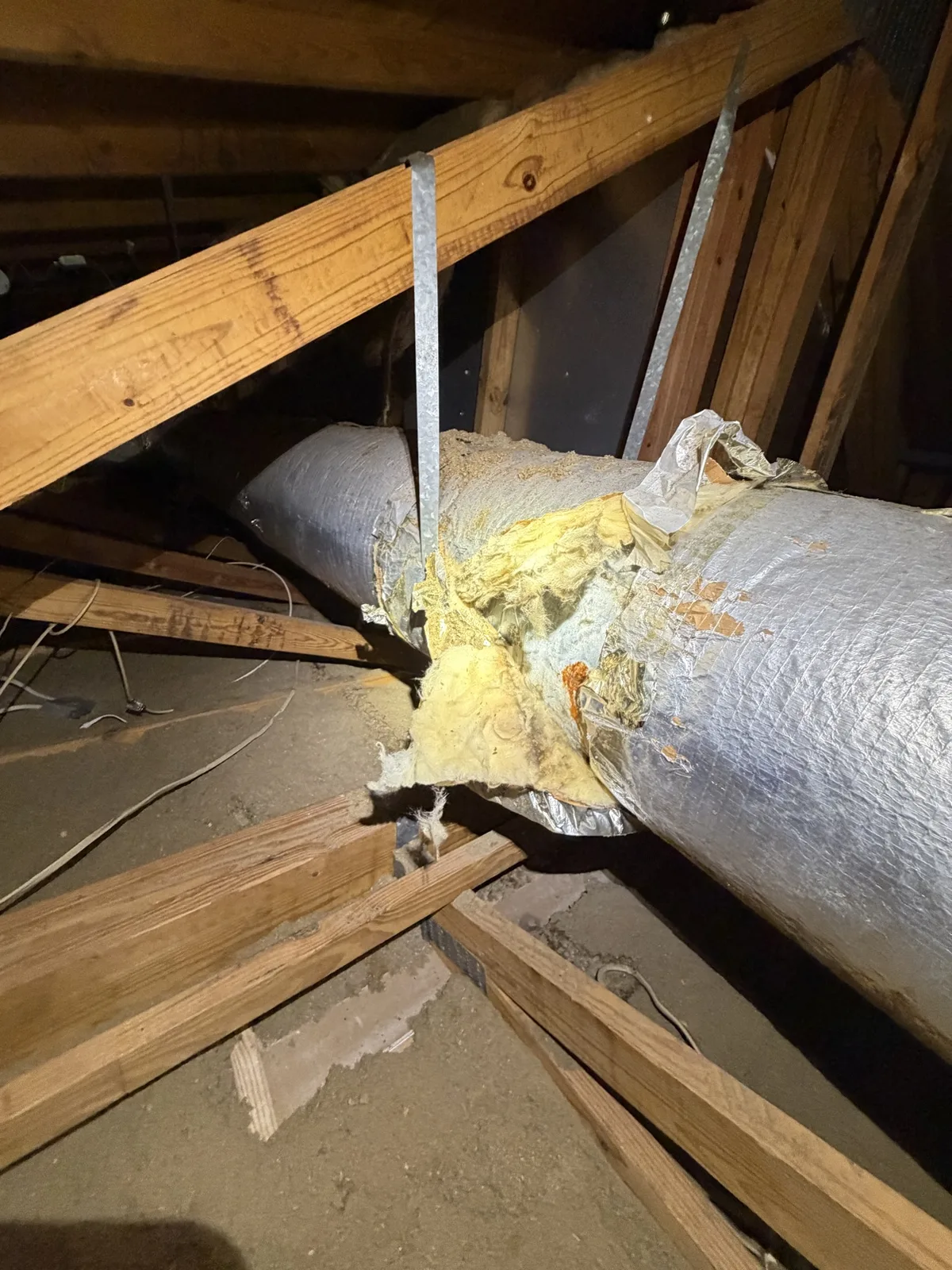
Metal ductwork does not usually fail in the middle of a run. It fails where pieces meet — and that is a different leak pattern than you get with flex duct, where the weak points are the connections at each end. On aging galvanized systems, look for these first:
None of this means the system is junk. Galvanized metal, where the metal itself is still sound, is durable stock — often better made than what replaced it elsewhere. The question is always the condition of the seams, the joints and the metal around them.
You do not need to climb into the attic to suspect a leak. The house tells you:
Set the fan to "on" so air is moving, then check what you can safely reach. Early morning is the only sane time in a South Florida attic. Run a hand slowly along the seams and joints near the air handler and the main trunk: a supply leak feels like a jet of cool air where there should be none, and a strip of tissue held near a joint will flutter if air is escaping. Look for the telltales too — rust staining along a seam, sealant hanging in cracked ribbons, dust blown into dark streaks around a connection.
What you cannot do from the attic steps is measure it. A professional duct leakage test seals the registers, pressurizes the system with a calibrated fan, and reports the loss as a number. On a historic home, that number matters: it is how you decide whether you are looking at a sealing job or something bigger, instead of guessing.
That distinction matters for air duct leaks in Coral Gables, FL, where the ductwork is often as old as the house is distinguished. Our first preference on sound metal is to preserve it: clean the seams, refasten loose slip joints, strip the failed sealant, and reseal with UL 181M code-standards duct sealant, reinforced with fiberglass mesh across wider gaps. UL 181M code-standards duct sealant stays flexible as it cures and holds through the heat cycles that killed the original sealant. Ordinary cloth duct tape is not part of this conversation — on ducts, its adhesive fails fast, and most attics we open are decorated with the evidence.
Then comes the honest pivot. Sealing cannot save metal that is rusted through, sections crushed during some long-ago retrofit, or flex branches with torn liners throughout. When a run is genuinely at end of life, we will tell you which sections are done and which are worth keeping — in a historic home, a partial replacement that preserves sound original trunk work is often the right answer, not a tear-out of everything by default.
Most air duct leaks in Coral Gables, FL turn out to be a sealing job, not a replacement job, and sealing is priced on the size of the system and how much of it we can reach — a free on-site estimate gives you the exact figure, and what we quote is what you pay. Where the insulation around otherwise sound ducts has failed, re-insulation is quoted exactly on a free on-site estimate. When ductwork truly has to be replaced, a full duct replacement is quoted exactly on a free on-site estimate for an average smaller residential home, varying on home sizing, layout, and materials required — larger historic homes with difficult attic access are quoted on site, never guessed at over the phone.
No hidden fees, no upselling. If your original metal ducts can be sealed and kept, that is the recommendation you will get.
Air Duct Specialists LLC serves Coral Gables and all of Miami-Dade County. Licensed CAC1825166. Fully insured. 350 five-star reviews. Same-day service, 7 days a week, 7am–11pm. Free estimates — what we quote is what you pay.
📞 (305) 885-9911 — Miami-DadeWhy are duct leaks so common in historic Coral Gables homes?
Many Gables homes were built before central air, so ductwork was retrofitted later into tight attics and crawl spaces. Aging galvanized metal seams, slip joints and old sealant have cycled through decades of heat and humidity, and they loosen, corrode and open up over time.
What are the signs my air ducts are leaking?
Rooms that stay warmer than the rest of the house, weak airflow from some vents, bills that climb with no change in habits, dust streaks around registers, and a system that runs longer to reach the thermostat. A leak usually hits the same branch every time.
Can original metal ductwork be sealed, or does it have to be replaced?
Often it can be sealed. If the metal itself is sound, cleaning the seams and slip joints and sealing them to UL 181M code standards can restore it. Replacement is the honest call only when sections are rusted through, crushed, badly corroded or too damaged to hold a seal.
How are leaks in metal ducts sealed?
Joints and seams are cleaned, loose slip joints are refastened, and the seams are coated with UL 181M code-standards duct sealant, reinforced with fiberglass mesh on wider gaps. Old cloth tape and failed sealant are removed first, because new sealant will not hold over the top of them.
Do leaky ducts cause condensation and moisture problems?
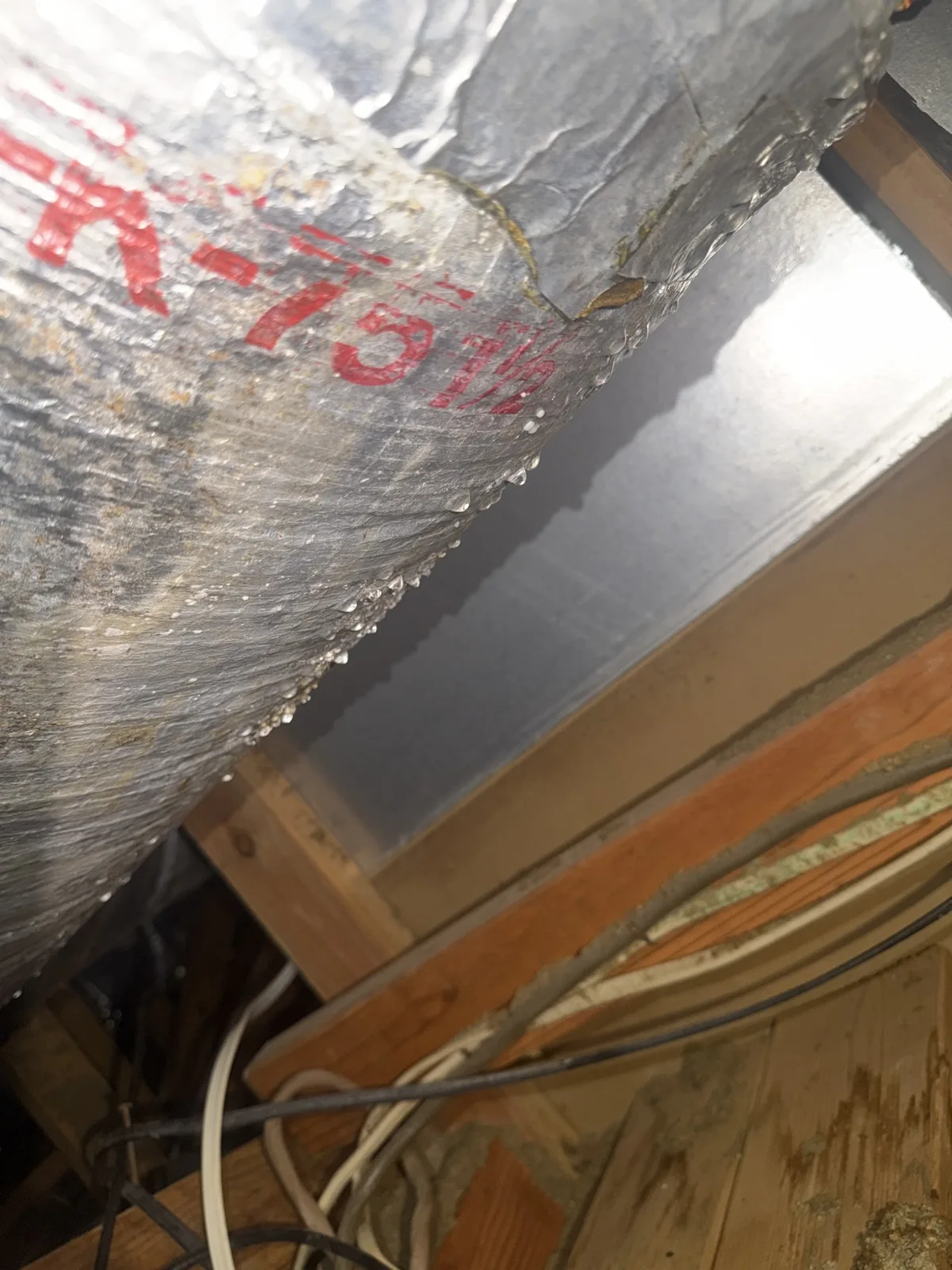
Yes. Cold air escaping from a supply leak chills the humid attic air around the duct, and a return leak pulls that humid air into the system. Where insulation has failed, moisture beads on the duct surface and can drip, stain ceilings and feed mold growth.
Are you licensed and insured?
Yes — Air Duct Specialists LLC is a licensed Florida air conditioning contractor, license CAC1825166, and fully insured. You can verify the license through the Florida DBPR before any work begins, and every estimate is free.