★★★★★
350
☰
Sagging runs, water-damaged insulation, boots pulled loose, flex chewed by pests — here is the damage Palmetto Bay attics actually hide, and the honest line between a repair that restores your system and one that only buys a season.
Most duct damage in Palmetto Bay does not announce itself with a bang. It accumulates — a flex run sagging a little lower every summer, a register boot worked loose by years of vibration, insulation soaked once during a storm-season roof leak and never quite right again. By the time a room stops cooling, the damage overhead is usually older than the symptom. Air duct repair in Palmetto Bay, FL is about finding that damage honestly: which sections can be repaired so the system is genuinely whole again, and which ones are so far gone that a repair would only buy you a season.
The housing stock explains a lot of it. Palmetto Bay is largely ranch homes on generous, tree-covered lots — many built in the 1970s and 80s, many rebuilt or renovated after Hurricane Andrew — stretching from the Deering Estate and Coral Reef Park areas east of Old Cutler Road out to the neighborhoods around Palmetto Bay Park. Those homes carry every era of ductwork: original runs in the older houses, fast post-storm replacements in others, and additions tied into systems that were never sized for them. Add four decades of attic heat, storm seasons, and the occasional uninvited attic guest, and damage is not a question of if. It is a question of where, and how much.
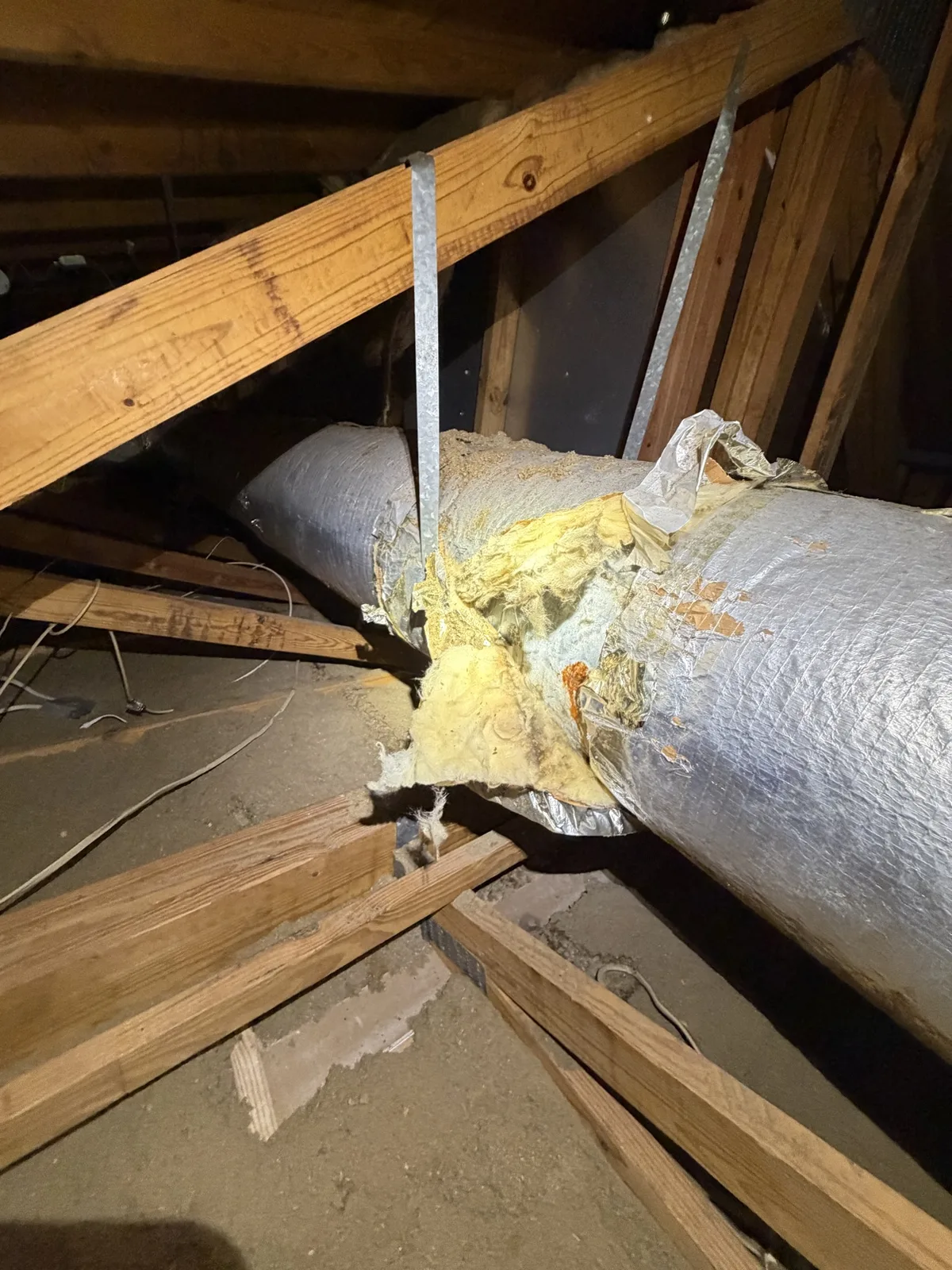
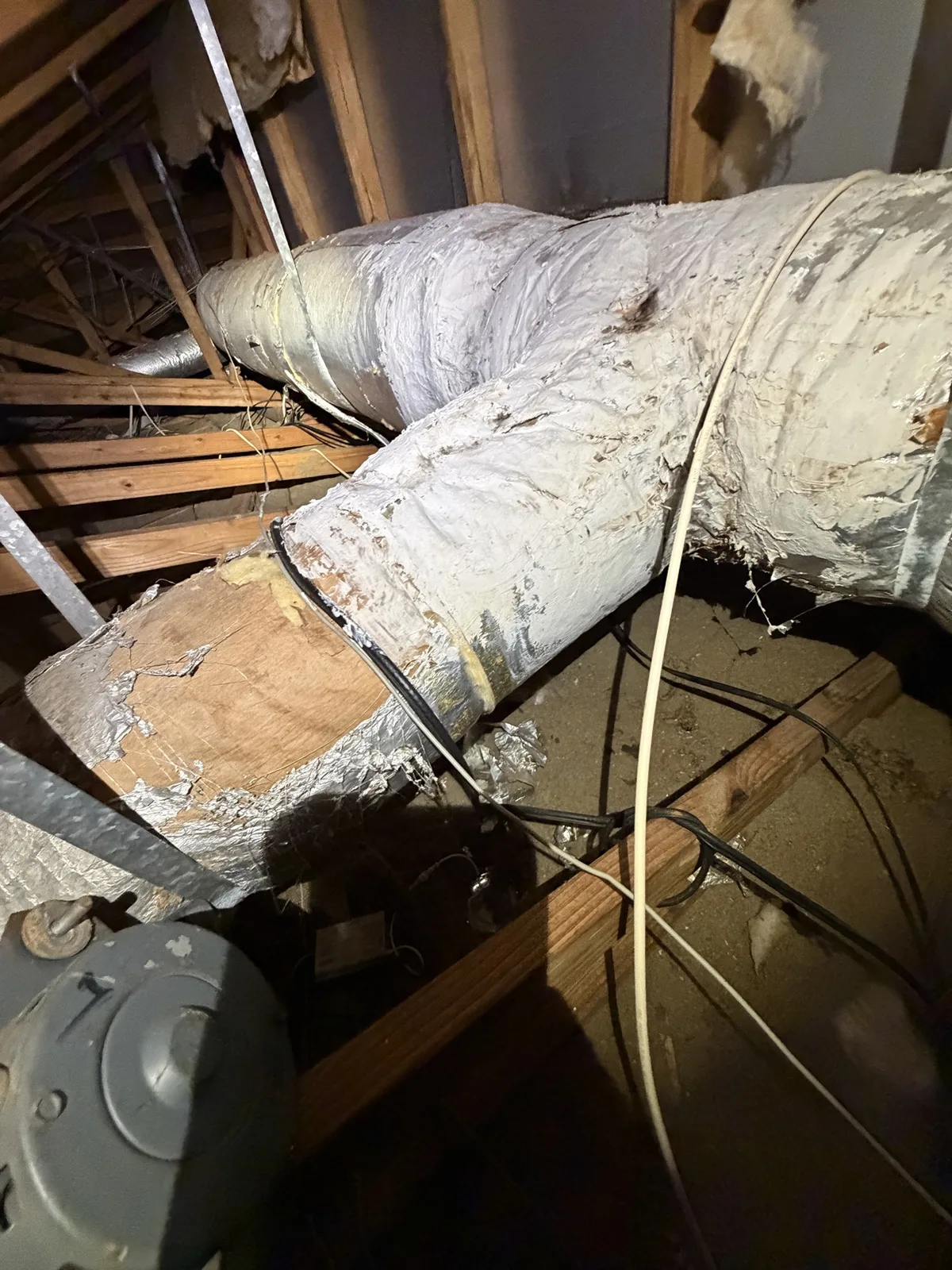
Sagging runs lead the list. Flex duct that was hung with too few supports — or whose straps have cut into the jacket over the years — droops between hangers, and every low spot strangles airflow and gives condensation a place to collect. Next are water-damaged sections: a past roof leak or a sweating, uninsulated spot soaks the insulation around a run, the insulation loses its rating and stays damp, and the run starts sweating in earnest every summer after. Then come the loose boots — the metal fittings where ducts meet your ceiling registers — pulled partly free by vibration and attic heat cycles, spilling cooled air around the register instead of through it.
Pest damage is the one homeowners least expect and we see regularly under Palmetto Bay's tree canopy. Rodents and other attic pests chew flex duct jackets and inner liners, nest in the insulation, and can open a run completely — which is why a sudden musty smell or debris at a register deserves a look overhead, not just a filter change. Age finishes the list: jackets gone brittle, inner cores torn at the collars, tape dried and lifted at the seams. None of these failures needs a whole new duct system by itself. All of them need more than a piece of tape.
A repair starts with a full attic inspection, not a guess from the register. We check every run — its supports, its jacket, its insulation, and every connection from the plenum to the boot — measure airflow at the registers, and photograph what we find so you can see the condition of your own system before deciding anything. Then the damaged sections are dealt with directly: a torn or pest-damaged run is cut out and replaced with a new section, properly stretched and supported; a sagging run is re-hung at the right spacing so it stays up; a water-damaged section is replaced rather than dried and hoped for, because insulation that has soaked and stayed damp does not recover its rating.
Connections get rebuilt, not patched over. A boot that has pulled loose is reseated, mechanically secured, and sealed to UL 181M code standards; collars and takeoffs get the same treatment. When the repairs are done, airflow is re-checked at the registers that were starving — the back bedroom that never cooled should show the difference the same day. That sequence — inspect, show you, replace what is damaged, reseat and seal what came loose, verify — is what separates a repair from a patch.
Here is the honest line we give every Palmetto Bay homeowner. If the damage is localized — one or two failed runs, a few loose boots, a single water-damaged section in an otherwise sound system — a section repair genuinely restores the system, and it is the right job. We will tell you so and quote exactly that. But if the inspection shows the same failures spread across most runs — brittle jackets everywhere, insulation compromised throughout, a layout that was improvised after a storm and never worked properly — then repairing section by section becomes the expensive way to arrive at a replacement, one service call at a time. In that case we will show you the photos, explain why, and quote the replacement. No upselling, ever — just the smallest job that actually solves the problem in front of us.
Every home is different — call for a free estimate and an exact price before any work starts. What we quote is what you pay. The cost of air duct repair in Palmetto Bay, FL depends on how many sections are damaged, whether the damage is torn ductwork, failed insulation, or loose connections, the length of any runs that need replacing, and attic access. A single failed run and a system-wide pattern of age damage are different jobs, and the honest way to price either is to inspect it first — no hidden fees, and the same price for everyone.
Air Duct Specialists LLC serves Palmetto Bay and all of Miami-Dade County — 7 days a week, 7am–11pm, same-day service available. Licensed CAC1825166, fully insured, 350 five-star Google reviews. Our own certified technicians — never subcontractors.
📞 (305) 885-9911 — Miami-Dade CountyWhat are the signs my Palmetto Bay home needs air duct repair?
The common ones are a room or wing that no longer cools like the rest of the house, weak airflow at one or two registers, whistling or rattling at a vent, a musty smell when the system starts, and bills climbing without a change in how you use the AC. In Palmetto Bay attics those symptoms most often trace to sagging runs, loose register boots, water-damaged insulation, or pest-damaged flex duct.
Can pest-damaged ductwork be repaired, or does it have to be replaced?
A pest-damaged section is cut out and replaced — chewed jacket and liner do not get patched. If the damage is confined to one or two runs, that section replacement fully restores the system. If pests have worked through runs across the whole attic, we will show you the extent with photos and talk honestly about whether wider replacement is the smarter job.
My duct run is sagging. Is that really a problem?
Yes. A sagging flex run strangles airflow at every low point, so the rooms past the sag get less air than the system was designed to deliver, and the low spots collect condensation in summer. Re-hanging the run with proper support spacing restores the airflow — and if the jacket or insulation was damaged while it hung low, that section is replaced at the same time.
How long does air duct repair take in Palmetto Bay?
Most localized repairs — a failed run, loose boots, a water-damaged section — are completed the same day. The timeline depends on how much of the system is damaged and attic access, and we give you the scope and schedule in writing with your free estimate before any work starts.
How much does air duct repair cost in Palmetto Bay?
Every home is different, so there is no single number that fits. Cost depends on how many sections are damaged, the type of damage, the length of any runs being replaced, and attic access. Call for a free estimate and an exact price before any work starts. What we quote is what you pay.
Are you licensed for duct repair in Palmetto Bay?
Yes — Air Duct Specialists LLC is a licensed Florida air conditioning contractor, license CAC1825166, and fully insured. Repairs are done by our own certified technicians — never subcontractors — with every connection sealed to UL 181M code standards and airflow verified at the registers afterward.