★★★★★
350
☰
Water beading on your vents isn't just annoying — in Palmetto Bay's humidity, it's a signal. Here's what causes it, when it's harmless, and when it means your ductwork needs attention.
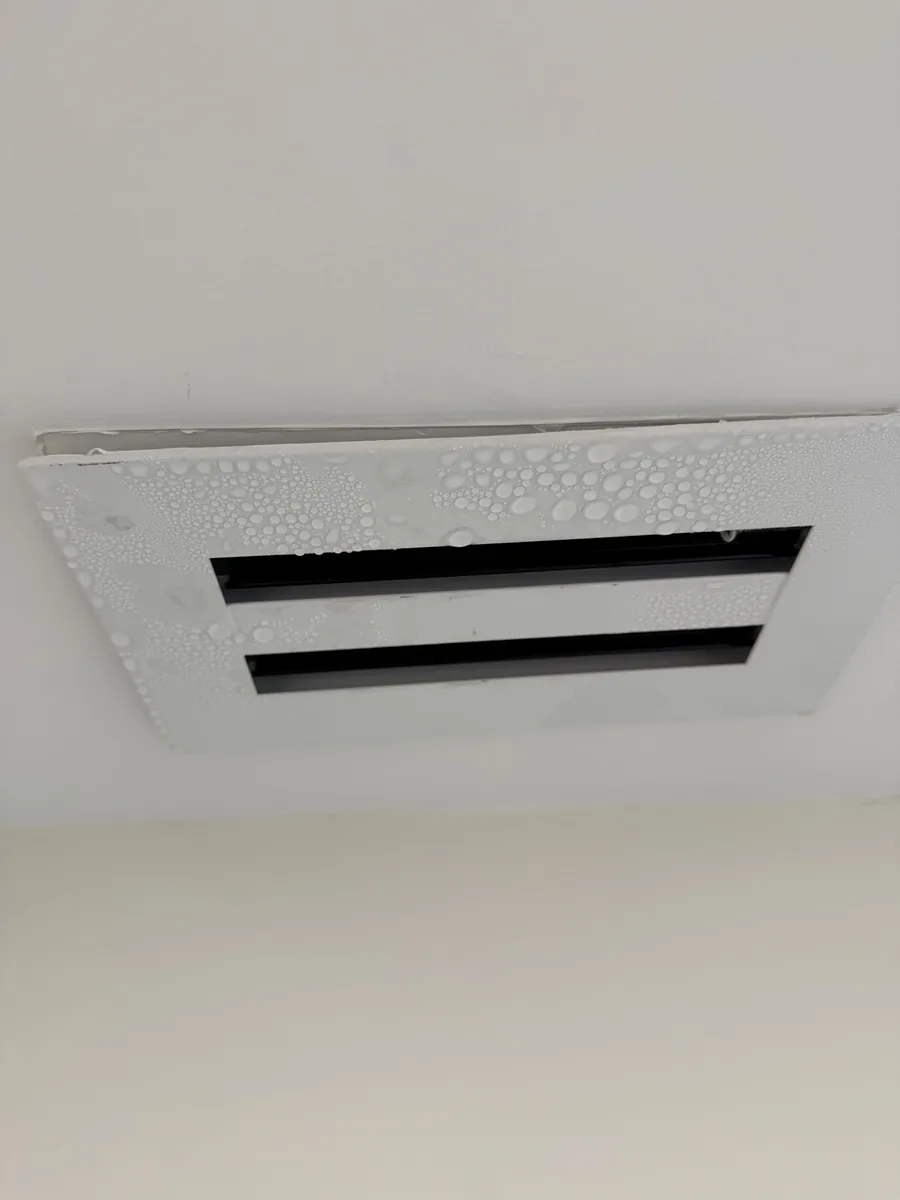
If you live in Palmetto Bay — from the Old Cutler Road corridor to the neighborhoods along Biscayne Bay — you've probably seen it: water beading on an air vent, dampness around a register, maybe a stain creeping across the ceiling. Sweaty air vents are one of the most common calls we get from Miami-Dade homeowners, and the cause is almost always the same physics. Your AC blows cold air through the ducts; Palmetto Bay's warm, humid air surrounds them; where the two meet, water condenses — like the outside of a cold glass on a hot day.
A little condensation during the stickiest weeks of summer can be normal. But vents that sweat constantly, drip, or mark your ceiling are telling you something specific is wrong. Here's what's actually happening, the South Florida causes, and how to tell a quick fix from a ductwork problem.
Condensation forms when a cold surface meets warm, humid air. Your supply ducts carry air at roughly 55°F; the air in a Palmetto Bay attic in summer sits between 130°F and 150°F, and even the air inside your home carries heavy humidity. The metal or plastic of the vent register gets cold from the supply air, and moisture in the surrounding air condenses onto it.
In a healthy system, the ductwork is insulated well enough that the cold stays inside the duct. When you see sweating, that barrier has failed somewhere — insulation thin, damaged, or missing; air leaking from the ducts; or airflow off. The sweat is the symptom. The ductwork is the story.
Aging, under-insulated ductwork. Many Palmetto Bay homes from the 1960s–80s still run original ducts — thin R-4 or R-6 flex, flattened and degraded by decades of attic heat. Modern code calls for R-8. That gap is where most sweating starts.
Attic heat. A tile-roof attic in Palmetto Bay can hold 130–150°F for hours. The bigger the gap between the cold duct and the hot attic, the harder condensation forms. Under-insulated ducts don't stand a chance.
Leaking duct connections. Loose collars, torn jackets, and unsealed joints let cold air escape — and let hot, humid attic air reach the cold duct surface. We find this constantly: the insulation looks fine from a distance, but the connections are wide open.
Oversized systems that short-cycle. Some newer construction along the Old Cutler corridor runs oversized equipment — it blasts cold air in short bursts without ever running long enough to dehumidify the home. Cold vents plus humid indoor air equals condensation.
Restricted airflow. A clogged filter, blocked returns, or crushed flex duct reduces airflow across the coil, making supply air colder than designed. Colder air at the vent means a bigger gap — and more sweat.
Thermostat set very low. Running the house at 68°F when it's 92°F outside maximizes the temperature gap at every vent. Not a defect — but combined with any cause above, it turns a small problem into a dripping one.
Water and South Florida homes are a bad combination. Persistent dampness around vents and ductwork can create conditions where mold or mildew grows — and this climate rarely dries anything out on its own. Once dark spotting appears on the ceiling drywall around a register, you're no longer dealing with a vent problem; you're dealing with a ceiling problem.
There's also the money side: sweating is wasted cooling condensing out of your system, and homes with sweating vents almost always run higher electric bills than they should. If the moisture comes from leaking ducts, you're paying to cool your attic.
Here's the honest version: sometimes sweating vents are a $0 fix — a new filter and a thermostat adjustment. But when the ductwork is the problem, no setting change fixes it. The signs: multiple vents sweating at once, attic insulation that's flattened or falling off, ducts old enough to vote, and sweating that persists at a reasonable thermostat setting.
That's also where the fix pays for itself. Re-insulating ductwork or replacing failing runs with properly sized R-8 ducts — sealed at every connection — stops the condensation, drops the electric bill, and protects the ceilings. We'd rather tell you it's the filter than sell you ducts. But when it's the ducts, saying so is the honest answer.
Straight numbers. A simple airflow or drain-line fix is minor. Re-insulating a typical Palmetto Bay home runs roughly $1,000–$2,700. A full duct replacement — new R-8 runs, sealed connections, properly supported — typically runs $1,500–$7,000 depending on home size and system count. Larger estates with multiple air handlers run higher; the only way to know your number is an on-site look.
Every estimate is free, and what we quote is what you pay — no hidden fees, no upselling. If the answer is a filter and a thermostat change, we'll tell you that too.
Air Duct Specialists LLC serves Palmetto Bay and all of Miami-Dade, Broward, and Palm Beach — 7 days a week, 7am–11pm. Licensed CAC1825166. Fully insured. Same-day service, 350 five-star reviews.
📞 (305) 885-9911 — Miami-Dade 📞 (954) 302-1550 — Broward 📞 (561) 331-6777 — Palm BeachIs it normal for air vents to sweat in Palmetto Bay?
A little condensation during the most humid weeks of summer happens in any South Florida home. But vents that sweat constantly, drip, or stain the ceiling are telling you something is off — usually poor duct insulation, air leaks, or restricted airflow. Worth a look before it becomes ceiling damage.
Can sweating vents cause mold?
Persistent moisture around vents and ductwork can create conditions where mold or mildew grows — this climate rarely dries anything out on its own. If the area around a vent stays damp, dark spotting can appear on the ceiling drywall. The fix: stop the moisture at the source — the ductwork, the airflow, or both.
Will turning the AC up stop my vents from sweating?
Sometimes — a few degrees reduces the temperature gap behind the condensation. But if the real cause is under-insulated or leaking ductwork, a higher setpoint just hides the symptom while the problem runs your bill up. A quick duct check tells you which it is.
How much does it cost to fix sweating vents in Palmetto Bay?
A simple airflow fix or drain-line clearing is minor. Re-insulating runs roughly $1,000–$2,700; a full replacement typically runs $1,500–$7,000 depending on home size. Free on-site estimates — what we quote is what you pay.
Do older Palmetto Bay homes have worse sweating-vent problems?
Often. Many Palmetto Bay homes from the 1960s–80s still run original ducts with thin R-4 or R-6 insulation, degraded by decades of attic heat. Newer Old Cutler corridor construction has better insulation but can still sweat if the system is oversized and short-cycles. An inspection tells the story.
Is Air Duct Specialists licensed and insured?
Yes — Air Duct Specialists LLC is a licensed Florida air conditioning contractor, license CAC1825166, and fully insured. We serve Palmetto Bay and all of Miami-Dade, Broward, and Palm Beach counties, 7 days a week, 7am–11pm.