★★★★★
350
☰
Leaky joints spill cooled air into a 140-degree attic and pull bay-humid air back in — coastal homes feel that loss fastest. Here is how sealing every joint to UL 181M code standards cuts run time and brings indoor humidity under control.
On a July afternoon, the attic over a Palmetto Bay home sits around 140 degrees — and if your duct joints leak, that is where a share of the air you just paid to cool ends up. It spills out of supply connections into the attic, while the return side pulls hot, humid attic air back in to take its place. Air duct sealing in Palmetto Bay, FL closes those leaks at every joint, sealed to UL 181M code standards — and in a coastal village where the air itself carries bay moisture, sealing is not just an energy job. It is how you stop your duct system from importing humidity faster than your AC can remove it.
Palmetto Bay feels duct leaks faster than an inland suburb for a simple reason: the replacement air is worse. When a leaking system in a dry climate pulls in outside air, it pulls in heat. Here — in ranch homes from the Deering Estate corridor and Coral Reef Park east of Old Cutler Road to the neighborhoods around Palmetto Bay Park — it pulls in heat loaded with moisture off Biscayne Bay. Every leak therefore costs twice: cooled, dried air lost on the supply side, and a fresh humidity load added on the return side. The thermostat still reads the number you set. The house just feels clammy getting there, and the system runs longer to hold it.
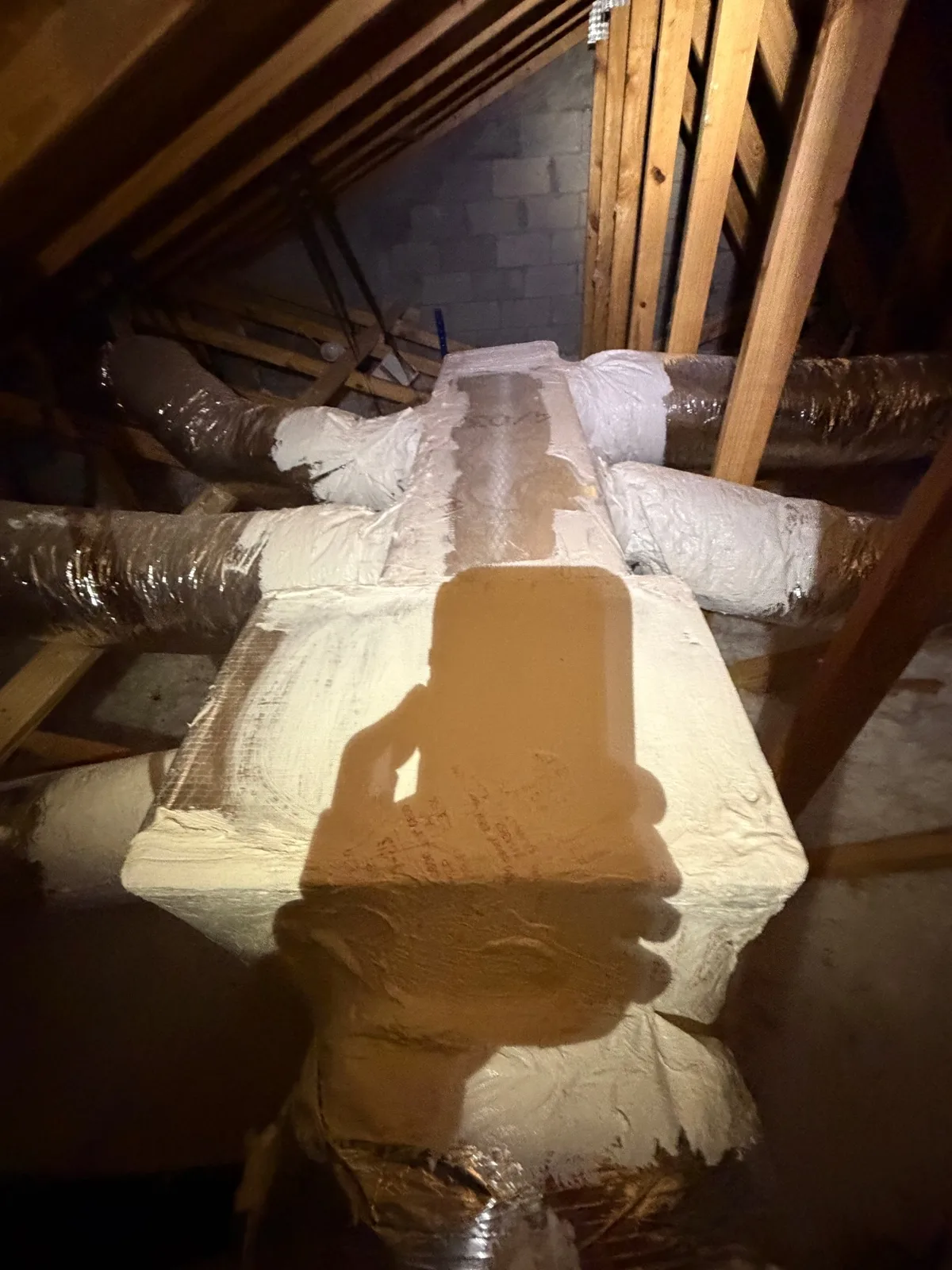
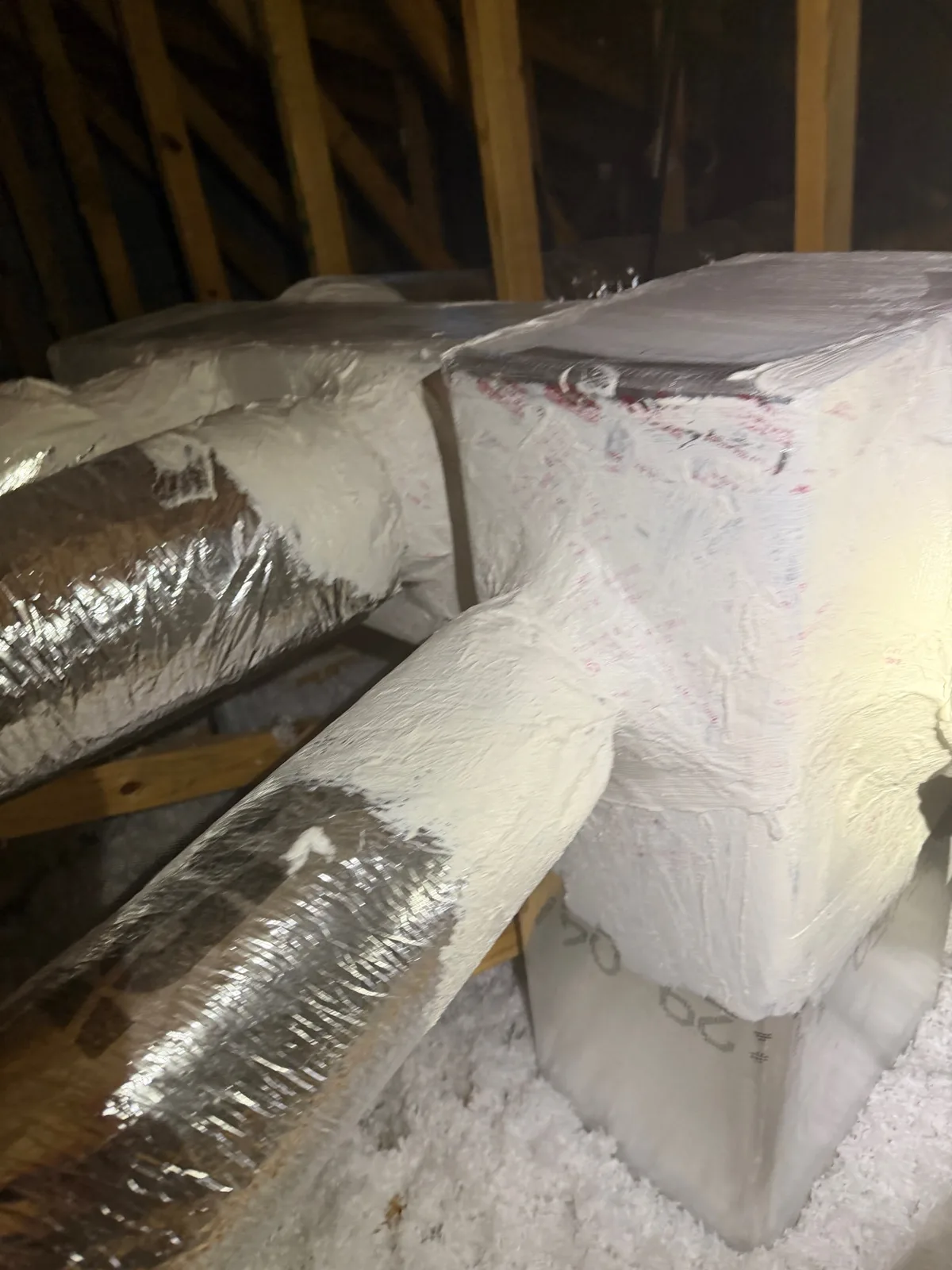
Ducts rarely leak along a straight run. They leak where pieces meet: the plenum where the system begins, the trunk seams, every takeoff where a branch leaves the trunk, every collar where flex duct connects, and every register boot at the ceiling. Those joints were closed at installation with varying care — and Palmetto Bay's mix of 1970s and 80s originals and fast post-Hurricane Andrew replacements means varying is generous. Attic heat then works on whatever was used: tape dries and lifts, connections shift as materials expand and contract, and vibration worries joints loose a fraction at a time, season after season.
The result is a system that looks intact from the attic hatch and leaks at dozens of points at once. No single gap is dramatic — that is exactly why homeowners blame the air conditioner. The equipment is usually fine. It is cooling the attic a little, drying attic air a lot, and delivering what is left to your rooms.
We start by mapping the system and checking airflow at the registers, so there is a picture of where air is being lost before any sealing begins. Then our technicians work joint by joint through the whole system — plenum and trunk seams first, where pressure is highest and losses are largest, then every takeoff, collar, and boot connection. A connection that has slipped is reseated and mechanically secured before it is sealed; sealant over a loose joint is not a repair. Every finished joint is sealed to UL 181M code standards, on both the supply and the return side.
The return side deserves its own sentence, because in Palmetto Bay it is the humidity side. A return leak does not spill your cooled air — it pulls hot, damp, dusty attic air into the system ahead of the filter's protection in many layouts, and the AC then has to cool and wring out air it was never supposed to handle. Sealing returns is what turns a sealing job into a change you can feel on your skin: indoor humidity that finally settles, rooms that dry out between cycles, and a musty start-up smell that fades because attic air is no longer part of the recipe.
The first change is run time. A system that stops leaking stops overworking — cycles get shorter because the air it cools actually arrives, and arrives at the temperature it left the coil. The second is humidity control: with the return side no longer importing bay-moist attic air, the equipment's normal dehumidification is suddenly enough, and the clammy-at-74 feeling that plagues coastal homes eases. The third is balance — registers at the far end of long ranch-home runs get closer to their designed airflow, so the back bedrooms stop lagging the front of the house. We verify all of it the direct way: airflow re-checked at the registers after sealing, compared against the readings from before the work.
Sealing is the right job when the ductwork itself is sound — runs intact, insulation dry and in place, layout sensibly sized — and the losses are at the connections. If our inspection finds torn runs, sagging sections, or insulation that has taken on water, sealing over them would waste your money; those are repairs first, and we will show you the photos and say so. And if the system is failing at the joints because it is failing everywhere — brittle, undersized, improvised — replacement is the honest recommendation. Sealing is powerful precisely because it is aimed at the right problem: good ductwork that leaks at its seams.
Every home is different — call for a free estimate and an exact price before any work starts. What we quote is what you pay. The cost of air duct sealing in Palmetto Bay, FL depends on the size of the home, how many systems it runs, the total number of joints and connections to be sealed, attic access, and whether any connections need to be reseated or sections repaired before sealing can hold. A single-system ranch and a multi-system home on the water are different jobs, and the honest way to price either is to inspect it first — no hidden fees, and the same price for everyone.
Air Duct Specialists LLC serves Palmetto Bay and all of Miami-Dade County — 7 days a week, 7am–11pm, same-day service available. Licensed CAC1825166, fully insured, 350 five-star Google reviews. Our own certified technicians — never subcontractors.
📞 (305) 885-9911 — Miami-Dade CountyWhy do leaky ducts make a Palmetto Bay home feel humid?
Supply leaks spill cooled, dried air into the attic, and return leaks pull hot, humid attic air into the system in its place. In Palmetto Bay that replacement air carries moisture off Biscayne Bay, so the AC fights a constant humidity load it was never sized for. Sealing both sides to UL 181M code standards stops importing that moisture, and normal dehumidification becomes enough again.
How do I know if my ducts are leaking?
Common signs are rooms that lag behind the rest of the house, weak airflow at far registers, indoor humidity that never settles, a musty smell at start-up, and longer AC run times with rising bills in a home whose equipment checks out fine. An inspection of the joints — plenum, trunks, takeoffs, collars, and boots — plus airflow readings at the registers confirms where the system is losing air.
What does sealing to UL 181M code standards mean?
It means every joint and connection in the duct system is mechanically secured and sealed with UL 181M-rated duct sealant to the standard the code requires — plenum, trunk seams, takeoffs, collars, and register boots, on both the supply and return sides. Connections that have slipped are reseated first, because sealant over a loose joint is not a repair.
Will duct sealing lower my electric bill in Palmetto Bay?
It should reduce the waste built into every cycle: air you paid to cool stops spilling into a 140-degree attic, and the system stops spending run time cooling and drying attic air pulled in through return leaks. How much that shows up on a bill depends on how badly the system was leaking — which is why we measure airflow before and after, so the improvement is verified, not promised.
How much does air duct sealing cost in Palmetto Bay?
Every home is different, so there is no single number that fits. Cost depends on the size of the home, how many systems it runs, how many joints need sealing, attic access, and whether any sections need repair first. Call for a free estimate and an exact price before any work starts. What we quote is what you pay.
Are you licensed for duct sealing in Palmetto Bay?
Yes — Air Duct Specialists LLC is a licensed Florida air conditioning contractor, license CAC1825166, and fully insured. Sealing is done by our own certified technicians — never subcontractors — with every joint sealed to UL 181M code standards and airflow verified at the registers afterward.