★★★★★
350
☰
Two or three systems, dozens of runs, over a hundred joints — in a big Parkland home, duct leakage is a whole-system problem. Here is how whole-system sealing fixes it, and how we prove it worked.
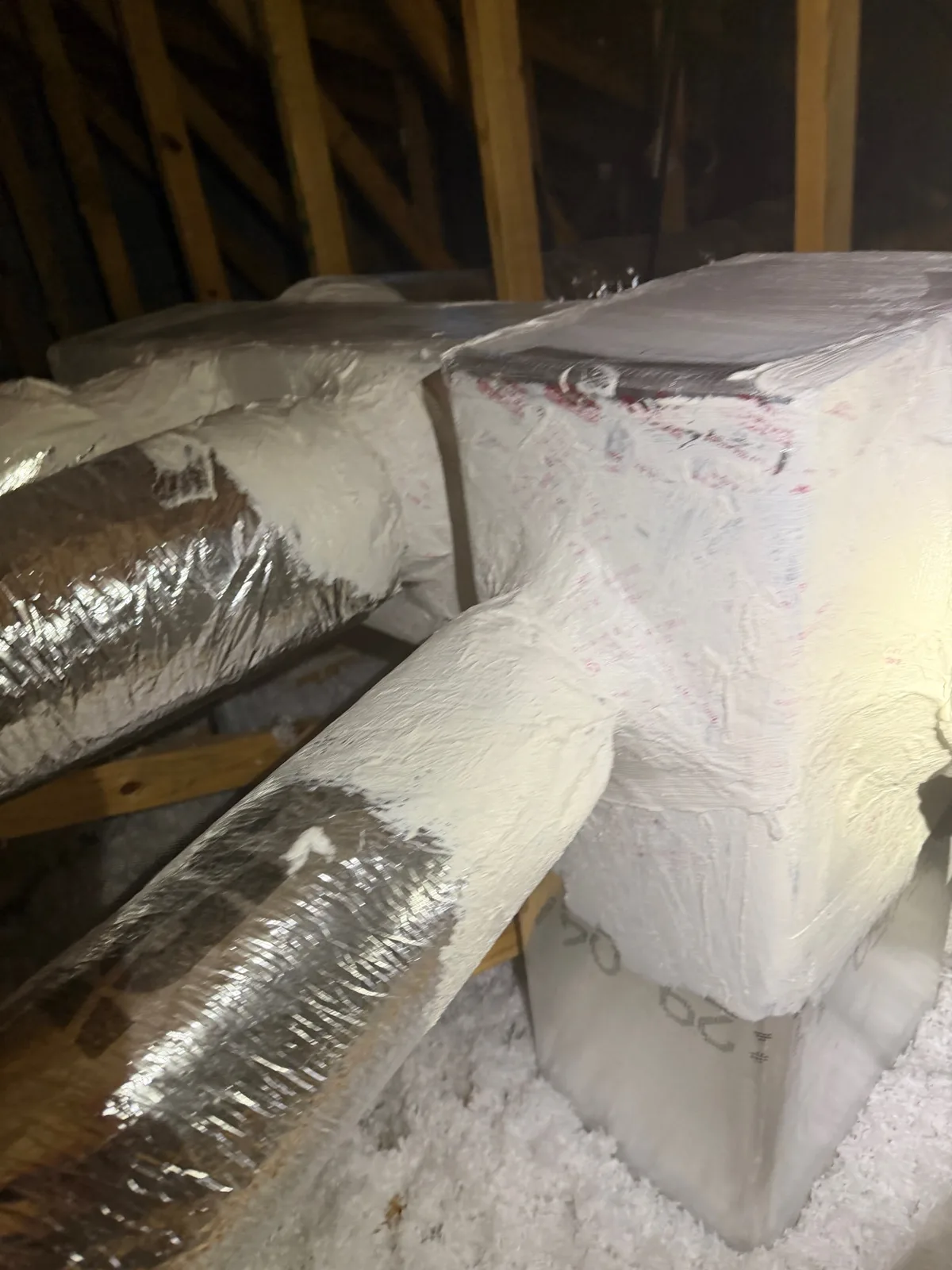
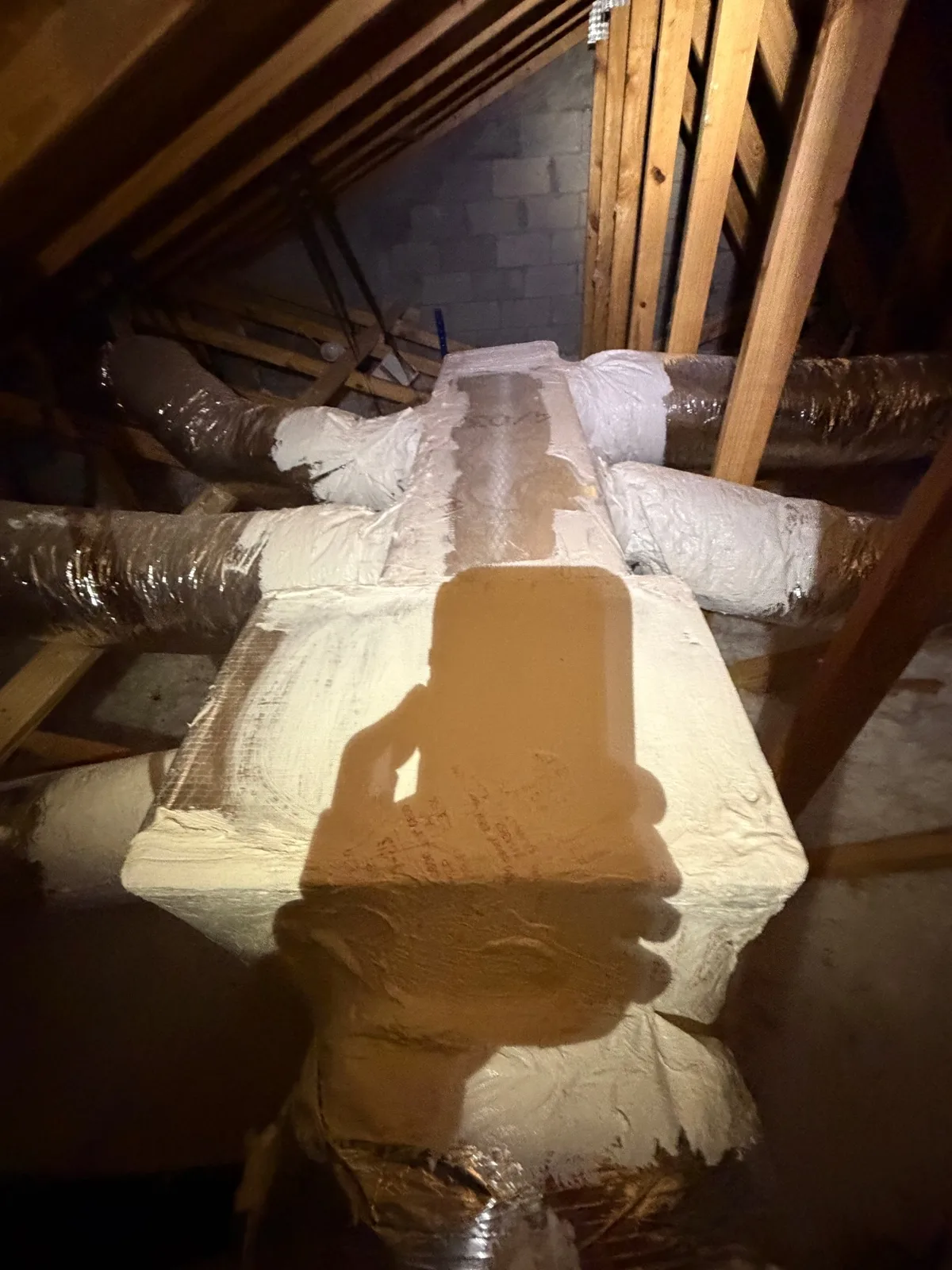
A big Parkland home does not have a duct leakage problem in one place. It has dozens of small ones, all leaking at once. Homes in Heron Bay, Parkland Golf & Country Club, MiraLago, Cascata, and Watercrest commonly run two or three separate AC systems — which means two or three plenums, dozens of branch takeoffs, and well over a hundred individual joints, collars, and seams overhead. Air duct sealing in Parkland, FL is the whole-system fix for that math: every accessible joint sealed to UL 181M code standards, then airflow balanced and static pressure checked across every zone, so the air you paid to cool actually arrives in the rooms it was meant for.
No single leak in that attic looks dramatic. A collar seeping at its seam, a takeoff gap you could slip a finger into, a plenum corner that was never fully closed — each one is minor on its own. Together, across three systems, they add up to a steady drain: cooled air spilling into a 140-degree attic around the clock, and hot, humid attic air pulled back in on the return side. The equipment compensates the only way it can — by running longer. You feel it as rooms that lag, humidity that never quite settles, and a bill that does not match the comfort.
Duct systems leak at connections, not in the middle of straight runs. Every place two pieces meet — plenum to trunk, trunk to takeoff, takeoff to flex, flex to register boot — is a potential gap, and production installation leaves many of them closed with tape and speed rather than properly secured and sealed. Attic heat then does the slow work: tape dries and lifts, flex shifts on its collar, and vibration works connections loose a fraction at a time, season after season.
Zoning multiplies the effect. When only one zone of a big Parkland home calls for air, the full output of that system pushes against a partly closed duct network — pressure rises, and higher pressure forces more air out of every unsealed joint on the runs that are open. That is why leakage in a zoned, multi-system home is worse than the joint count alone suggests, and why sealing has to be verified with a static pressure check afterward: seal the system, and the pressure picture changes across every zone, not just the one that felt weak.
We start by mapping the system — every air handler, plenum, trunk, and branch — and checking airflow at the registers and static pressure at the equipment, so there is a baseline before anyone opens a tube of sealant. Then our technicians work joint by joint: plenums and trunk seams first, where pressure is highest and losses are largest, then every takeoff, collar, and boot connection on the branch runs. Connections that have slipped are reseated and mechanically secured first — sealant over a loose collar is not a repair — and then every joint is sealed to UL 181M code standards.
Return-side leaks get the same attention, and in South Florida they matter just as much. A leaking return does not spill cooled air; it pulls in the opposite — hot, humid, dusty attic air that the system then has to cool and dry all over again. Sealing both sides is what turns a sealing job into a comfort change you can feel: shorter run times, humidity that comes under control, and registers that deliver closer to their designed airflow in every zone.
Sealing you cannot measure is sealing you have to take on faith, and we do not ask for faith. After the last joint is sealed, airflow is re-checked at the registers and static pressure is read again at each air handler and compared against the baseline and the equipment's rated range. Zones are run one at a time and together, the way the home actually uses them. The rooms that lagged should show the gain the same day. You also get before-and-after photos of the joints we sealed — the same documentation we provide on every job — so the work overhead is as visible as the results at the register.
Sealing is the right call when the ductwork itself is sound — runs intact, insulation in place, layout sensibly sized — and the losses are at the connections. That describes a great many Parkland homes, including newer ones whose joints were simply never sealed to standard. If the inspection finds torn runs, crushed sections, or insulation that has failed along the duct, those are repairs or replacements, and sealing over them would be wasted money. We will show you which condition your system is in, with photos, and recommend the smallest job that actually solves it. No upselling, ever.
Every home is different — call for a free estimate and an exact price before any work starts. What we quote is what you pay. The cost of air duct sealing in Parkland, FL depends on how many systems the home runs, the total number of joints and connections to be sealed, attic access across those systems, and whether any connections need to be reseated or sections repaired before sealing can hold. A one-system home and a three-system estate are different jobs, and the honest way to price either is to inspect it first — no hidden fees, and the same price for everyone.
Air Duct Specialists LLC serves Parkland and all of Broward County — 7 days a week, 7am–11pm, same-day service available. Licensed CAC1825166, fully insured, 350 five-star Google reviews. Our own certified technicians — never subcontractors.
📞 (954) 302-1550 — Broward CountyWhat does air duct sealing do in a multi-system Parkland home?
It closes the leaks at every joint, collar, and seam across all of the home's systems — plenums, trunks, takeoffs, and register boots — sealing them to UL 181M code standards. Big Parkland homes running two or three systems can have well over a hundred connections; sealing them stops cooled air from spilling into the attic at dozens of points at once.
How do I know if my Parkland ducts are leaking?
Common signs are rooms that lag behind the rest of the house, weak airflow at some registers, indoor humidity that never settles, longer AC run times, and rising bills in a home that is not old enough for the equipment to be worn out. An inspection with register airflow checks and a static pressure reading confirms where the system is losing air.
What is static pressure, and why do you check it after sealing?
Static pressure is the air pressure inside the duct system as the blower runs. Readings outside the equipment's rated range mean the system is working against restrictions or leaks. We read it before sealing for a baseline and again afterward — across every zone — to verify the sealed system delivers air the way it was designed to.
Why do return-side duct leaks matter in South Florida?
Supply leaks spill cooled air into the attic. Return leaks do the opposite: they pull hot, humid, dusty attic air into the system, which then has to cool and dry that air all over again. In a Parkland attic that can mean a constant humidity load the equipment was never sized for. Sealing both sides is what makes the comfort difference noticeable.
How much does air duct sealing cost in Parkland?
Every home is different, so there is no single number that fits. Cost depends on how many systems the home runs, how many joints need sealing, attic access, and whether any connections must be repaired first. Call for a free estimate and an exact price before any work starts. What we quote is what you pay.
Are you licensed for duct sealing in Parkland?
Yes — Air Duct Specialists LLC is a licensed Florida air conditioning contractor, license CAC1825166, and fully insured. Sealing is done by our own certified technicians — never subcontractors — with every joint sealed to UL 181M code standards and the results verified by airflow and static pressure checks.