★★★★★
350
☰
Your AC cools the air. Leaking joints decide whether it ever reaches your rooms. In Plantation's older duct systems, the plenum and takeoffs are where that air escapes — and sealing them to code is the fix.
Every hour your air conditioner runs, it pushes cooled air through a network of joints overhead — and in a Plantation home built in the 1970s, 80s, or 90s, a share of that air never arrives. Air duct sealing in Plantation, FL is about the connections: the plenum at the air handler, the takeoffs where each branch begins, and the boots at every register. In Jacaranda, Plantation Park, Mirror Lake, and the older sections around Central Park, those joints were typically finished with tape alone. Tape does not survive decades of 130-degree attic heat. It dries, curls, and lets go — and the system starts cooling the attic instead of the house.
The symptoms are easy to misread. Rooms at the far end of the house run warm. The system runs longer than it used to. The electric bill climbs a little every summer. Homeowners often blame the air conditioner itself, when the equipment is fine and the delivery system is leaking. Sealing is the unglamorous repair that fixes the delivery — and it is required work whenever ducts or vents are sweating, because a leaking joint also pulls humid attic air toward cold surfaces, where it condenses.
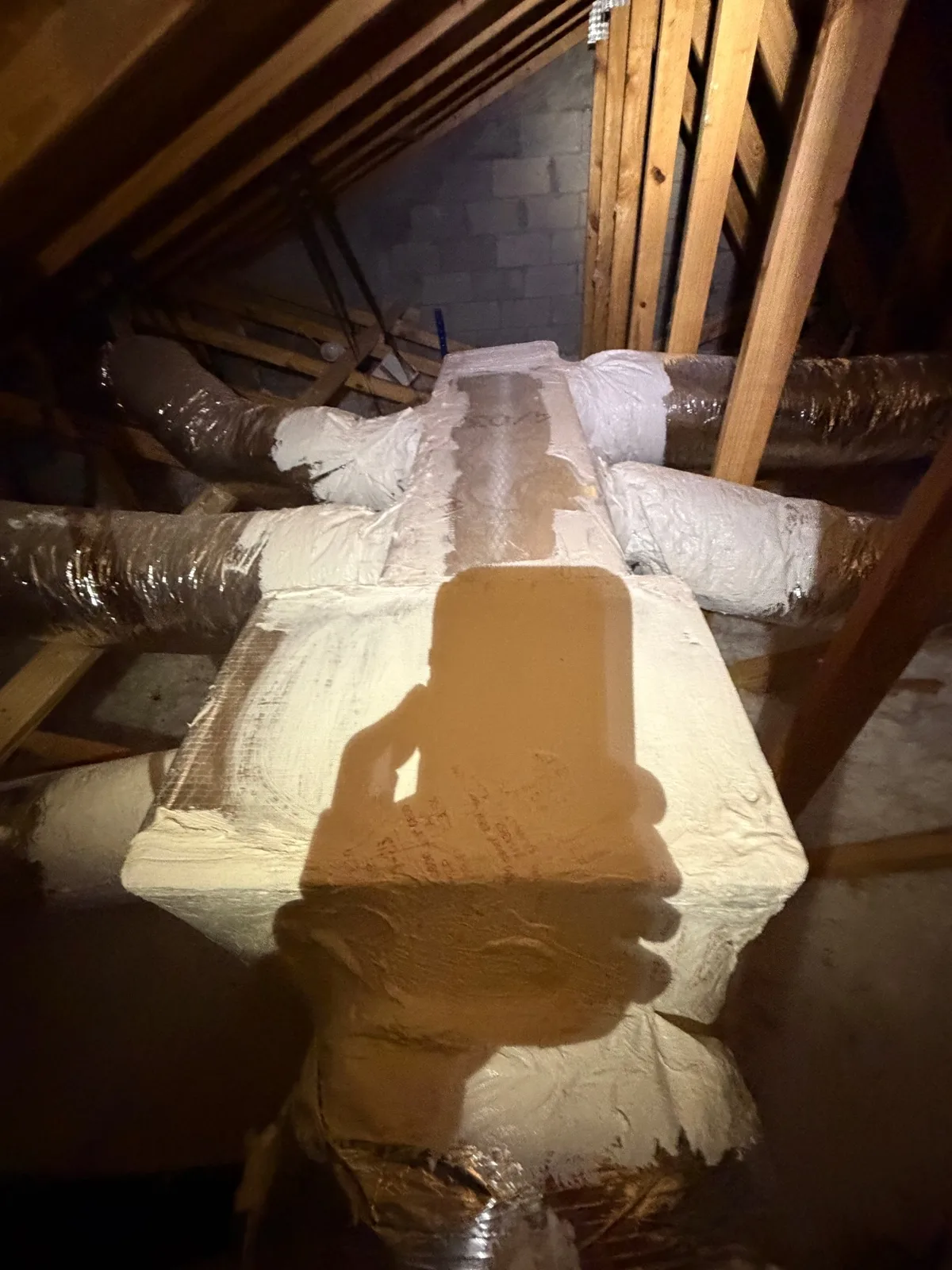
The plenum is leak number one. It is the box where all the ductwork meets the air handler, it carries the full pressure of the system, and its seams take the most stress. When plenum joints open, the system loses air at the source — before a single room gets its share. The takeoffs come next: every branch run starts at a collar on the trunk or plenum, and each collar is a joint that can gap as materials expand and contract through thousands of cooling cycles. Register boots leak at the other end, spilling cooled air into the attic right above the ceiling instead of down into the room.
Flex duct connections fail in their own way. The inner core slips on its collar, the outer jacket pulls back, and air escapes into the insulation layer — invisible from below, obvious the moment a technician looks at the joint in the attic. None of these leaks announce themselves. They just tax every cooling hour, which is why a sealing job starts with a joint-by-joint inspection, not a guess.
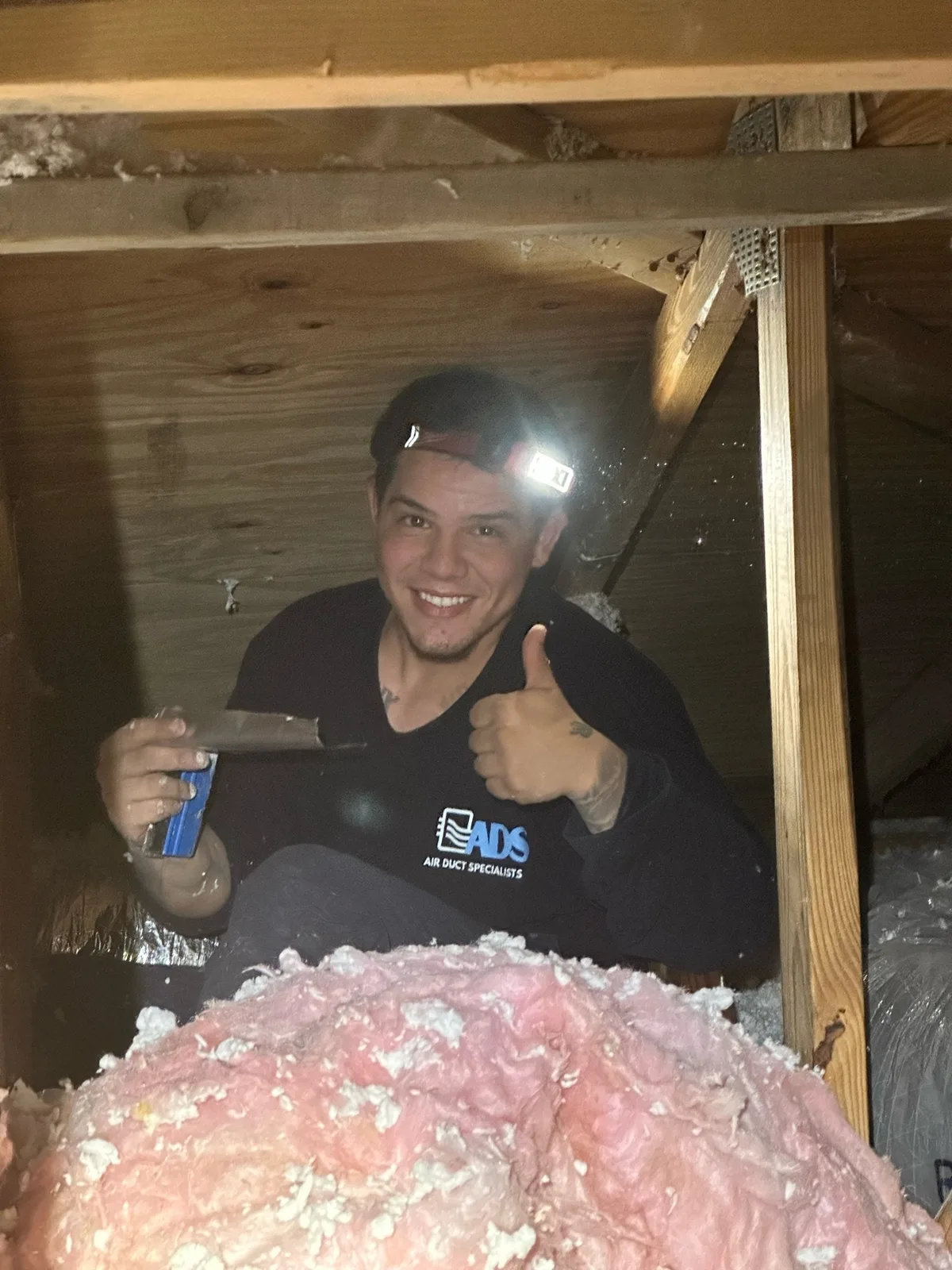
A proper sealing job is methodical. We inspect every accessible joint in the system — plenum seams, takeoffs, branch connections, and boots — and photograph the failures so you can see exactly where your air has been going. Each connection is mechanically secured first; a seal over a loose joint is no seal at all. Then every joint is coated with UL 181M code-standards duct sealant, the rated material that flexes with the system, tolerates attic heat, and holds for the life of the ductwork. It is the same standard we apply on every new installation, because sealing is not an add-on to installation work — it is a required part of it.
When the sealing is done, we check airflow at the registers. The rooms that lagged should feel it first: stronger delivery, temperatures that even out room to room, and a system that reaches the thermostat setting and cycles off instead of running on. That shorter run time is where the savings live — the air conditioner stops paying to cool an attic it was never supposed to cool.
Sealing fixes leaks at joints in ductwork that is otherwise sound — and for many Plantation homes, that is the whole problem. If the inspection finds torn runs, crushed sections, or insulation that has separated and failed along entire lengths, sealing alone will not rescue those sections; they need repair or replacement first, and then the new connections get sealed as part of that work. We will show you the photos and put the options in the right order — seal what is sound, repair what is failed, replace only what is past both. No upselling, ever, is a standing promise, not a promotion.
Every home is different — call for a free estimate and an exact price before any work starts. What we quote is what you pay. The cost of air duct sealing in Plantation, FL depends on the size of the home, the number of systems, how many joints the system has and how many have failed, and how accessible those joints are in the attic. A compact single-system home and a two-system house with a long trunk line are simply different amounts of sealing work, and the honest way to price either one is to look at it first.
Air Duct Specialists LLC serves Plantation and all of Broward County — 7 days a week, 7am–11pm, same-day service available. Licensed CAC1825166, fully insured, 350 five-star Google reviews. Our own certified technicians — never subcontractors.
📞 (954) 302-1550 — BrowardWhere do Plantation duct systems leak the most?
At the plenum where the ductwork meets the air handler, at the takeoffs where each branch run begins, and at register boots. Those joints were often sealed with tape alone when the home was built, and tape fails in attic heat — the joints open up and leak cooled air into the attic every hour the system runs.
What are the signs my Plantation home needs duct sealing?
Rooms that never match the thermostat, weak airflow at registers far from the air handler, a system that runs longer than it used to, rising electric bills, and extra dust in the house. Any one of them can point to leaking joints — an attic inspection confirms it, and we photograph what we find.
How is professional duct sealing different from taping joints?
Tape dries out and lets go in a hot attic. Professional sealing coats every joint, seam, and connection with UL 181M code-standards duct sealant after the connection is mechanically secured, so the seal flexes with the system and holds. It is the standard we use on every installation and repair we touch.
Will sealing my ducts even out the temperatures in my home?
When uneven temperatures are caused by leaks — cooled air escaping before it reaches the far rooms — yes. Sealing stops the loss at the joints, more of the air your system cools actually arrives, and rooms that lagged the thermostat usually come back in line. If the cause is sizing or equipment, we will tell you that plainly.
How much does air duct sealing cost in Plantation?
Every home is different, so there is no single number that fits. Cost depends on the size of the home, the number of systems and joints, and attic access. Call for a free estimate and an exact price before any work starts. What we quote is what you pay.
Are you licensed for duct sealing in Plantation?
Yes — Air Duct Specialists LLC is a licensed Florida air conditioning contractor, license CAC1825166, and fully insured. Sealing is done by our own certified technicians — never subcontractors — and every joint is sealed to UL 181M code standards.