★★★★★
300
☰
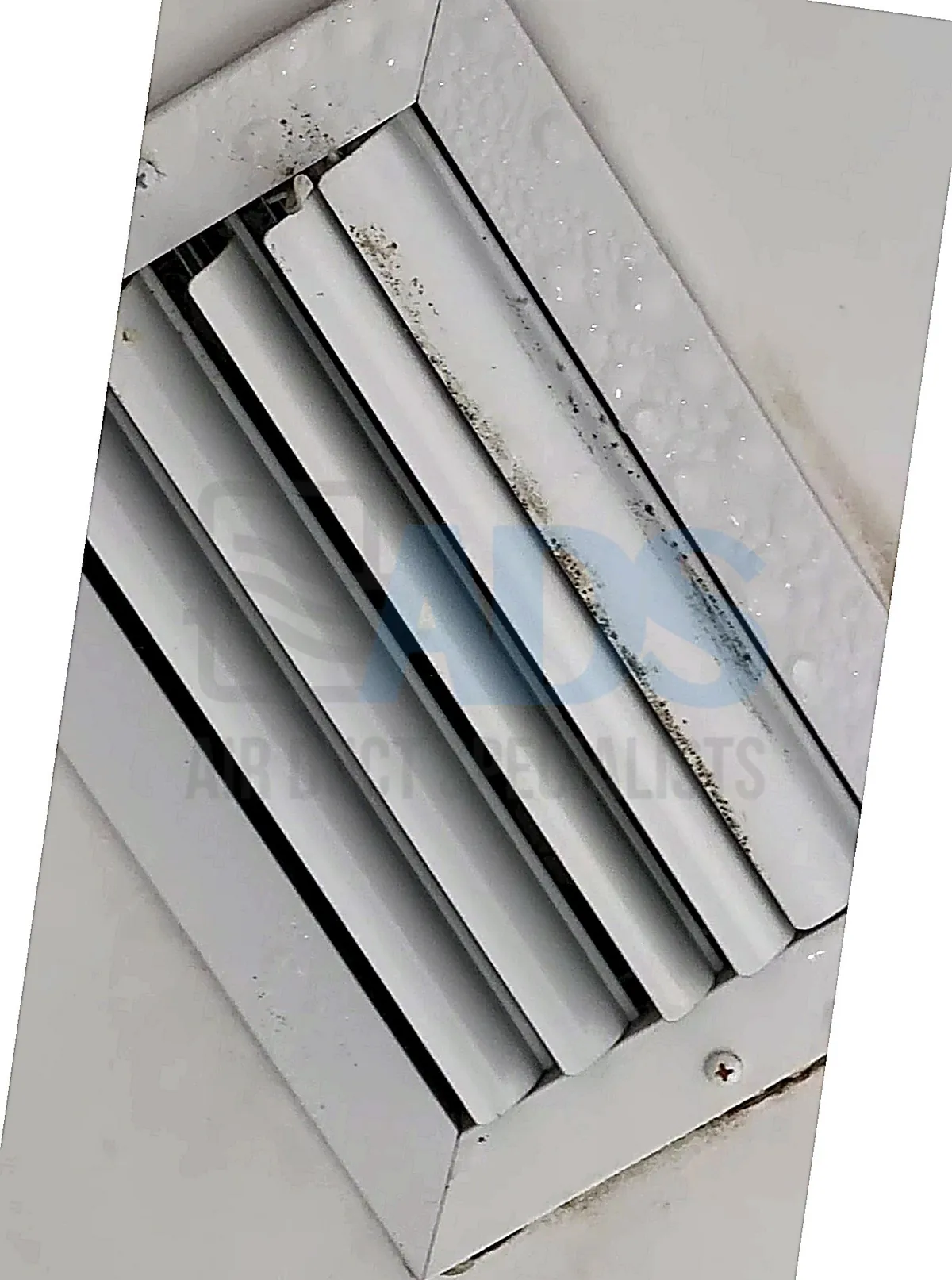
Water beading on your AC registers, drips onto the ceiling, dark streaks along the vent blades — it's one of the most common calls we get on Pinecrest estates every summer. Here's exactly what's happening, why it's worse in South Florida than almost anywhere else, and how we stop it permanently.
Almost every "my vent is leaking water" call turns out to be condensation, not a plumbing or refrigerant leak. The metal face of your supply register is cold — it's carrying air straight off the evaporator coil. When warm, humid indoor air touches that cold surface, the moisture in the air condenses into water droplets, exactly the way a glass of iced tea sweats on a Pinecrest porch in July. The vent isn't broken. The air around it is simply humid enough, and the metal cold enough, for water to form on contact.
The technical term is the dew point — the temperature at which air becomes saturated and has to give up its moisture. When the surface temperature of your register drops below the dew point of the room air, water forms. That's the entire mechanism, and every real fix comes down to changing one side of that equation: making the surface warmer, or making the air drier.
South Florida is one of the hardest climates in the country for this problem. Outdoor dew points sit in the low-to-mid 70s for months, and every time a door opens, that humid air comes inside. In older Pinecrest homes and estates along Old Cutler, you also have high ceilings, long duct runs through hot attics, and rooms that don't all cool evenly — so certain registers run colder than others and become the first place moisture collects. Add salt air near the coast and you have the exact conditions that turn a cold metal grille into a condensation magnet all summer long.
On its own, a little condensation isn't an emergency. The danger is what it leads to if it's ignored. Dripping water stains drywall and ceilings, loosens paint, and — most importantly — keeps the register and surrounding surface constantly damp. That moisture is what feeds mildew, which is the dark streaking you can see forming along the vent blades in the photo above. Once mold takes hold on and around the grille, cleaning it only helps until the next humid week, because the moisture source is still there. Fixing the condensation is the only thing that keeps it from coming back.
We'll diagnose whether it's a simple register swap or a bigger humidity or duct-insulation issue — and fix the cause, not just the symptom. Serving Miami-Dade, Broward & Palm Beach. Free estimates. 300+ five-star reviews.
📞 (305) 885-9911 — Miami-Dade 📞 (954) 302-1550 — Broward 📞 (561) 331-6777 — Palm BeachWhen we get a sweating-vent call, one of these five is almost always behind it. The fix depends entirely on which one you have, which is why diagnosing before replacing anything matters.
Metal conducts cold extremely well, so the grille face on a metal register drops right down to supply-air temperature — often well below the room's dew point. If only one or two registers sweat and the rest of the house is fine, this is usually the whole story — and once we confirm it, the correction is quick.
The metal boot behind the register connects the flex duct to the ceiling opening. If that boot and the surrounding duct aren't wrapped in enough insulation, cold bleeds through to the drywall and the register frame, and condensation forms — sometimes inside the ceiling cavity where you can't see it until a stain appears. In South Florida attics we want at least R-6, and R-8 is the safer standard — correcting that is the heart of proper duct sealing & repair.
If the whole house feels sticky and several vents sweat at once, the problem isn't the vents — it's the moisture load in the air. Indoor humidity should sit below about 55–60%. Above that, the dew point rises high enough that even reasonably insulated surfaces start collecting water. Causes range from an oversized AC that short-cycles without dehumidifying, to duct leaks pulling in humid attic air, to a home that simply isn't sealed well.
Running the setpoint aggressively cold makes the supply air — and every metal surface it touches — colder, which pushes register temperatures further below the dew point. On vacant homes and second properties, nudging the setpoint up a few degrees keeps the air less aggressively cold and often stops borderline sweating on its own, while still keeping humidity in check.
Occasionally the register itself dumps cold air directly onto an adjacent ceiling or wall surface, chilling that spot below the dew point and sweating the drywall instead of the vent. Adjusting the throw or the register style corrects it.
Here's the difference between a patch and a permanent fix. A patch dries the vent today; a permanent fix removes the reason it was sweating. Depending on what we find, the repair is one or more of the following:
On a recent high-value Pinecrest home, the fix combined several of these at once — upgrading the flex ducts from R-6 to R-8 so less cold reached the boots, correcting the worst registers, and setting the thermostat where the two independent systems could each dehumidify their half of the house. The result: dry registers through the peak of summer, with no recurring mildew to clean off the blades.
If one register sweats and the rest of the house is comfortable, it's almost always a local issue — a cold metal grille or an under-insulated boot — and the fix is quick. If several vents sweat at the same time, or the house feels damp, treat it as a whole-house humidity or duct problem and don't waste money swapping grilles one at a time. That single distinction saves homeowners the most money, and it's the first thing we check when we arrive.
Usually not — it's condensation, not a burst pipe. But over a humid South Florida summer the dripping can stain drywall and grow visible mold on and around the register, so it shouldn't be left alone. The sooner the cause is corrected, the less chance of cosmetic damage.
It can. Constant moisture on the register and ceiling gives mildew a place to grow — that's the dark streaking you often see on the vent blades. Fixing the condensation removes the moisture source, which is the real way to keep it from coming back after cleaning.
Condensation depends on humidity. In the humid months the dew point of the indoor air rises above the temperature of your cold metal register, so water forms on it. In the drier, cooler season the indoor dew point drops below the register temperature and the sweating stops on its own.
Sometimes you can influence the cause — keeping indoor humidity down or easing off an aggressively low thermostat setting. But most sweating vents trace back to the register, the boot insulation behind it, or the duct condition, and those need a proper diagnosis to correct the right way. Guessing at it usually just masks the problem until moisture damage shows up in the ceiling. We identify the actual cause first, then fix that one thing.
Address the cause, not the symptom: keep indoor humidity below about 55–60%, make sure the boot behind the register is sealed and wrapped to at least R-6 (R-8 is better in South Florida attics), correct any chronically cold register, and avoid a setpoint colder than the system can dehumidify. We diagnose which of these applies before recommending anything.
Serving Pinecrest and all of Miami-Dade, Broward & Palm Beach. Same-day service often available. Free estimates. 300+ five-star reviews.
📞 (305) 885-9911 — Miami-Dade 📋 Request a Free EstimateDuct Sealing & Repair
Seal leaks, upgrade to R-8, balance static pressure
Attic Insulation
Stop cold bleed and sweating vents at the source
Why Your AC Smells Bad in South Florida
Moisture, mold, and the musty-vent problem
AC Maintenance & Cleaning for the Heat
Coil, blower & duct cleaning before summer
Signs Your AC Needs Repair
When it's more than a humidity issue
AC & Air Duct Service in Pinecrest
Our full service coverage for Pinecrest, FL