★★★★★
350
☰
You already know something's growing in your ducts — the musty smell when the AC kicks on told you that. The real question is what it takes to fix it for good. Here's how a trained tech decides between cleaning, re-insulating, or replacing — and what each one honestly costs.
Coral Gables has some of the oldest — and most beautiful — housing stock in Miami-Dade. From 1920s Mediterranean Revival estates with tile roofs to 1960s ranch homes in the 33134 corridor, these houses carry character you can't build anymore. They also carry ductwork that, in many cases, is decades old: thin R-4/R-6 insulation, joints sealed with tape that's long since dried out, and years of dust settled into every run. Under a tile roof in an attic that hits 130 to 150°F all summer, with South Florida humidity pushing in from outside, that's the exact setup where bacteria in air ducts takes hold.
Here's the question that actually matters: what fixes it? Not every growth problem is the same, and not every home needs the same answer. This guide walks through how our techs decide between cleaning, re-insulation, and full replacement — so when we give you a quote, you understand exactly why.
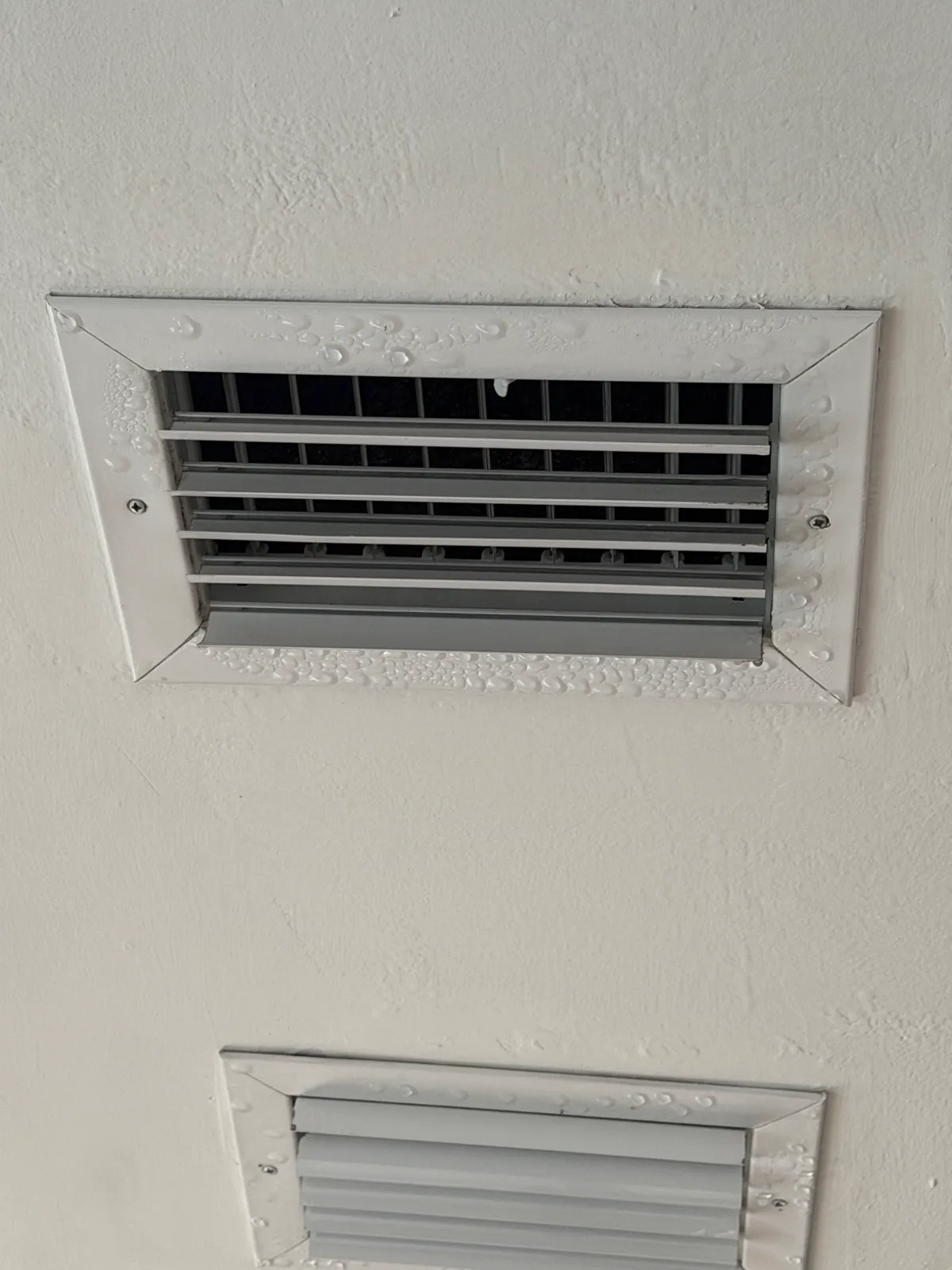
Bacteria and mold need three things: moisture, warmth, and something to eat. An aging duct system in Coral Gables supplies all three at once. Cold air inside the ducts (typically 55–65°F) meets humid attic air, and where the thin old insulation can't stop the temperature difference, condensation forms — the ducts sweat. That moisture soaks into years of accumulated dust — skin cells, pet dander, pollen, landscaping dust — and the colonies start.
The EPA notes that mold can begin colonizing a damp surface in as little as 24 to 48 hours, and bacterial growth moves just as fast. Once it takes hold inside the ducts, every cycle of the AC pushes air across those colonies and distributes spores and bioaerosols through the whole house. That's why the symptoms — musty odor when the system kicks on, allergy-like complaints that linger indoors, discoloration around the vents — show up everywhere, not just near one register.
A real inspection goes inside the system, not just at the vents. Here's what we're looking at in a Coral Gables home — and what each finding means for the fix:
The evaporator coil. The coil stays wet every time the AC runs, and it's usually the biggest breeding spot in the system. If the coil is caked with buildup, it's feeding growth straight into the ducts — and cleaning the ducts without cleaning the coil is a short-lived answer.
The condensate drain pan and drain line. A clogged drain backs water up into the pan and sometimes into the attic. Standing water in a dark, warm enclosure grows things fast — and it's the finding we see most often on older systems.
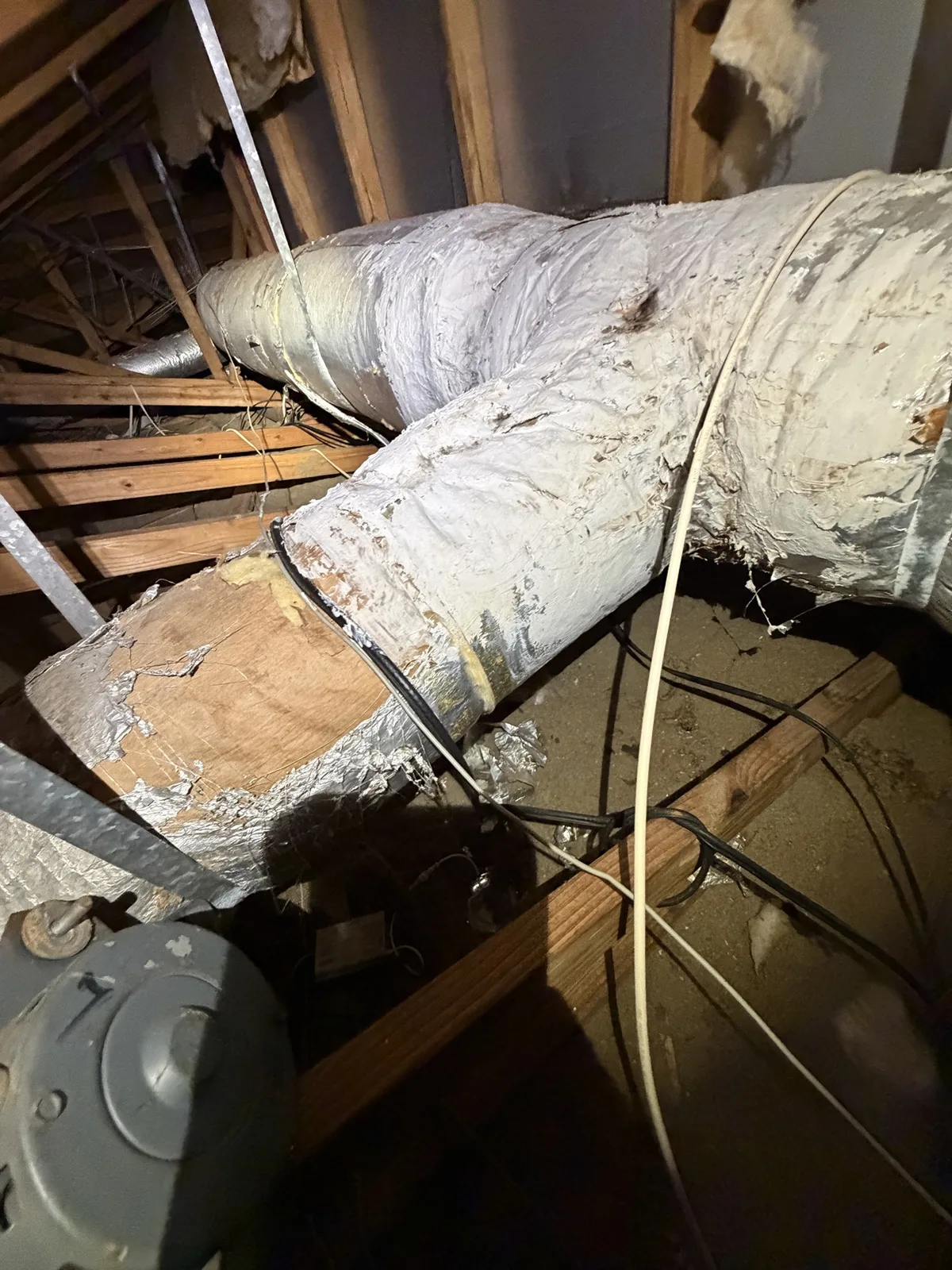
The duct insulation. Pressing the insulation tells the story: brittle, compressed, or water-stained R-4/R-6 insulation has failed. Failed insulation means the ducts sweat, and sweating ducts breed growth. This is the moisture source behind most older-home growth problems.
The liners and joints. Torn liners, crushed runs, and leaking joints pull humid attic air — and attic dust — into the system with every cycle. Minor damage can be repaired; widespread failure means the system can't be saved by cleaning.
Here's the honest breakdown — the same one we walk homeowners through on every estimate:
Cleaning ($200–$500) is right when the ductwork is structurally sound — intact liners, decent insulation, sealed joints — but the system is carrying years of dust and organic buildup feeding the growth. We clean the whole system: supply and return ducts, coil, blower, drain pan, and registers, with before-and-after photos.
Re-insulation (roughly $1,000–$2,700) is right when the ducts themselves are solid but the insulation has failed. This is the most common answer in older Coral Gables homes: bring the duct insulation up to the R-8 standard, seal the joints properly, and the sweating stops. Paired with a full system cleaning, that's the complete fix — the moisture source is gone.
Replacement ($3,500–$9,500 for an average smaller residential home) is right when the ductwork is done — torn liners, crushed runs, insulation failed throughout, joints pulling attic air at every turn. Cleaning can't restore a system that's falling apart; re-insulating damaged ducts is throwing money at the wrong problem. When replacement is the answer, we'll show you exactly why with photos.
Let's be straight: ignoring bacterial growth in your ducts doesn't buy you time, it buys you a bigger bill. Moisture spreads, colonies expand, and the system keeps circulating spores through the house with every cycle. Long-term moisture also degrades the ducts themselves — liners break down, insulation fails faster, metal components corrode in the salt air that drifts into Coral Gables from the coast.
The practical math: a cleaning plus re-insulation job today can become a full replacement job a year or two from now if the moisture keeps working. It's always cheaper to fix it early — and the free inspection costs you nothing but the phone call.
Once the ducts are fixed, keeping them that way is straightforward:
For reference, and exactly what we'll quote you in writing on-site: air duct cleaning runs $200 to $500 residential. Re-insulating ducts with failed insulation is roughly $1,000 to $2,700. And a full duct replacement for an average smaller residential home typically runs $3,500 to $9,500, varying on home sizing, layout, and materials required. No hidden fees, no upsells, same price for everyone — and we'll put the number in writing before any work starts.
Air Duct Specialists LLC serves Coral Gables and all of Miami-Dade, Broward, and Palm Beach. Free on-site estimates, same-day service, licensed & insured. Florida license CAC1825166. 350 five-star Google reviews.
📞 (305) 885-9911 — Miami-Dade 📞 (954) 302-1550 — Broward 📞 (561) 331-6777 — Palm BeachCan air duct cleaning get rid of bacteria?
Professional cleaning removes the dust, debris, and organic material bacteria feed on — which makes a real difference. But if the moisture source — sweating vents, failed insulation, a clogged drain — isn't fixed at the same time, growth comes back. Cleaning without fixing the moisture is a temporary answer.
How do I know if my ducts need cleaning or full replacement?
A free on-site inspection tells you honestly. Cleaning works when the ductwork is structurally sound — intact liners, decent insulation, sealed joints. Replacement is the right call when ducts are torn, crushed, or the insulation has failed throughout, because cleaning can't restore a system that's falling apart. We'll show you photos and explain which one you actually need.
Is re-insulating ducts enough to stop bacterial growth?
Often, yes — if the ductwork itself is sound. Growth needs moisture, and in older Coral Gables homes the moisture usually comes from sweating ducts with failed R-4/R-6 insulation. Bringing the insulation up to the R-8 standard stops the sweating, and sealing the joints keeps humid attic air out. Paired with a full system cleaning, that's the complete fix for many homes.
Why do older Coral Gables homes get bacteria in their air ducts?
Age plus climate. Many Coral Gables homes — from 1920s Mediterranean Revival estates to 1960s ranch homes — still carry original or decades-old ductwork under tile roofs, in attics that hit 130 to 150°F. Thin, aged insulation sweats in South Florida humidity, and every damp spot becomes a breeding ground for bacteria and mold.
How much does it cost to fix bacteria in air ducts in Coral Gables?
It depends on the fix. Air duct cleaning runs $200 to $500 residential; re-insulating ducts with failed insulation is roughly $1,000 to $2,700; and a full duct replacement for an average smaller residential home typically runs $3,500 to $9,500, varying on home sizing, layout, and materials required. The estimate is free, and what we quote is what you pay.
What happens if I ignore bacteria growing in my air ducts?
It doesn't stay small. Moisture spreads, colonies expand, and the system keeps circulating spores and bioaerosols through the house with every cycle. Long-term moisture also damages the ducts themselves — liners degrade, insulation fails faster — turning a cleaning job into a replacement job. It's always cheaper to fix it early.