★★★★★
350
☰
Musty start-up smells, dust that comes back in days, and air that feels stale in a closed-up Stuart home usually trace back to the ducts, the coil, and humidity. Here's what a trained tech checks — and what actually fixes it.
Indoor air quality in Stuart, FL is a humidity story first. Homes in Sewall's Point, Port Salerno, and along the St. Lucie River breathe river and ocean air all year — and many Stuart ranch homes were built long before anyone sealed a house the way we do now. When the air inside feels stale, smells musty at start-up, or leaves dust on the furniture days after cleaning, the cause is usually inside the system that moves that air.
This guide covers what a trained technician checks that a quick look misses: where dust and moisture collect, why seasonal homes that sit closed come back to a musty house, what actually improves the air — cleaning, coil care, sealing, and humidity control — and what is just marketing.
Homeowners describe it a few ways: a musty smell when the AC kicks on, dust that returns too fast, a house that feels clammy even when it is cool, or bedrooms that never smell fresh. Those are different symptoms with a shared short list of causes. Dust and debris built up inside ductwork get recirculated every cycle. A dirty evaporator coil holds moisture and odor. Leaking ducts pull hot, humid, dusty attic air into the system and push it into your rooms. And a home closed up for weeks at a time — common for seasonal Stuart residents — lets humidity sit with no drying cycles at all.
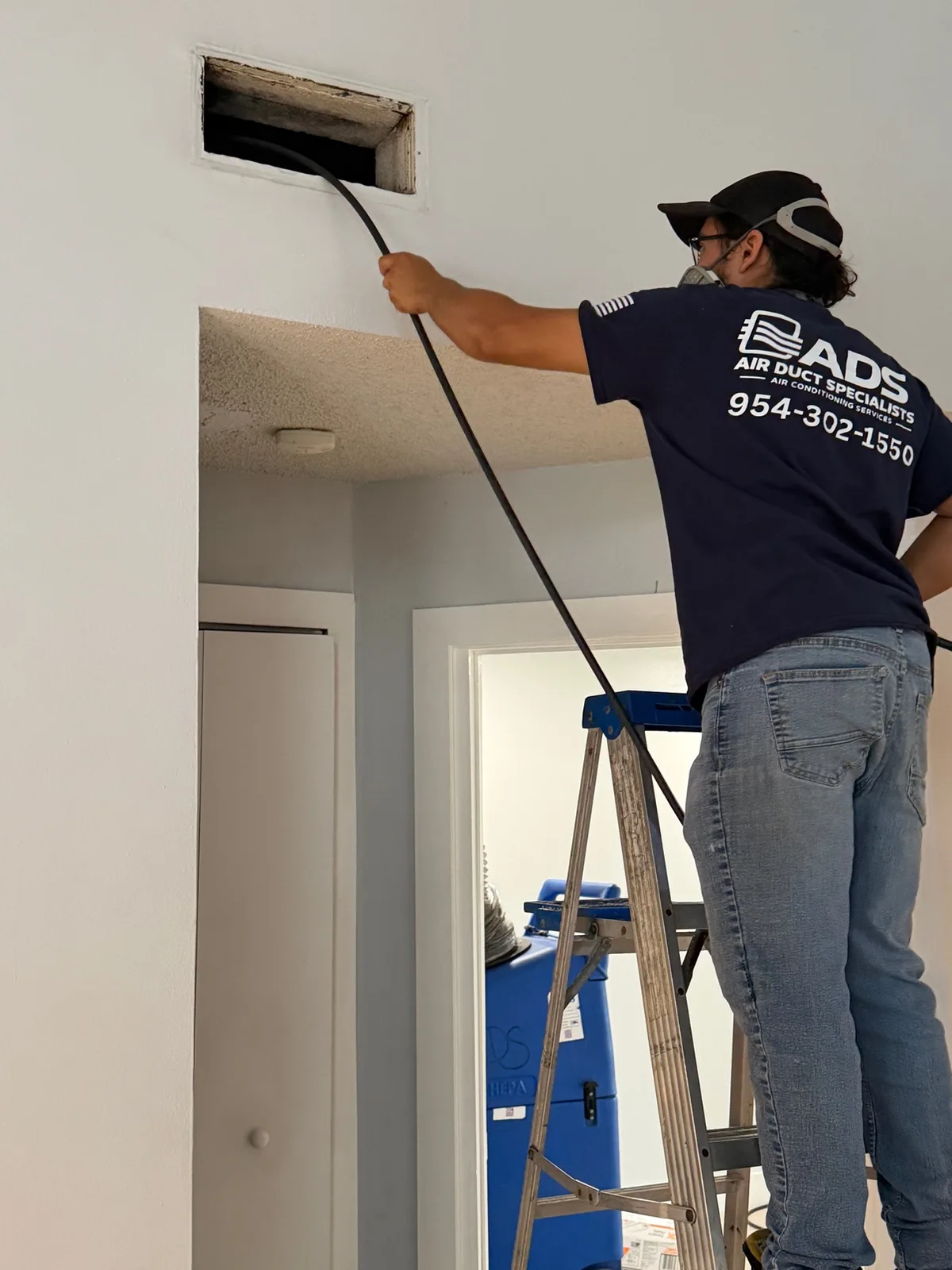
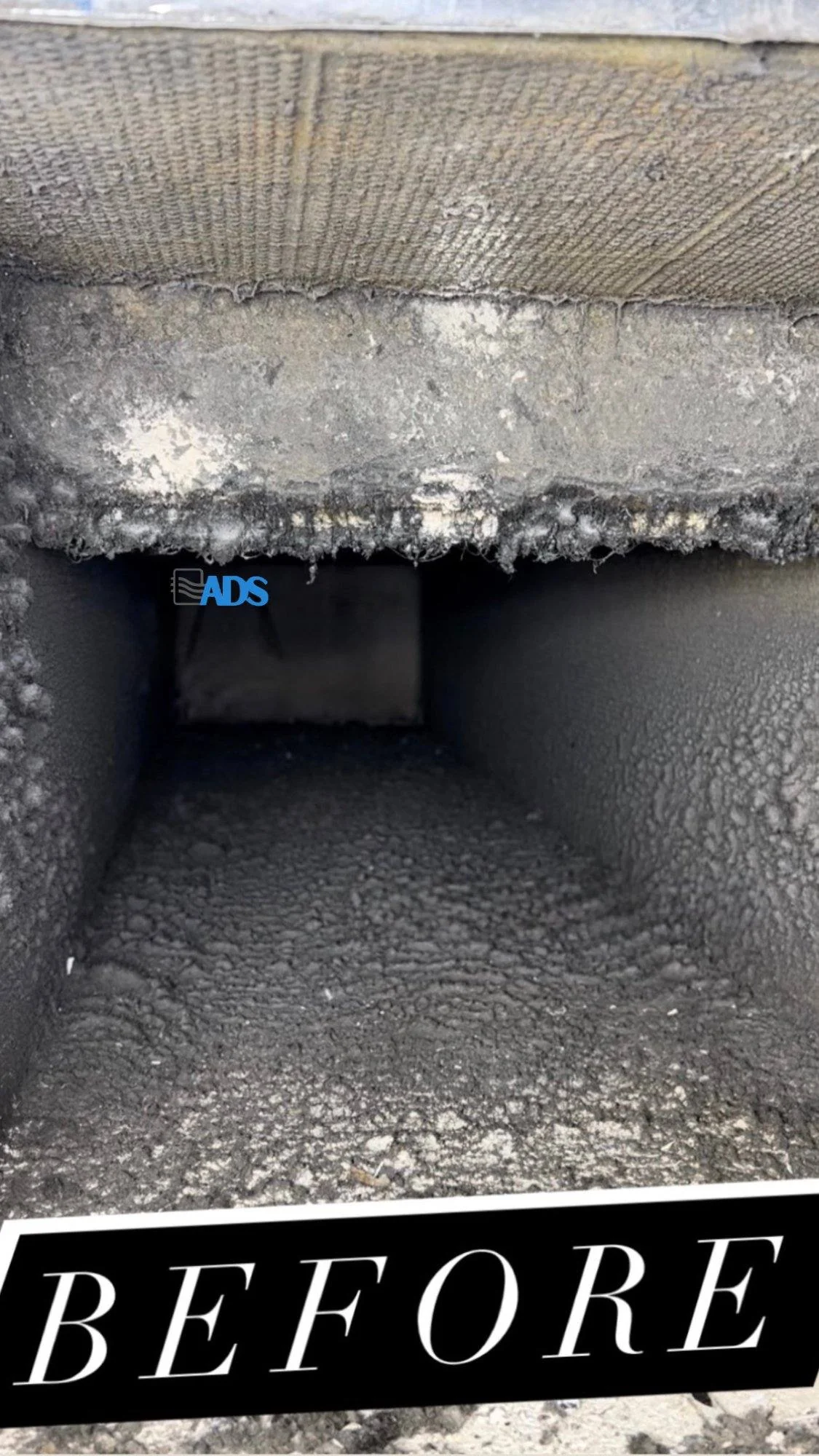
The untrained eye sees a dirty vent cover. The trained eye follows the air: returns, filter, coil, drain, and the duct runs themselves, with photos at each step so you can see what we see.
Start with the filter: if it is gray and loaded, replace it and note the date — Stuart systems run hard, and filters load faster than the box suggests. Look at the return grille: heavy fuzz there means the system has been breathing dusty air. Run the system and stand at a supply vent at start-up — a musty first minute that clears is different from an odor that lasts the whole cycle, and that detail helps us. Finally, check humidity: if the house feels sticky at 74 degrees, the system is cooling without drying, and air quality will suffer until that is fixed.
What works is source removal and moisture control. A real duct cleaning removes the buildup with professional equipment and HEPA collection, not a shop vacuum at one register. Coil cleaning restores the surface that dehumidifies your air. Sealing duct leaks stops attic air from entering the stream. And a system maintained well enough to run proper drying cycles keeps indoor humidity where growth and odors struggle.
What does not work: scented sprays, foggers, and vent covers with fragrance. They mask odor for a day while the moisture and buildup stay exactly where they were. We will tell you honestly when a cleaning is not needed — if your ducts are clean, photos will show that too, and no upselling, ever, is the rule.
Every home is different, so there is no single number that fits every property. Cost depends on the size of the home, the number of systems and vents, the condition of the ducts and coil, attic access, and whether leaks or moisture problems need repair alongside cleaning — a compact ranch and a waterfront home in Sewall's Point are not the same job.
Call for a free estimate and an exact price before any work starts. What we quote is what you pay — no hidden fees.
Air Duct Specialists LLC inspects and cleans duct systems across Stuart and Martin County — ranch homes, riverfront homes, and seasonal homes. Licensed CAC1825166. Fully insured. Same-day service, 7 days a week, 7am–11pm. 350 five-star reviews.
📞 (561) 331-6777 — Palm BeachWhat affects indoor air quality most in a Stuart home?
Humidity is the big one. When indoor air stays damp, dust and buildup inside the ductwork and on the coil hold moisture, odors linger, and the air feels stale even at the right temperature. Leaking ducts, a dirty coil, an overdue filter, and dust loaded into the returns all add to it — which is why we look at the whole system, not just one part.
Why does my Stuart home smell musty when the AC starts?
A musty start-up odor usually means moisture and buildup somewhere in the system — often on the evaporator coil, in the drain pan, or in ductwork that has collected dust over years of coastal humidity. Cleaning the source and fixing the moisture problem is what stops the smell; covering it up with scent does not.
Can duct cleaning improve indoor air quality?
It helps when the ducts are actually loaded with dust and debris, which we show you with photos before recommending anything. Cleaning removes what is circulating. It works best paired with a clean coil, a good filter, sealed leaks, and humidity under control — otherwise the buildup simply comes back.
How often should Stuart homes have their air checked?
Homes that sit closed for part of the year, homes near the river or ocean, and homes with pets or recent renovations benefit from a yearly look. Year-round homes with no odor, dust, or allergy complaints can go longer between cleanings — the condition of the system, not a calendar, should drive it.
What can I do myself to improve indoor air quality?
Change the filter on schedule, keep supply and return vents unblocked, run bathroom exhaust fans during showers, and keep the thermostat set so the system runs long enough to dry the air. Vacuum returns and registers when dust builds up on them — heavy buildup there is also a sign it is time for a professional look inside.
How much does indoor air quality work cost in Stuart?
Every home is different, so there is no single number that fits. Cost depends on the size of the home, the number of systems, the condition of the ducts and coil, and whether leaks or moisture problems need repair as well as cleaning. Call for a free estimate and an exact price before any work starts. What we quote is what you pay.
Are you licensed and insured?
Yes — Air Duct Specialists LLC is a licensed Florida air conditioning contractor, license CAC1825166, and fully insured. Our own certified technicians do the work — never subcontractors. You can verify the license through the Florida DBPR.