★★★★★
350
☰
Ripped and torn air ducts are one of the most common — and most quietly expensive — problems we find in South Florida attics. Here is what they do to your comfort, how to spot them, and when repair is enough versus when replacement is the honest answer.
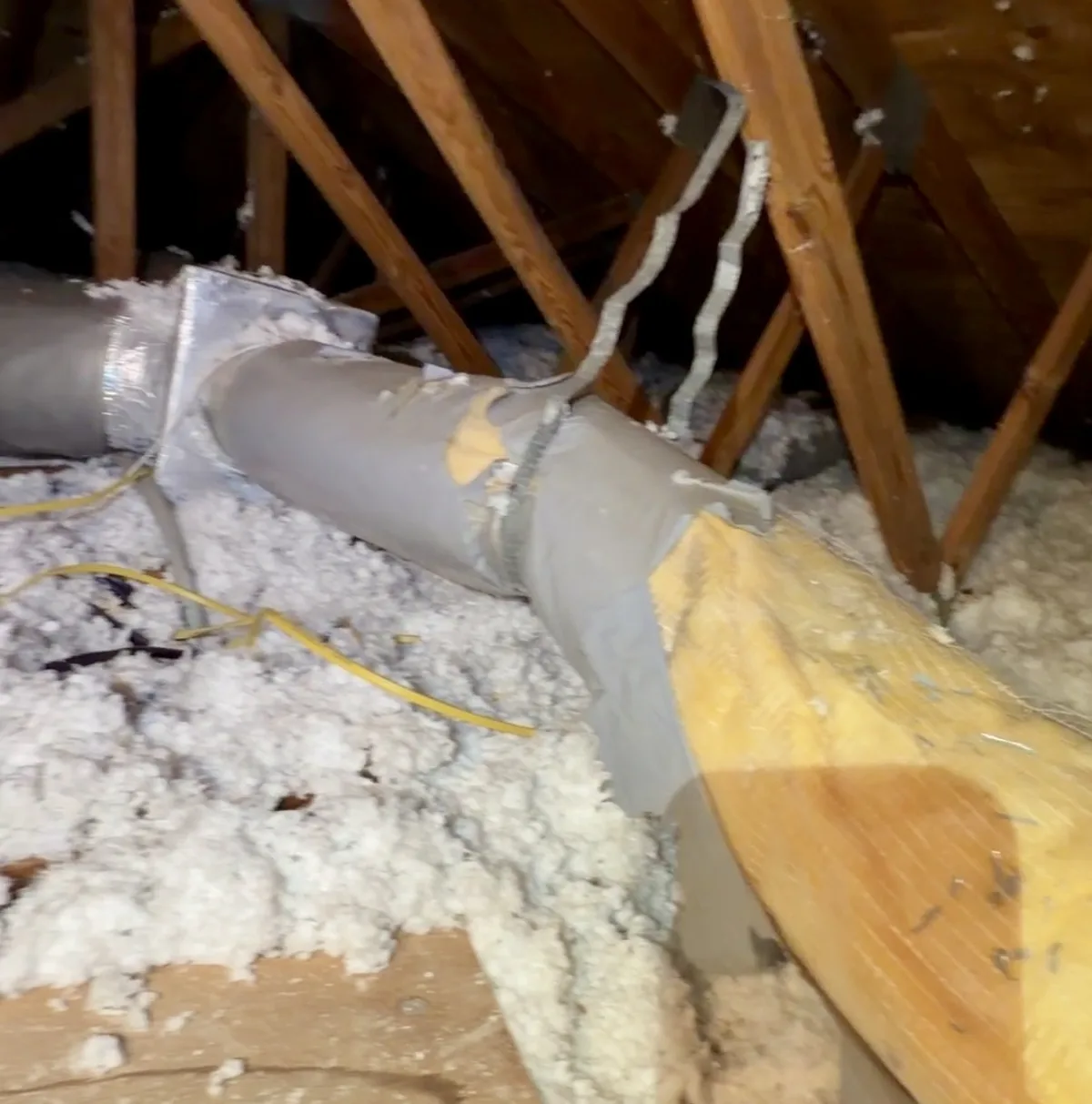
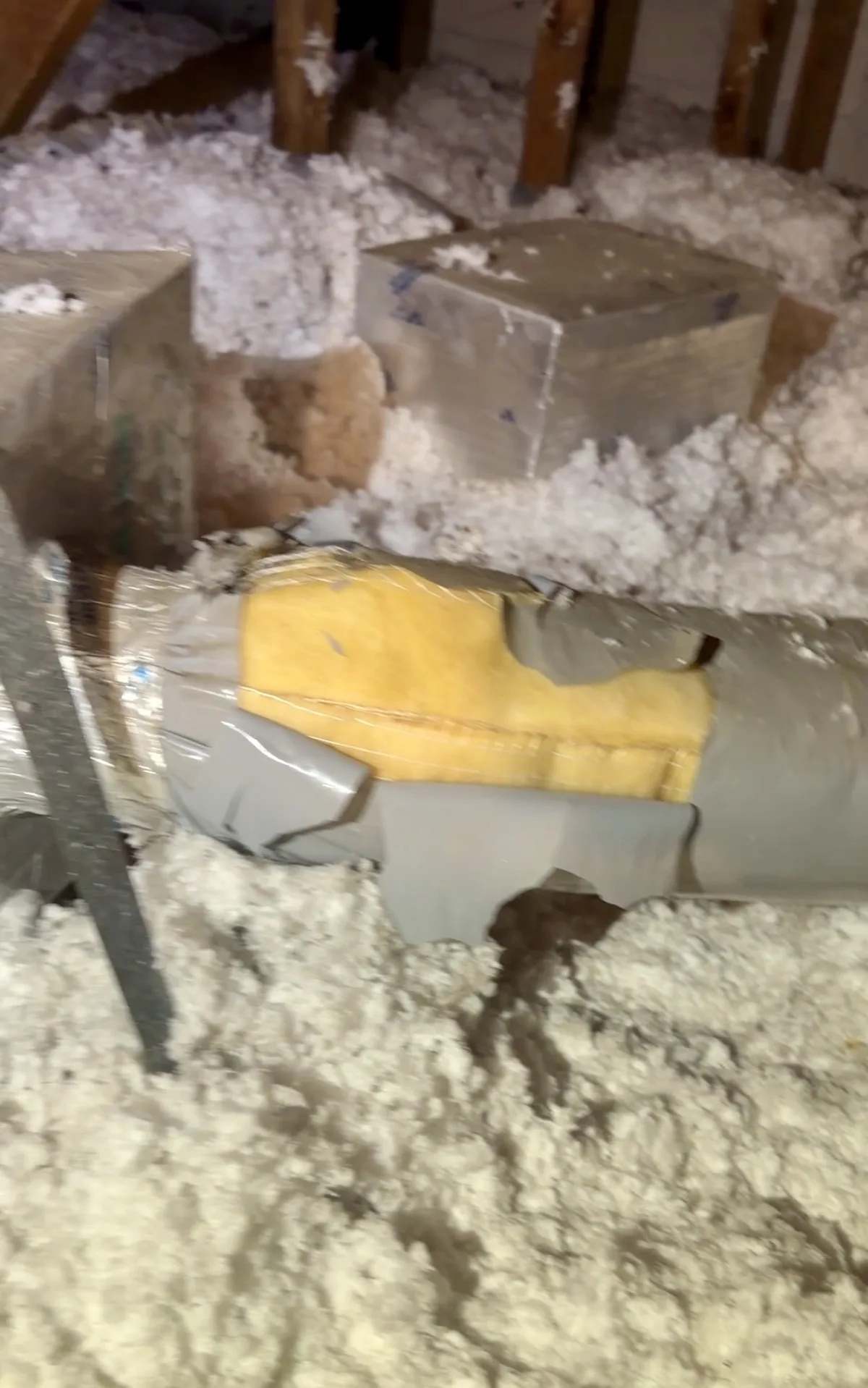
Much of Plantation's housing stock went up in the 1970s through the 1990s — comfortable, well-kept homes whose original flex ductwork is now 25 to 50 years old and sitting in attics that hit 130–150°F all summer. We see it constantly on 33317 jobs: you walk into an attic expecting aging but serviceable ducts, and instead you find torn air ducts with the jacket split clean through, insulation exposed, conditioned air pouring straight into the attic instead of the rooms it was meant for. The homeowner downstairs has been blaming the AC unit for years — weak airflow in the bedrooms, one room that never cools, an electric bill that keeps climbing — while the real problem was hiding above the ceiling the whole time.
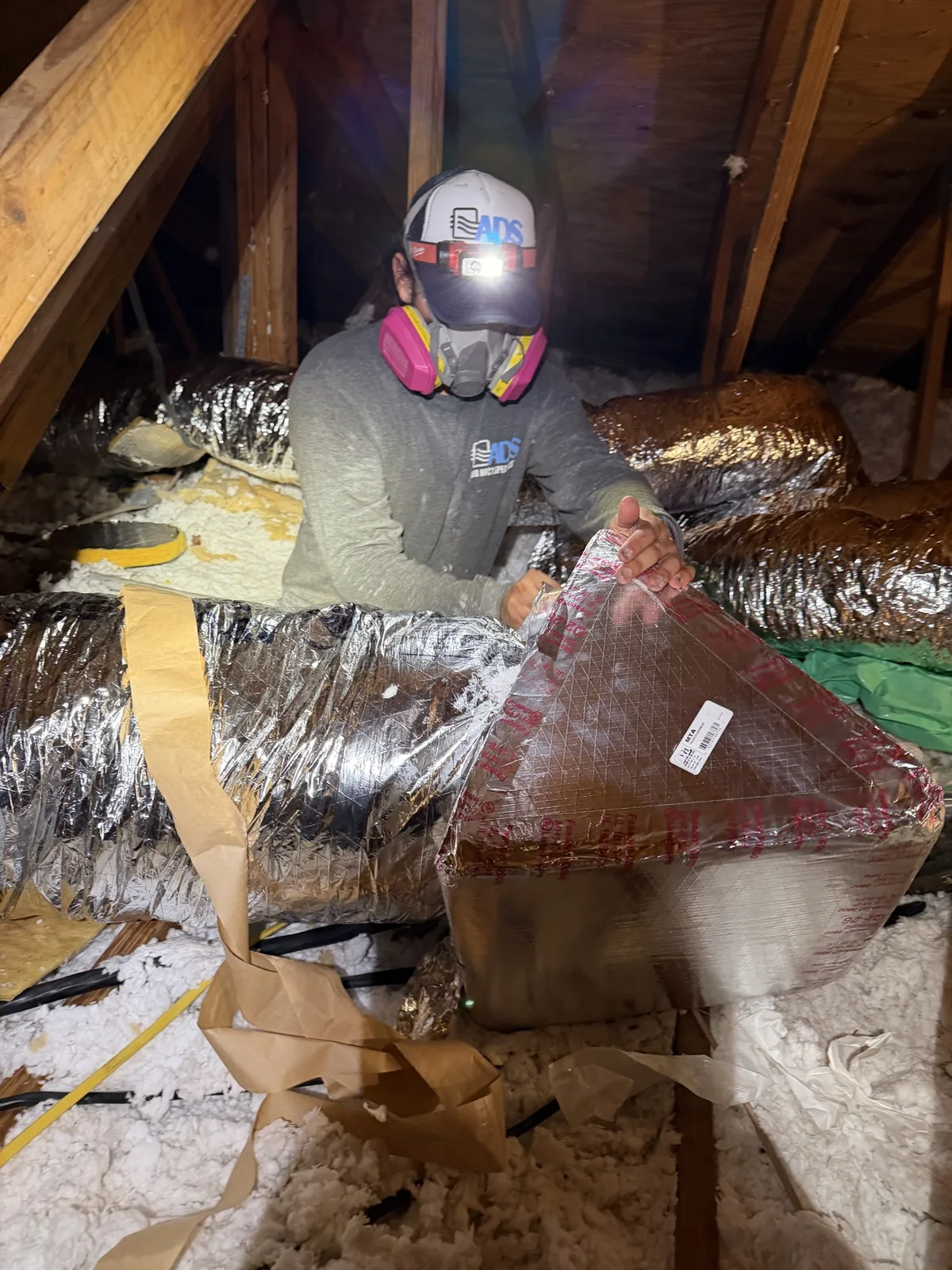
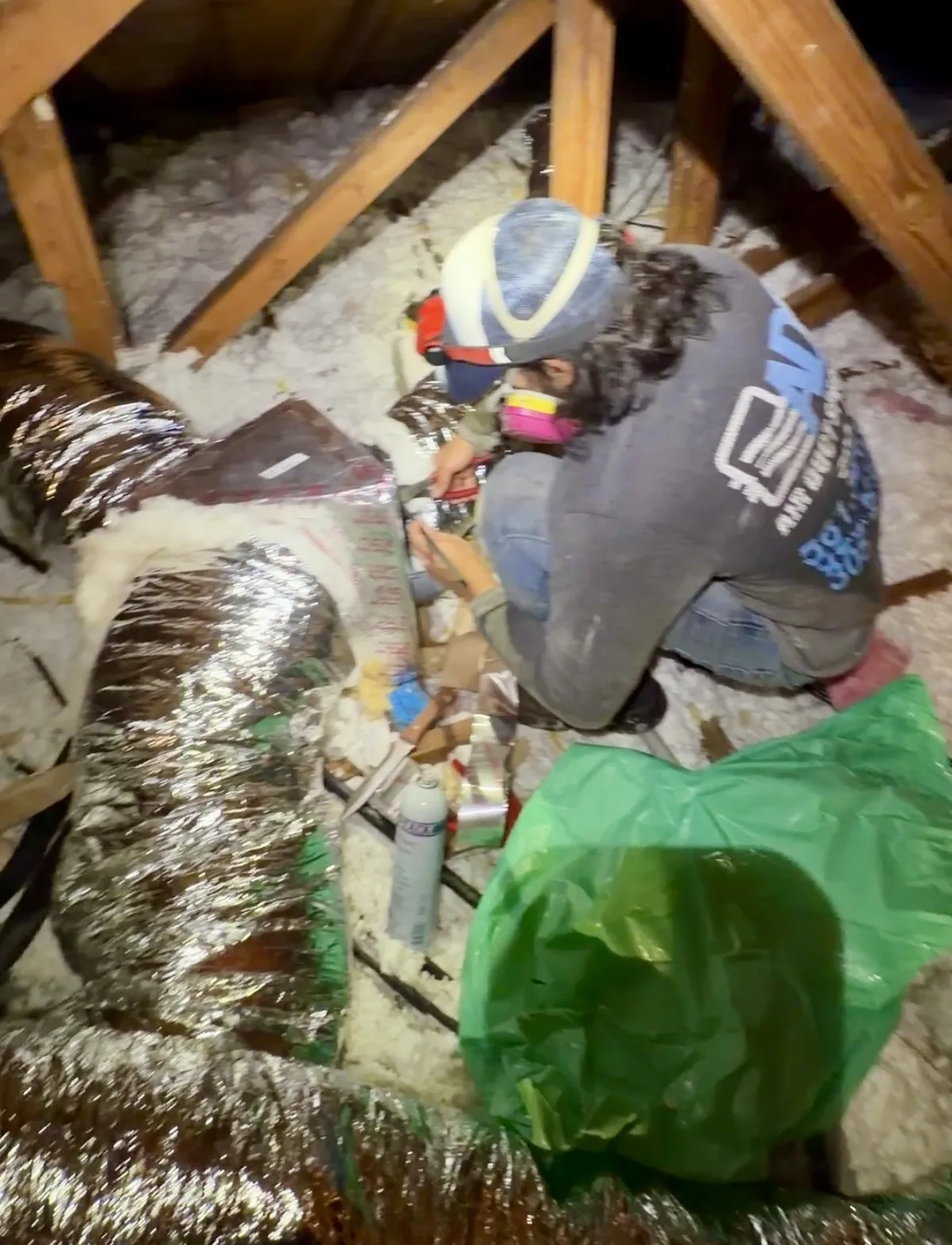
This is exactly what we found on a recent Plantation installation: the home's old ducts were completely ripped, with tears along multiple runs and insulation hanging open. The fix was a full duct replacement with new, properly hung and sealed ductwork. This guide covers how to recognize torn ducts in your own home, why they cause the symptoms they cause, and how to tell whether a repair will do — or whether replacement is the move that actually pays off.
Your duct system is supposed to be a sealed path: cold air leaves the air handler, travels through insulated runs, and arrives at your registers at nearly the same temperature. A tear breaks that contract in two ways at once. First, the cooled air escapes through the opening before it reaches the room — you are paying to air-condition your attic. Second, the tear lets hot, humid attic air be drawn into the system, which means the air that does reach your vents is warmer and wetter than it should be.
The knock-on effects are what homeowners actually feel. Airflow drops at the end of the damaged run, so one or two rooms never cool properly. The system runs longer to compensate, which shows up on the FPL bill. And the exposed duct surface, stripped of its insulation, meets that 140°F humid attic air and sweats — condensation beads on the duct, drips onto drywall, and stains ceilings. We have seen tears alone cause every one of those symptoms: weak vents, hot rooms, sweaty registers, and water marks on the ceiling.
Flex duct is tough stuff when it is new, but it has enemies. Age is the biggest one: the outer jacket and insulation on ductwork from the '70s, '80s, and '90s dry out, become brittle, and split — often right along the seams. Heat accelerates it; a South Florida attic bakes the material for a decade or more. Pests chew through jackets to nest in the soft insulation. Foot traffic matters too — anyone who has had an attic work party with plumbers, electricians, or cable installers walking on the ducts has probably put a foot through a run without knowing it. And original bad installs show up here as well: ducts hung with too much tension, routed around sharp corners, or laid directly on hot roof decking will fail years before their time.
The common thread is that the damage accumulates silently. A duct doesn't have to be severed in half to cost you money — a six-inch tear in the jacket exposes the insulation, and exposed insulation stops insulating. From there it's a slow leak in your energy bill every single day.
You rarely need to climb into the attic to suspect torn ductwork. These are the symptoms we hear most from Plantation homeowners before we ever open the hatch:
A few things you can check safely on your own. Hold your hand up to each vent and compare — a dramatically weak register points to its specific run. Walk the rooms and note which ones run warm; a pattern (one wing, the second floor, the far end of the house) tells a story about which duct serves them. Look up at the ceiling around your registers and along the attic hatch for water stains, discoloration, or bubbling paint — those marks often sit directly below a sweating or torn duct. And check your filter and the air handler itself; if the equipment looks fine but the rooms don't, the problem is usually in the ducts in between.
What we don't recommend is attic surgery yourself. Summer attics in Plantation hit 140°F+, and stepping on a duct or a ceiling joist can turn a small tear into a big one — or put you through the drywall. An inspection by a licensed tech takes under an hour and tells you exactly which runs are torn and how bad they are.
Not every torn duct needs to be ripped out and replaced — and we'd rather tell you that than sell you what you don't need. A single small tear in otherwise healthy ductwork, or a connection that pulled loose at the boot, can often be sealed and re-insulated with good results. If the rest of the system is sound, a targeted repair is the right call and we'll say so.
But there's a point where repair becomes wishful thinking. On that Plantation job, the old ducts were torn across multiple runs with insulation exposed — patching three or four sections of a 30-year-old system would have cost real money without fixing the underlying deterioration, and the homeowner would be paying for the remaining air leaks every month. When the ductwork is old, torn in several places, or sagging and disconnected at the joints, full replacement is the honest recommendation: new, properly sized, hung, and sealed ductwork with insulation that meets current code. That's the job we did here, and it's the kind of job that drops the electric bill and ends the sweaty-vent problem in one visit.
Straight numbers. Targeted repairs and duct re-insulation typically run roughly $1,000–$2,700 depending on how many runs are affected and how accessible the attic is. Full duct replacement for a home typically falls between $3,500 and $9,500 for an average smaller residential home, varying on home sizing, layout, and materials required. The reason we publish ranges instead of a flat number is that every attic is different — the only way to know your exact number is an on-site look.
What we do promise is this: free estimates, no hidden fees, and no upselling — ever. What we quote is what you pay, same price for everyone. If a repair will genuinely solve it, that's what we'll recommend. If replacement is the only fix that makes sense, we'll show you exactly why.
Air Duct Specialists LLC inspects, repairs, and replaces torn ductwork in Plantation and throughout Broward County. Licensed CAC1825166. Fully insured. Certified techs — never subcontractors. 350 five-star reviews.
📞 (954) 302-1550 — BrowardHow do I know if my air ducts are torn?
The telltale signs are weak airflow at one or more vents, rooms that never cool like the rest of the house, sweating vents or ceiling moisture near duct runs, and an electric bill that keeps climbing without a change in usage. A technician confirms it with an attic inspection — torn flex duct with exposed insulation is visible once you get up there.
Can torn air ducts be repaired, or do they need full replacement?
A single small tear or a loose connection can often be sealed or repaired. But when the duct jacket is shredded, the insulation is exposed across long runs, or several sections are torn, repair becomes a patch on a failing system — full replacement is the honest answer. An on-site inspection determines which one your ducts need.
Why do torn ducts make vents sweat?
Torn insulation lets cold duct surfaces meet hot, humid South Florida attic air. That temperature collision causes condensation — the same way a cold glass sweats on a humid day. The sweating can drip onto ceilings, stain drywall, and feed mold. Sealed, properly insulated ductwork stops it.
How much does it cost to fix torn air ducts in Plantation?
Small repairs and re-insulation typically run roughly $1,000 to $2,700, while full duct replacement for a home typically falls between $3,500 and $9,500 for an average smaller residential home, varying on home sizing, layout, and materials required. Air Duct Specialists provides a free on-site estimate for exact pricing — what we quote is what you pay.
Are you licensed to do duct work in Broward County?
Yes. Air Duct Specialists LLC is a licensed Florida air conditioning contractor, license CAC1825166, and fully insured. We serve Plantation and all of Broward County seven days a week, 7am to 11pm, with same-day service.