★★★★★
350
☰
Drips from your vents on the floor or staining the ceiling? In Fort Lauderdale's waterfront humidity, it's almost always condensation — and the fix depends on why the vent is colder than the air around it. Here's what we check on every one of these calls.
If your home sits anywhere near the water in Fort Lauderdale — Harbor Beach, Coral Ridge, the isles along the Intracoastal — you've probably seen it: water beading on an air vent, then running down and pooling on the tile or leaving a ring on the drywall ceiling. On a humid summer afternoon in the 33316, it's one of the most common things our phones ring about. The good news is the explanation is simple physics, not a haunted air conditioner. The important part is knowing what that physics is telling you about your ductwork — because water dripping from air vents is sometimes a ten-minute fix and sometimes the first visible warning that your ducts need real attention.
This guide covers what water dripping from air vents actually means in a Fort Lauderdale home, the five causes we find most often, what you can safely check yourself, and how to tell whether you're looking at a simple repair or a case for re-insulation or full duct replacement.
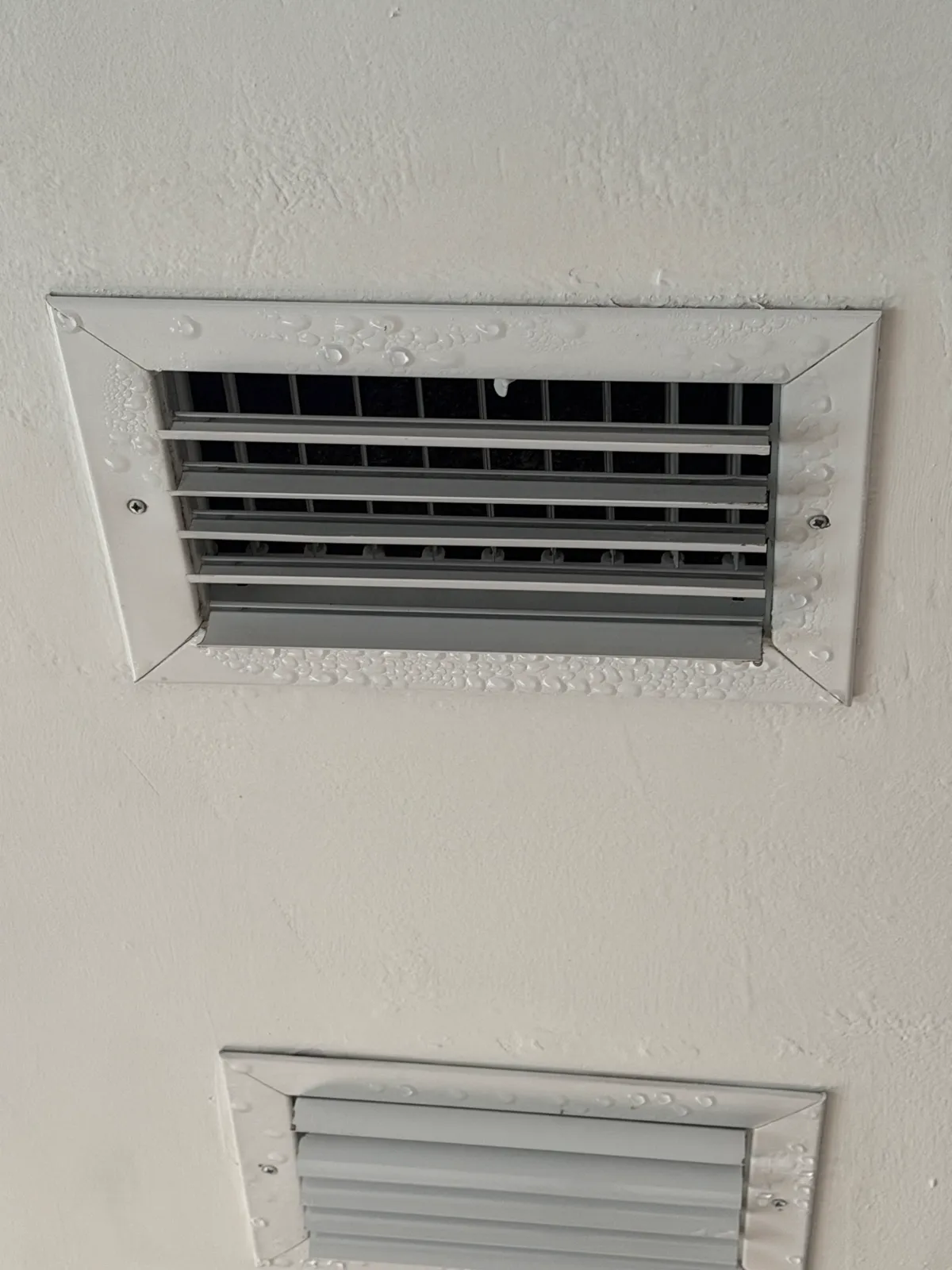
Condensation forms whenever a surface drops below the dew point of the air touching it. In Fort Lauderdale, summer dew points sit in the mid-to-high 70s — the air is practically saturated. Your AC sends supply air through the ducts somewhere in the mid-50s, which makes the vent registers and the duct boots behind them some of the coldest surfaces in your house. When that cold metal meets that saturated air, water beads up exactly like it does on a cold glass of water. That much is normal.
What's not normal is actual dripping — water running off the vent onto the floor, or soaking into the ceiling around it. Dripping means condensation is forming faster than it can evaporate, and the vent or duct surface is staying cold and wet for hours at a time. Every summer we trace this back to the same handful of causes in Fort Lauderdale homes, and waterfront properties in Harbor Beach and Coral Ridge see it more than most because the outdoor air is so relentlessly humid and so many homes have older duct runs above the ceiling.
The water is not coming out of the duct. It's coming out of the air around it — the duct and vent are just the coldest thing in the room.
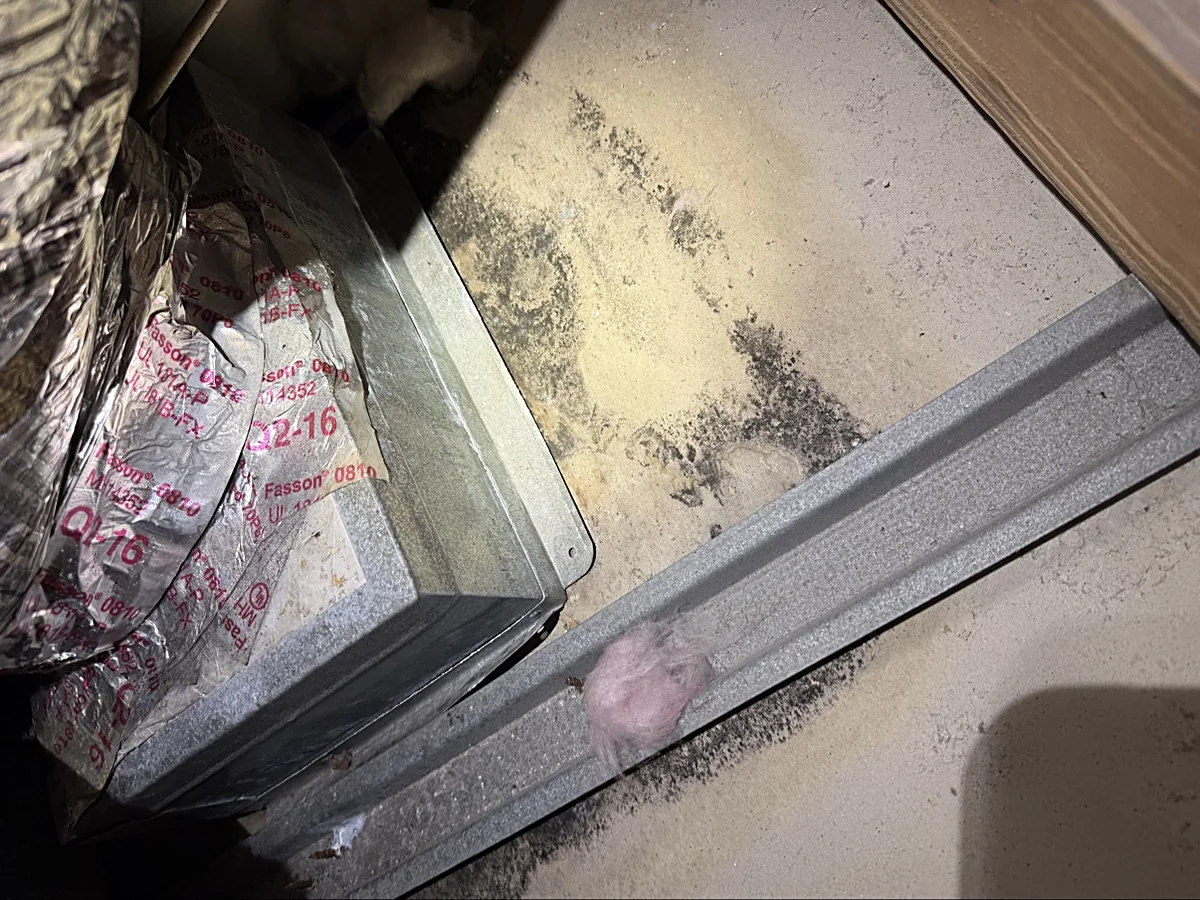
1. Torn or missing duct insulation in the attic. This is the big one. The flexible ducts in many Fort Lauderdale attics were installed decades ago with older, thinner insulation, and years of 130–150°F attic heat break it down. When the insulation tears, collapses, or was never installed on a section, the cold duct surface sits exposed to hot, humid attic air — and it sweats so heavily that water runs down and drips off the vent boot inside the room.
2. Air leaks at the duct boot or connections. A loose vent boot, a connection that was sealed with aging duct tape instead of mastic, or a joint that's pulled apart lets cold supply air leak directly onto the back of the register. The localized cold spot concentrates condensation right at the vent, so the drip starts exactly where you see it. Properly sealed connections stop the leak and the dripping along with it.
3. Thermostat set very low with the fan running. Homes set at 68–70°F with the fan running constantly keep vent surfaces at their coldest while pushing maximum airflow — the ideal recipe for condensation. In waterfront homes, where people tend to run the system hard against the heat, this combination alone can cause dripping even when the ducts are in decent shape.
4. Restricted airflow — dirty filter, blocked returns, closed registers. When airflow is choked, the supply air gets even colder than normal and the vent temperature drops further below the dew point. A filter that's months overdue, furniture blocking a return, or half the registers closed off for rooms nobody uses can all trigger dripping from vents that were perfectly fine last season.
5. A clogged condensate drain backing up. This is the one that isn't condensation at all. Your AC wrings gallons of water out of the air every day, and it all leaves through a small drain line. When that line clogs — algae, sludge, debris — water backs up, overflows the drain pan, and can leak through the ceiling near the air handler. If the water seems to come from inside the ceiling rather than off the vent surface itself, the drain line is suspect number one.
A couple of drops on the most humid afternoon of the year is a nuisance. Steady dripping is a problem that gets more expensive the longer it runs. Here's what it does to a Fort Lauderdale home over weeks and months:
Ceiling drywall damage. Water dripping or soaking through around a vent boot softens and stains the drywall. The dark spotting you see on the ceiling is moisture that's been sitting there — and drywall that stays damp eventually has to be cut out and replaced, not just repainted.
Mold conditions. Constant moisture plus dust plus a dark space above the ceiling is exactly what mold needs. We see mold establish itself on the back of vent boots, on drywall around leaking vents, and on duct insulation that's stayed wet — all in homes where the dripping "didn't seem that bad" for a season or two.
Ruined duct insulation. Fiberglass insulation that soaks through and stays wet loses its ability to insulate. Soaked sections collapse against the duct, which makes the condensation worse, which soaks more insulation — a loop that only goes one direction. Once insulation is saturated, patching it isn't an option; it has to be replaced.
Wasted energy. Sweating ducts are ducts losing their thermal barrier. Cold air that should be reaching your rooms is being warmed in a wet, poorly insulated run — your system runs longer and your electric bill reflects it.
If the dripping stops after those checks, you've likely bought yourself time. If it keeps coming back — or if you see ceiling staining — the cause is in the ductwork, and that's a job for someone who can get into the attic and see it.
Here's the honest breakdown, because not every dripping vent means new ducts. Sometimes the fix is genuinely simple: a duct boot re-sealed with mastic, a collapsed insulation section replaced, a drain line cleared. We fix those for what they are — no upselling, ever. But some situations don't have a cheap answer:
Re-insulation makes sense when the ducts themselves are structurally sound — the inner liner is intact — but the outer insulation is degraded, torn, or missing in sections. Stripping off the failed insulation and wrapping the runs in fresh, properly sealed insulation restores the thermal barrier and stops the sweating at its source. Many older Fort Lauderdale homes with original ductwork from the 80s and 90s fall into this category.
Full replacement is the right call when the ducts are done: insulation soaked through, inner liner torn or collapsed, disconnected runs, or 25+ year-old R-4 ductwork that can't hold modern insulation. Water and mold inside a duct run is a sign the run has failed as a system — patching one wet section while the rest keeps degrading is throwing money at a lost cause. A new R-8 duct system, properly hung, sealed, and insulated, ends the condensation problem for good and cuts the system's energy waste at the same time.
Which category your home falls into is something we determine in person, up in the attic, looking at the actual ducts. That's the only way anyone can honestly tell you — so be wary of any quote given sight-unseen over the phone.
Straight numbers, the way we'd quote them on site. A professional air duct cleaning runs $200–$500 for a residential home. Duct re-insulation typically falls in the $1,000–$2,700 range, depending on how much ductwork is involved. Full duct replacement generally runs $1,500–$7,000, depending on home size, the number of runs, and system complexity.
Those are honest ranges, not bait. The exact number for your home comes from a free on-site estimate — and what we quote is what you pay, with no hidden fees and no upselling. For a dripping-vent problem, the estimate starts with diagnosing the actual cause, so you're never paying for duct replacement when a repair would do.
Air Duct Specialists LLC serves Harbor Beach, Coral Ridge, Victoria Park, and all of Fort Lauderdale and Broward County. Free estimates · Same-day service · Licensed CAC1825166 · 350 five-star reviews.
📞 (954) 302-1550 — Broward 📞 (305) 885-9911 — Miami-Dade 📞 (561) 331-6777 — Palm BeachIs water dripping from air vents common in Harbor Beach and other Fort Lauderdale waterfront homes?
Yes. Waterfront homes in Harbor Beach (33316), Coral Ridge, and Victoria Park sit in some of the most humid air in Broward County — summer dew points routinely reach the high 70s. That combination of saturated outdoor air and cold supply air makes vent condensation one of the most common calls we run in Fort Lauderdale every summer.
Is it dangerous when water drips from an air vent?
A few drops on a very humid day is usually a nuisance, not an emergency. But steady dripping can stain and soften ceiling drywall, saturate duct insulation, and create conditions for mold around the vent and in the duct boot. If the dripping continues for more than a day or two, or you see staining, get it checked before the repair bill grows.
Does dripping from vents mean I need new ductwork?
Not necessarily. Sometimes the fix is simple — a thermostat setting, a dirty filter, or a disconnected duct connection that just needs sealing. When the insulation on the ducts is torn, collapsed, or soaked through, re-insulation or full duct replacement is the honest fix. We diagnose the actual cause on-site and tell you which category you're in before quoting anything.
Can I just wipe up the water and ignore it?
Wiping treats the symptom, not the cause — the same conditions will make water form again tomorrow. If dripping keeps returning, the underlying problem — usually insulation or airflow related — keeps getting more expensive to fix as ceiling and duct damage spreads.
What's the difference between condensation dripping and an AC drain problem?
Condensation dripping forms on the outside of the vent or duct boot where warm, humid air meets cold metal — you see water beading on the vent itself. A clogged condensate drain backs up and overflows at the air handler or leaks through the ceiling near the unit. Both need fixing, but the fixes are different, which is why an on-site diagnosis matters.
Are you licensed and insured to work in Fort Lauderdale?
Yes — Air Duct Specialists LLC is a licensed Florida air conditioning contractor, license CAC1825166, and fully insured. We serve Fort Lauderdale and all of Broward County seven days a week, 7am to 11pm, with free estimates.