★★★★★
350
☰
Water beading on your ceiling vents is not a plumbing leak — it's a moisture-control problem, and waterfront homes in 33146 get hit hardest. Here's what's actually causing it and what fixes it for good.
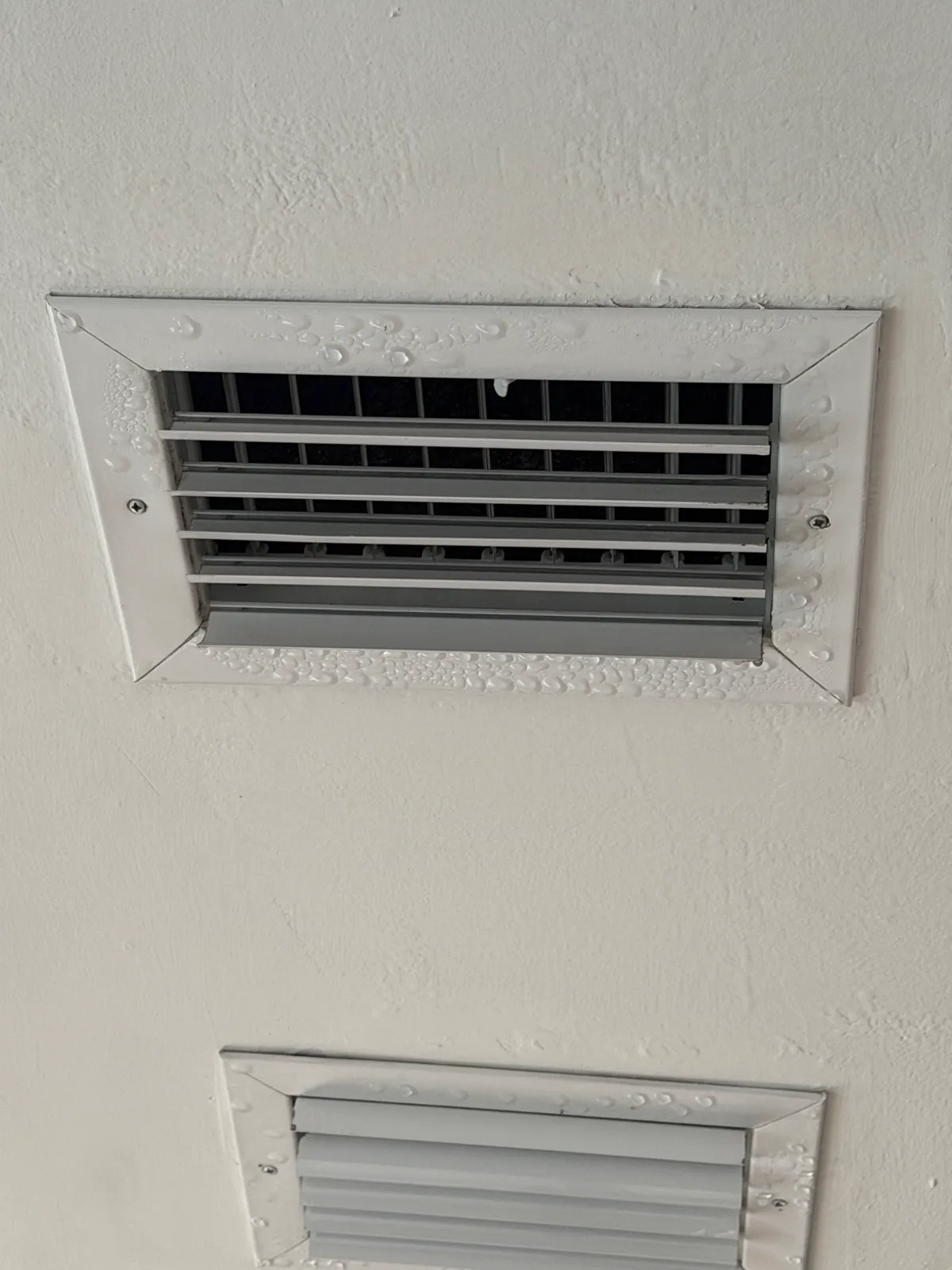
If you live in Gables by the Sea, around Snapper Creek, or along Old Cutler Road, you've probably seen it: water beading on a ceiling vent, a faint ring in the paint around a register, or an actual drip on a humid afternoon. Sweating air vents in Coral Gables, FL homes are one of the most common calls we get from the 33146 zip. The vent isn't leaking, and nothing is wrong with your plumbing. What's failing is moisture control: humid air is reaching cold surfaces it was never supposed to touch, and in a waterfront zip surrounded by Biscayne Bay, canals, and lakes, that humid air never takes a day off.
Think of a glass of iced tea on a patio table in August. The water on the outside didn't leak through — it condensed out of the air. When air touches a surface colder than its dew point, its moisture lands on that surface. Your supply air leaves the system at around 55°F, making the metal vent register — and the duct boot hidden above it — some of the coldest surfaces in your house.
South Florida summer dew points run 65 to 75°F, so almost any AC-cooled surface exposed to untreated air collects water. Here, insulation and sealed joints are the only things standing between your cold ducts and that wet air. When either fails, the vent sweats — and the vent is just where you see it. The problem is almost always upstream.
Failed or thin duct insulation. Many 33146 homes still run on original R-4 or R-6 ductwork from decades ago. Insulation that has torn, compressed, slipped, or gotten wet leaves the cold duct surface exposed to 130–150°F attic air — below its dew point. The duct sweats in the attic, and the water migrates down to the ceiling.
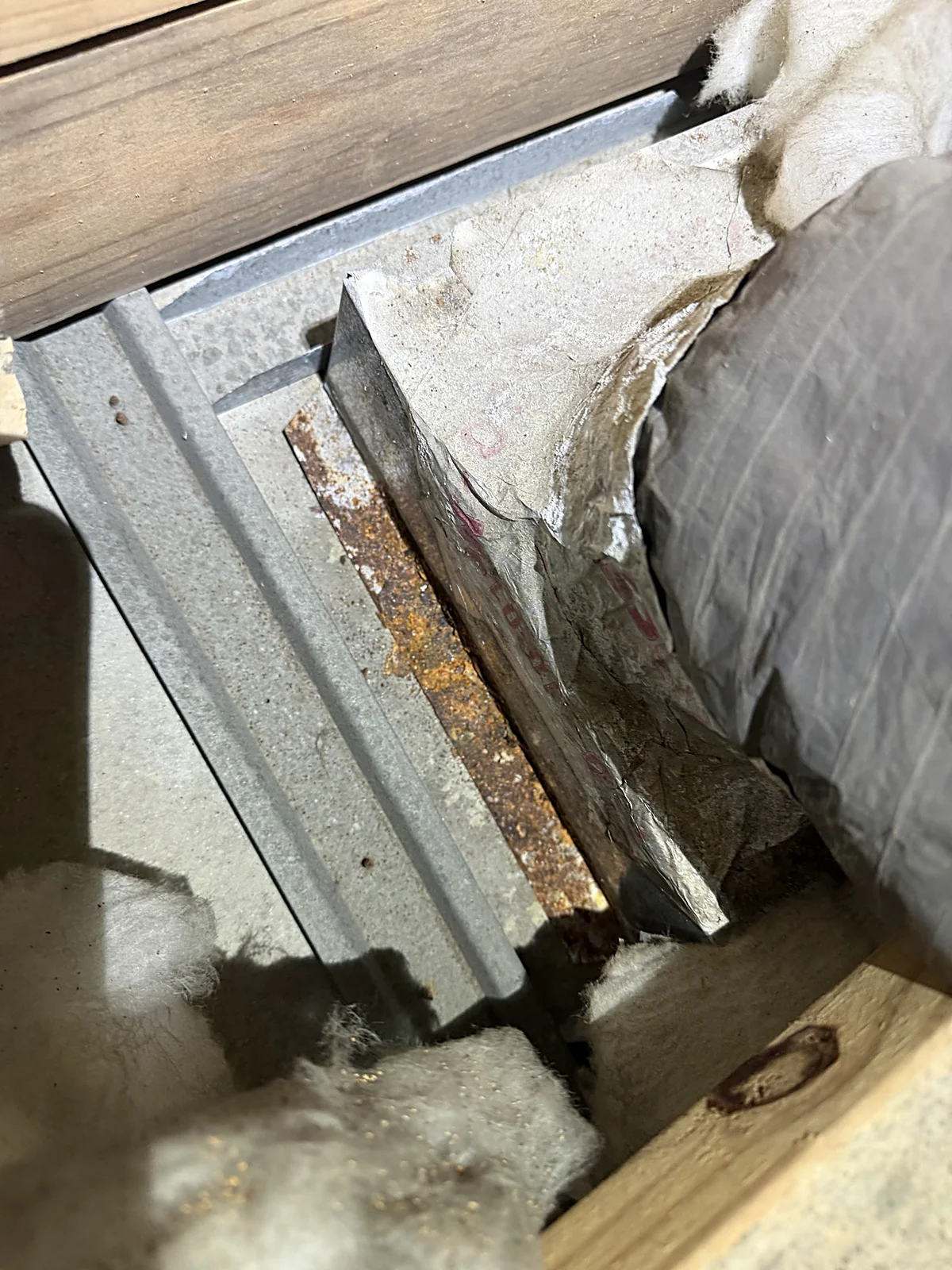
Leaking joints and unsealed register boots. The boot is the metal box connecting your duct to the ceiling vent, and in many older installs it was slipped over the register with no real seal. Humid attic air gets pulled right to that cold metal — the most common cause of the ring stain around a vent. Return-side leaks are just as bad: they drag attic air into the system, loading the home with humidity.
An AC system that short-cycles. An oversized system cools fast, satisfies the thermostat, and shuts off — but dehumidification needs long run times, as moisture condenses on the coil. Short cycles leave the house cold and clammy, with indoor humidity above 60% — and every vent becomes a candidate for sweating.
Restricted airflow. Clogged filters, dirty coils, and too many closed registers starve the system. Less air across the coil means colder supply air and colder duct surfaces, which drop below the dew point more easily. That's why we check static pressure and airflow on every sweating-vent call, not just insulation. And in 33146 the margin for error is smaller than inland: between the bay, the canals, and sliders opening to patios and pools all day, the moisture load never lets up.
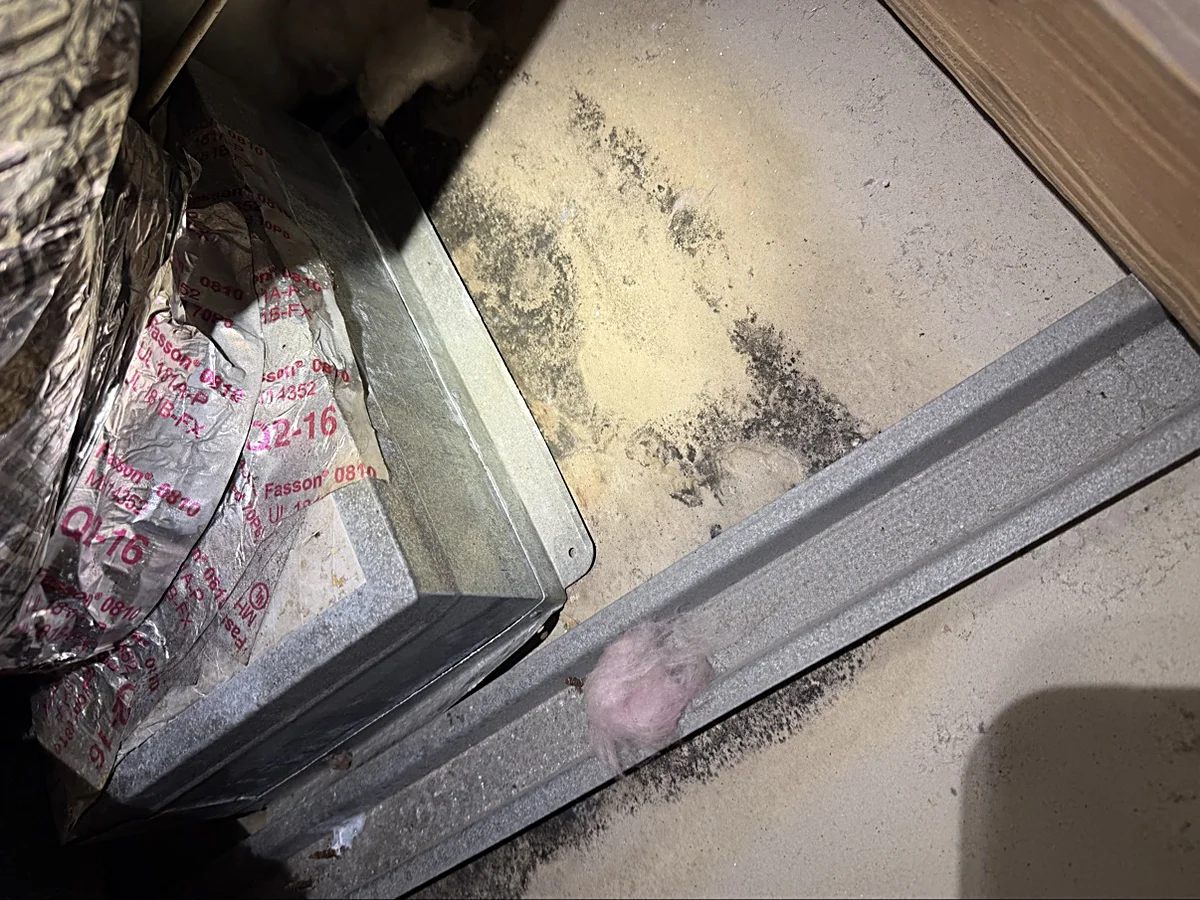
Sweating vents rarely stay cosmetic. Water forming at the same spot daily soaks the ceiling drywall around the register, leaving the dark spotting and shadow rings many Gables homeowners first blame on a roof leak. Above the ceiling, constant moisture oxidizes and rusts metal duct boots until they crumble. Wet insulation loses its insulating value — which makes the sweating worse, in a loop — and damp insulation and drywall are where that musty smell at startup comes from.
There's an energy cost too: every leak pulling humid attic air into your system is work you're paying FPL for.
Every fix starts with diagnosis, because the right repair depends on which cause — or combination — your home has. Our techs inspect the duct insulation, check the seal at every register boot and joint, and measure airflow, static pressure, and indoor humidity. Then the fix is matched to the finding: leaking joints and boots are sealed to UL 181M code standards with UL 181M-rated duct sealant, so humid attic air can no longer reach cold metal; failed insulation is reinsulated so duct surfaces stay above the dew point even in a 150°F attic; airflow restrictions are corrected so supply temperatures and humidity come back into line.
And here's the honest part, because it's our brand: sometimes one boot reseal and a section of reinsulation fixes one vent, and that's all you need. But when insulation has failed across an entire original system, patching it run by run is money spent twice — replacing the deteriorated ductwork is the real answer, and we'll tell you so, with before-and-after photos either way. On multi-system estate homes, we map which system serves which zone first, so the work targets the equipment actually causing the problem. Most single-system fixes are completed in a day; larger multi-system homes can take longer — your free estimate includes the timeline.
It depends on what's causing the sweating, and before seeing the attic, nobody honest will guess. The factors are: how many vents and systems are affected; whether the fix is sealing joints and boots plus spot reinsulation, or reinsulating or replacing longer duct runs; attic access; and the size of the home and number of systems. Every home is different — call for a free estimate and an exact price before any work starts. What we quote is what you pay. No hidden fees, and no upselling — ever.
Air Duct Specialists LLC diagnoses and fixes sweating ducts across Coral Gables and Miami-Dade — sealing, reinsulation, and duct replacement done right the first time. Free estimates, same-day service, 7 days a week, 7am–11pm. Licensed CAC1825166. Fully insured. 350 five-star reviews.
📞 (305) 885-9911 — Miami-DadeWhy are my air vents sweating in my Coral Gables home?
Humid air is touching a surface colder than its dew point. Supply air leaves your system around 55°F, so the register and duct boot are among the coldest surfaces in the house, and South Florida dew points run 65 to 75°F. The usual culprits: failed or thin duct insulation, unsealed boots and joints, and a short-cycling system that never runs long enough to dehumidify.
Is a sweating air vent dangerous?
Not an emergency, but not something to ignore. Daily moisture soaks ceiling drywall, leaves spotting around registers, rusts duct boots, and keeps insulation damp — and wet insulation stops insulating and can support growth. Fixing the cause early is far cheaper than repairing ceilings.
Will a dehumidifier alone stop my vents from sweating?
It helps when high indoor humidity is the main problem — keeping indoor humidity below 60%, ideally 45 to 55%, gives cold surfaces more margin. But it can't fix failed duct insulation or an unsealed boot above the ceiling, where humid attic air reaches cold metal regardless. Most waterfront homes need the duct-side fix; some need both.
Why do vents sweat more in 33146 than in inland neighborhoods?
The 33146 side of Coral Gables — Gables by the Sea, Snapper Creek, the Old Cutler corridor — sits between Biscayne Bay and a network of canals and lakes, which keeps dew points high more of the year. Add older homes with original R-4 or R-6 duct insulation that has aged, torn, or compressed, and cold duct surfaces meet wet air far more often than inland.
How much does it cost to fix sweating air vents in Coral Gables?
It depends on the cause. Factors include how many vents and systems are affected, whether the fix is sealing plus spot reinsulation or replacing longer duct runs, attic access, and home size. Every home is different — call for a free estimate and an exact price before any work starts. What we quote is what you pay.