★★★★★
350
☰
A sweating vent in South Miami is not just a damp register. It is moisture getting where it should not be — and in a South Florida attic, moisture plus dust plus darkness is exactly how bacterial growth starts inside your ductwork. Here is what is really happening, and why fixing it now costs far less than fixing it later.
If you live in South Miami — around Sunset Drive, the neighborhoods off Red Road, or the older ranch homes near Dante Fascell Park — you know the pattern. The AC runs hard all summer, the house feels cool, and then one afternoon you notice it: beads of water on a vent, a damp ring on the ceiling around a register, maybe a faint musty smell when the system kicks on. Most homeowners wipe it off and move on. That is the mistake. In South Miami's humidity, a sweating vent is almost never just surface condensation. It is a sign that moisture is collecting inside a system designed to stay dry — and a damp, dark duct full of dust is where bacterial growth gets its start.
This guide covers why sweating air vents happen in South Miami homes, how condensation turns into a bacterial problem, the checks you can do yourself, and the honest range of fixes — from a simple sealing job to full duct replacement — with real South Florida pricing and no upselling.
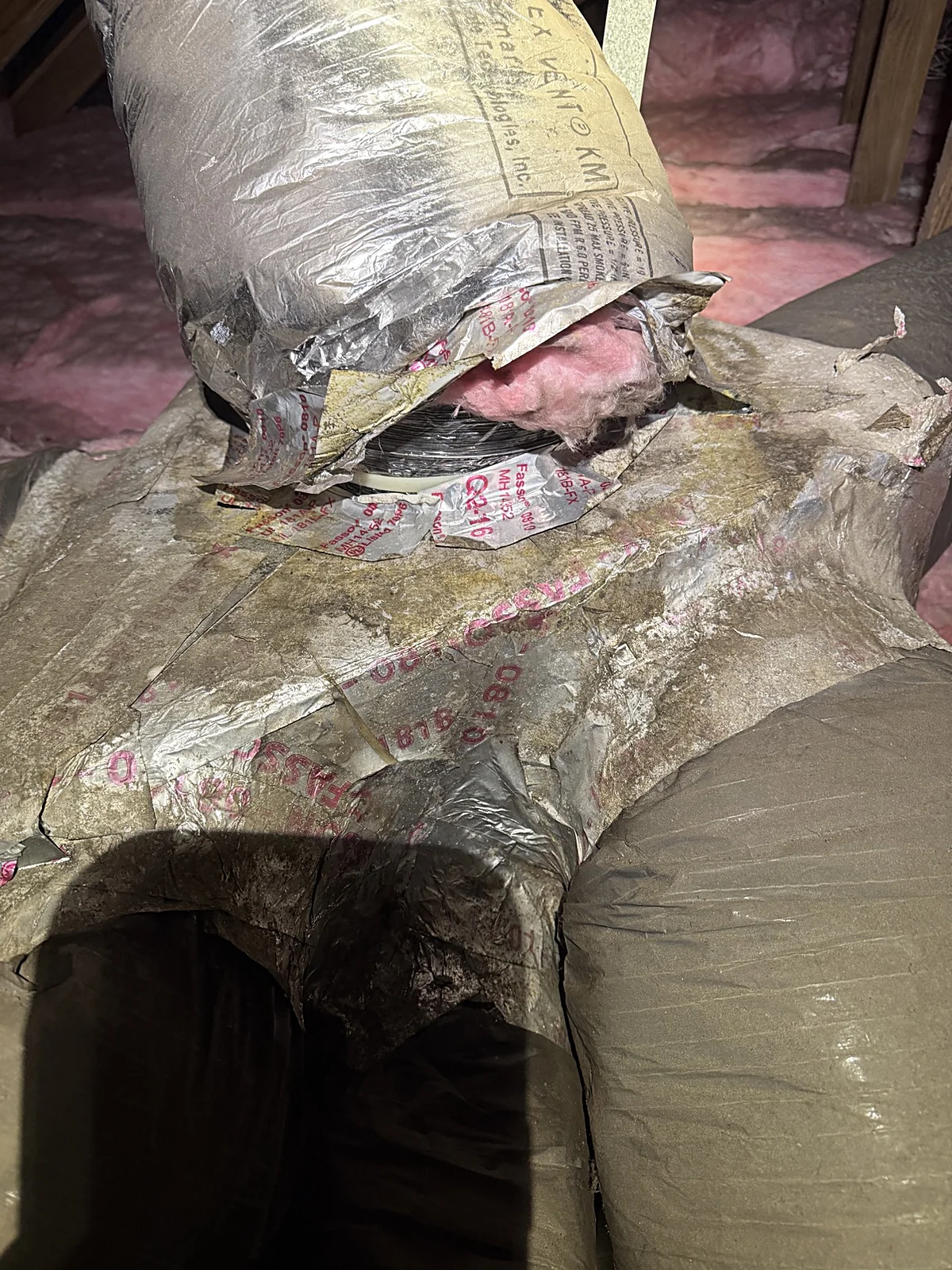
Sweating happens when warm, humid air meets a cold surface. Your AC sends air at roughly 55°F through the ducts. In a South Miami attic in summer, the air around those ducts can hit 130–150°F and carry heavy humidity. When the insulation wrapped around the duct is thin, torn, or simply decades old — the R-4 or R-6 insulation common in South Miami's older homes — the cold duct surface drops below the dew point and water beads up, just like a cold glass on a July afternoon.
That is the physics. The causes in a real South Miami home are usually one of these: failed or compressed duct insulation; a loose duct boot letting humid attic air pour in around the register; low airflow from a dirty filter or closed vents, which makes the air at the register colder and slower; or an oversized system that cools the house too fast without running long enough to pull humidity out of the air. Often it is two of these at once.
Here is the part most articles skip. Bacteria and mold need three things to grow: moisture, darkness, and food. A sweating duct provides all three. The moisture comes from condensation. The darkness is the inside of the duct. And the food is already there — dust is not just dirt; it is skin cells, pollen, and pet dander, and it coats the inside of nearly every duct system we open in South Florida.
Once a surface stays damp, growth can start fast — within a day or two in Florida's climate — and because the system circulates air through every room, whatever grows in the ducts does not stay in the ducts. That is why a musty smell when the AC starts, or allergies that seem worse indoors, often trace back to a sweating vent nobody took seriously months ago. We are not saying every sweating vent means a contaminated system. We are saying the longer condensation runs, the more likely the problem grows from a moisture fix into a cleaning — or replacement — job.
The urgency here is practical, not a scare tactic: a boot that needs sealing today is cheap. A duct system that has been wet for a year, with degraded liners and failing insulation, is not. Fix the moisture and the growth loses its water supply — which is why every real fix for bacteria in ducts starts with stopping the sweating, not just cleaning what grew.
A few checks cost nothing and tell you a lot. First, change the filter and open every vent — closed vents and a clogged filter are the most common airflow killers, and they make registers colder and wetter. Second, set the thermostat fan to AUTO, not ON: a fan that never stops blows moisture back off the coil and into the ducts. Third, look around the sweating register for staining, peeling paint, or a soft spot in the drywall — that tells you the moisture has been there a while, not just today.
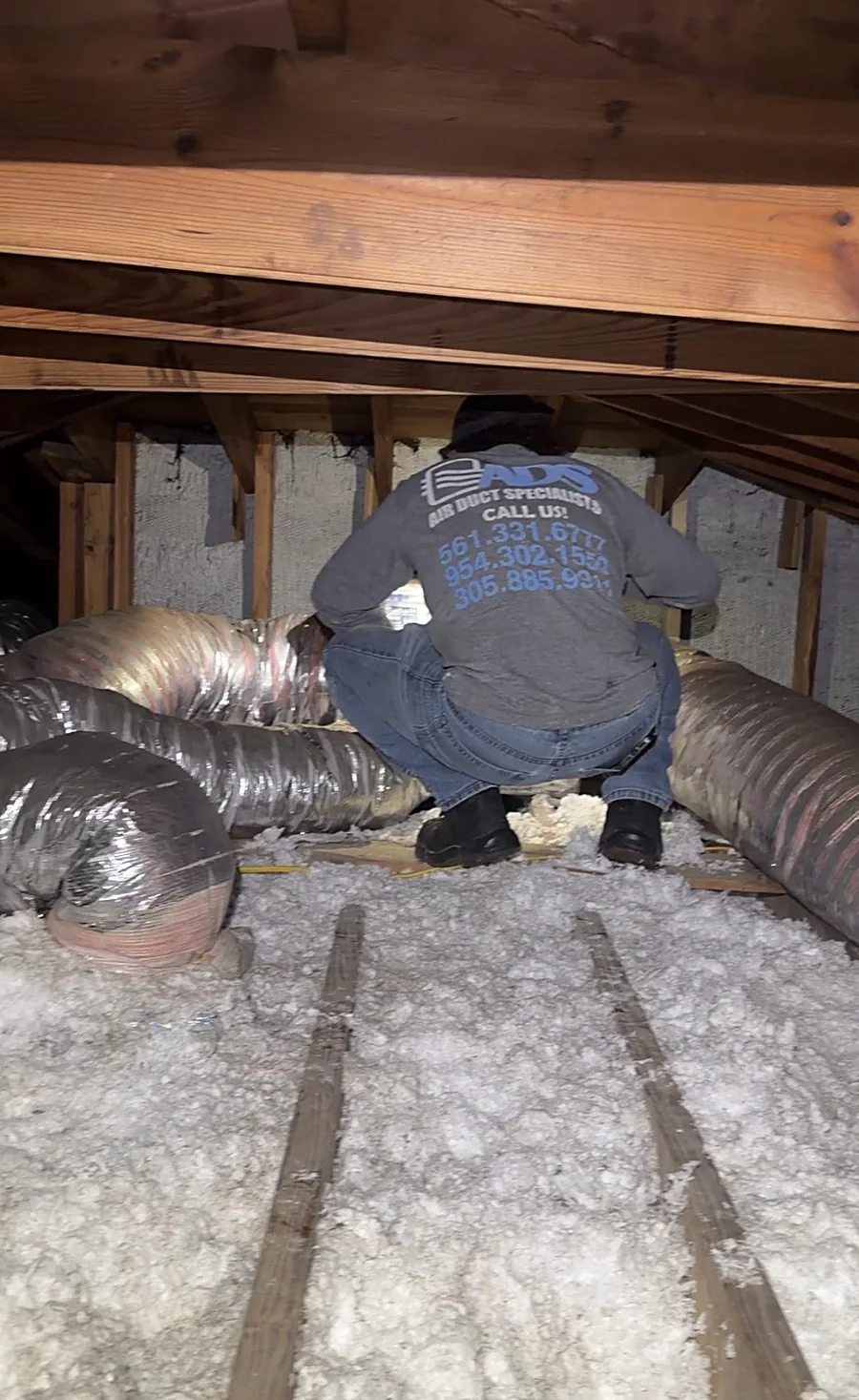
What you cannot check from the living room is the attic side: whether the insulation on that duct run has failed, whether the boot is sealed, and whether the inside of the duct is damp. That is the part a free inspection covers, and it is the part that decides whether you need a seal, a re-insulation, or a replacement. Do not climb into a 140°F attic to find out yourself.
Be honest about the range, because the right fix depends on what the inspection finds. If the ductwork is sound and the problem is a leaky boot or a bad seal, sealing it is a straightforward repair. If the insulation has failed across the system, re-insulating the ducts to the current R-8 standard stops the sweating at the source and typically runs roughly $1,000–$2,700. If the ducts themselves are torn, crushed, or decades past their life, cleaning will not save them — full duct replacement for an average smaller residential home typically runs $3,500–$9,500, varying on home sizing, layout, and materials required.
And if growth has already taken hold, a whole-system cleaning — ducts, coil, blower, and drain pan together — runs $200–$500 residential. Cleaning the ducts alone while leaving a dirty coil is a waste: the coil re-seeds the ducts within weeks. The honest order of operations is always the same: stop the moisture first, clean what grew second, and replace only what cannot be saved.
One more honest note: not every sweating vent needs a big job. Sometimes it is a filter and a fan setting. We would rather tell you that on a free estimate than sell you ductwork you do not need — that is why South Miami homeowners keep calling us back, and why we hold 350 five-star Google reviews.
Air Duct Specialists LLC serves South Miami and all of Miami-Dade, Broward, and Palm Beach. Licensed CAC1825166. Fully insured. Same-day service, 7am–11pm, 7 days a week. 350 five-star reviews.
📞 (305) 885-9911 — Miami-DadeWhy are my air vents sweating in South Miami?
Cold duct surfaces meeting warm, humid air — usually because the insulation on older ductwork has thinned or failed, or humid attic air is leaking in around a loose duct boot. A free on-site inspection tells you which one is happening in your home.
Can sweating vents really cause bacteria in air ducts?
Yes. Bacteria and mold need moisture, darkness, and food — and a sweating duct provides all three. Dust inside the ductwork feeds growth once moisture is present, and the system circulates those particles through every room with each cycle.
How do I know if my ducts need cleaning or full replacement?
A free inspection tells you honestly. Cleaning works when the ductwork is sound. Replacement is the right call when ducts are torn, crushed, or the insulation has failed throughout — cleaning cannot restore a system that is falling apart.
How much does it cost to fix sweating vents in South Miami?
Air duct cleaning runs $200–$500 residential; re-insulating ducts is roughly $1,000–$2,700; full duct replacement for an average smaller residential home typically runs $3,500–$9,500, varying on home sizing, layout, and materials required. The estimate is free, and what we quote is what you pay.
Is Air Duct Specialists licensed and insured?
Yes — license CAC1825166, fully insured, verifiable through the Florida DBPR before any work begins.
How fast can you come to South Miami?
Seven days a week, 7am–11pm, same-day service, average arrival 35–45 minutes. Call (305) 885-9911.