★★★★★
350
☰
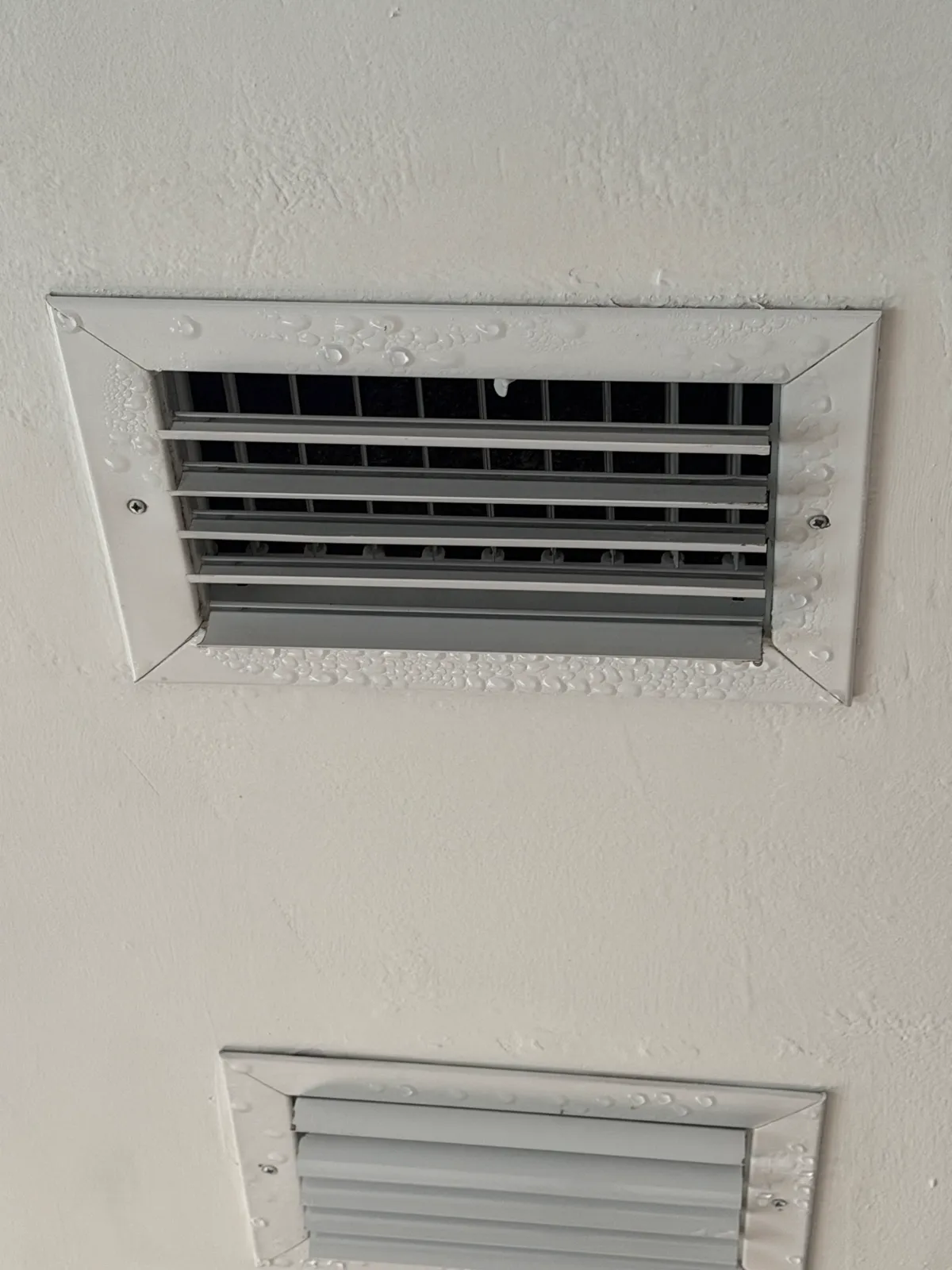
Water beading on your vents? For homeowners in the 33330 zip — Davie, Cooper City, and Southwest Ranches — here's what causes it, when it's harmless, and when your ductwork is telling you something.
The 33330 zip sits in one of Broward's most established suburban pockets — the neighborhoods around Flamingo Gardens, eastern Davie, western Cooper City, and northern Southwest Ranches. Mostly 1980s single-family homes on generous lots, 95% owner-occupied, with some of the highest household incomes in the county. So when the air vents start sweating — water beading on the registers, damp rings on the ceiling — it gets attention fast. Sweaty air vents in 33330 are a physics problem more than a house problem, and this guide breaks down what's going on.
The short version: your AC pushes ~55°F air through the ducts while the air around them — especially in a 130–150°F attic — is hot and humid. Where cold meets humid, water condenses. A little of that in peak summer can be normal. Constant sweating, dripping, or ceiling stains mean something specific has failed. Here's how to tell the difference.
Think of the outside of an ice-cold glass on a humid day — that's exactly what's happening on your vent register. The metal gets chilled by the supply air, and moisture in the surrounding air condenses onto it. In a properly built system, the ductwork between the air handler and the vent is insulated well enough that the cold never reaches a surface where humid air can touch it.
When vents sweat, that thermal barrier has broken down. The insulation is too thin, damaged, or missing; cold air is leaking out of the ducts; or the airflow is restricted enough to make the supply air colder than it should be. The sweat is never the real problem — it's the visible part of a ductwork problem.
1980s ductwork with thin insulation. Most 33330 homes were built in the 1980s with R-4 or R-6 flex duct — half of today's R-8 minimum. Forty-plus summers of brutal attic heat have flattened and degraded it further. Marginal when new; worse now.
Attic temperatures. Under a tile or shingle roof in Broward County, an attic can sit at 130–150°F for hours every summer afternoon. The wider the gap between the cold duct and the hot attic, the more aggressively condensation forms. Thin insulation in that environment never had a chance.
Leaking connections. After four decades, collars loosen, insulation jackets tear, and joints that were never sealed properly are wide open. Cold air escapes into the attic while hot, humid attic air reaches the cold duct surface. From the attic hatch the ducts can look fine; up close, the connections tell a different story.
Restricted airflow. Clogged filters, closed-off rooms, blocked returns, or a section of crushed flex duct all reduce airflow across the evaporator coil. Less airflow means colder supply air — and colder air at the vent means a bigger temperature gap for condensation to exploit.
Thermostat set very low. Holding the house at 68–70°F when it's 92°F outside maximizes the temperature difference at every register. Not a defect on its own, but stacked on top of aging ducts, it's what turns occasional dampness into actual dripping.
Wiping the vents doesn't fix anything, and in this climate the moisture doesn't go away on its own. Persistent dampness around registers and ductwork can create conditions where mold or mildew takes hold — and once dark spotting shows up on the ceiling drywall, you're looking at a ceiling repair on top of a duct repair.
Then there's the electric bill: sweating is your paid-for cooling condensing out of the system. Homes with sweating vents consistently run higher bills than identical homes with sealed, well-insulated ducts. If the moisture comes from duct leaks, you're air-conditioning your attic.
We'll be straight with you: sometimes this is a $0 fix — filter, thermostat, done. But when multiple vents sweat at once, the attic insulation is flattened or falling off, the ducts are 30–40 years old, and the sweating doesn't quit at a reasonable thermostat setting, no adjustment will fix it. That's a ductwork problem, and it needs a ductwork answer.
The fix is re-insulating or replacing the runs with properly sized R-8 ducts, sealed at every connection and hung on proper supports. It stops the condensation, cuts the electric bill, and protects the ceilings — which in these homes are worth protecting.
Honest numbers: a simple airflow or drain-line correction is minor. Re-insulating a typical 33330 home runs roughly $1,000–$2,700. A full duct replacement — new R-8 runs, sealed connections, proper supports — typically runs $1,500–$7,000 depending on home size and system count. The only way to get your exact number is an on-site estimate.
Ours are free, and what we quote is what you pay — no hidden fees, no upselling, same price for everyone. And if it really is just the filter, we'll tell you that.
Air Duct Specialists LLC serves Davie, Cooper City, Southwest Ranches, and all of Broward, Miami-Dade, and Palm Beach — 7 days a week. Licensed CAC1825166. Fully insured. Same-day service, 350 five-star reviews.
📞 (954) 302-1550 — Broward 📞 (305) 885-9911 — Miami-Dade 📞 (561) 331-6777 — Palm BeachIs it normal for air vents to sweat in the 33330 area?
Light condensation during the most humid weeks of summer happens across Davie, Cooper City, and Southwest Ranches. But vents that sweat constantly, drip, or stain the ceiling point to a real problem — usually thin or damaged duct insulation, leaking connections, or restricted airflow. Worth checking before it becomes ceiling damage.
Can sweating vents lead to mold in a 33330 home?
Ongoing dampness around vents and ductwork can create conditions where mold or mildew grows — Broward County's climate rarely dries anything out on its own. If the ceiling around a sweating vent stays damp, dark spotting can develop on the drywall. The answer is to stop the moisture at the source: the ductwork, the airflow, or both.
Why do so many 1980s homes in 33330 have this problem?
Most 33330 homes went up in the 1980s with R-4 or R-6 duct insulation — half of today's R-8 minimum. Forty-plus years of 130–150°F attic heat have flattened it further. Marginal when new, worse now — which is why sweating vents are so common in this zip.
Will raising the thermostat stop my vents from sweating?
It can help — a higher setpoint shrinks the temperature gap that causes condensation. But if the ducts are under-insulated or leaking, you're just masking the symptom while the underlying problem keeps wasting energy. A look at the ductwork tells you which situation you're in.
What does it cost to fix sweating vents in 33330?
A simple airflow fix or drain-line clearing is minor. Re-insulating ductwork in a typical 33330 home runs roughly $1,000–$2,700; a full duct replacement typically runs $1,500–$7,000 depending on home size and number of systems. Free on-site estimates — what we quote is what you pay.
Is Air Duct Specialists licensed and insured?
Yes — Air Duct Specialists LLC is a licensed Florida air conditioning contractor, license CAC1825166, and fully insured. We serve the 33330 area and all of Broward, Miami-Dade, and Palm Beach counties, 7 days a week, 7am–11pm.