★★★★★
350
☰
Barrier island, ocean on one side, bay on the other — Miami Beach is one of the hardest places in Florida to keep air vents dry. Here's why your vents sweat, when it's a warning sign, and what actually fixes it.
The 33139 is a barrier island with the Atlantic on one side and Biscayne Bay on the other, and that geography is exactly why sweaty air vents in Miami Beach are so common. Ocean air drifts in on every breeze, humidity rarely takes a day off, and the building stock fights back in the worst ways: Art Deco-era buildings along Ocean Drive and Collins Avenue with HVAC systems retrofitted decades ago, Mid-Beach high-rises with vertical duct risers running through wall chases, and oceanfront condos whose rooftop package units sit exposed to heat, salt air, and direct sun. Add flat roofs, original R-4 or R-6 ductwork, and thermostats set to 68°F in July, and you get the perfect setup for condensation.
This guide covers what sweating vents actually mean in a Miami Beach home or condo, the causes we see on service calls here, the DIY checks you can safely do, and when the real fix is re-insulating or replacing the ductwork. Straight talk, no scare tactics.
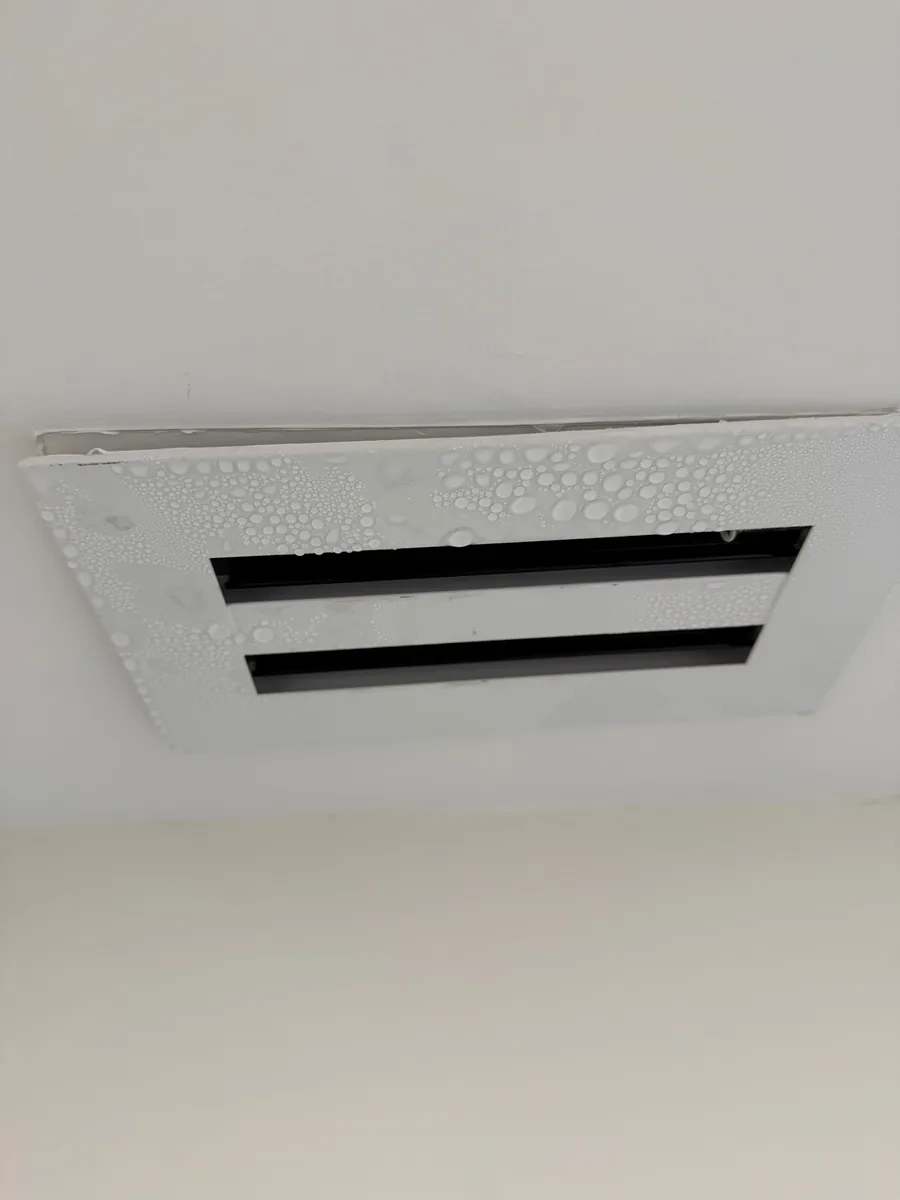
Sweating is condensation — pure physics, not a plumbing leak. Think of a cold glass of sweet tea on a July afternoon: within minutes the outside is dripping. Your vent is the glass. The air coming out of your AC is around 55°F. On a sticky Miami Beach day, the dew point of the indoor air — the temperature at which water vapor turns to liquid — can sit near 77°F. Any surface colder than that dew point collects moisture, exactly like that glass.
A vent grille gets cold because cold air flows through it. So faint, occasional condensation during extreme humidity isn't shocking. But when vents sweat regularly, bead up, or actually drip, the balance is off: the vent surface is too cold, the surrounding air is too humid, or — most often here — the duct insulation that should keep the two apart has failed. That's the part worth investigating.
The same causes show up on Miami Beach service calls again and again — almost all of them trace back to insulation, air leaks, or humidity:
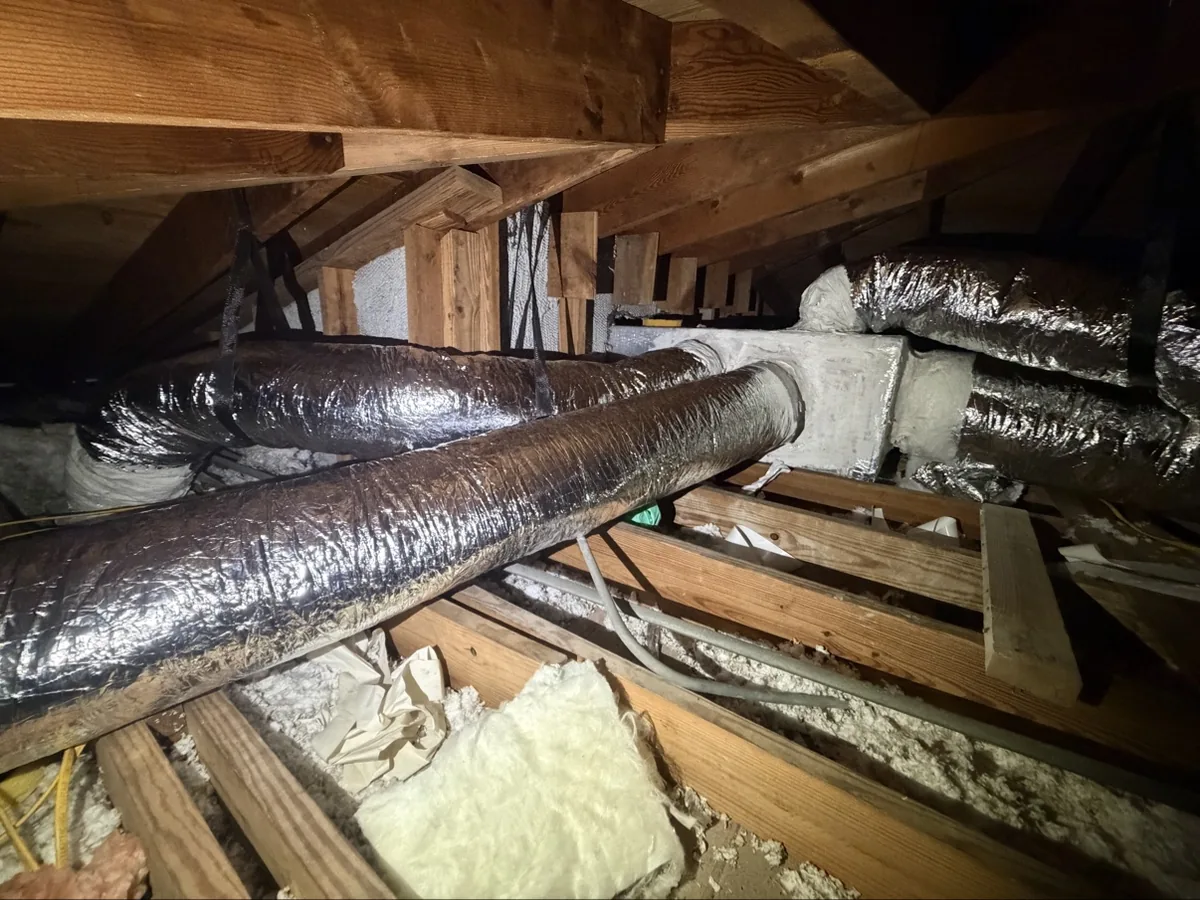
1. Failed or missing duct insulation. The number-one cause, period. Original R-4/R-6 ductwork in older Miami Beach buildings was never meant to survive decades of 130–150°F attics. When the insulation jacket tears, compresses, or soaks through, the cold duct surface meets hot humid air directly — and sweats. Wet insulation stops insulating entirely, which is how a small tear becomes a big problem.
2. Air leaks at duct boots and connections. The boot — the metal fitting that connects the duct run to the vent grille — is a classic weak point. Loose connections and gaps let cold air escape right at the ceiling, chilling the surrounding drywall below the dew point. This is why staining and spotting often shows up on the ceiling around the vent, not just on the grille.
3. An oversized AC that short-cycles. Common in Miami Beach condos, where equipment gets replaced unit-by-unit over the years. An oversized system cools the space and shuts off quickly — it cools without dehumidifying. High indoor humidity plus cold vent surfaces equals constant sweating.
4. The thermostat set extremely low. Oceanfront units with floor-to-ceiling glass get set to 68°F to fight the afternoon sun, and that widens the temperature gap between the vent and the room. Every degree colder at the vent makes condensation more likely. If the sweating started when you dropped the setpoint, the setpoint is part of the cause.
5. Condo realities: risers, chases, and rooftop units. Mid-Beach and Collins Avenue high-rises run vertical riser ducts through wall chases and rooftop package units that bake in the sun. Aging vertical runs, poorly sealed chase penetrations, and rooftop ductwork with sun-degraded insulation are Miami Beach-specific versions of the same problem — and they come with their own access rules and association coordination.
6. Humid ocean air flooding in. Sliding doors to balconies opened and closed all day, lobby doors propped open, leaky older windows — every one of them pushes the indoor dew point higher around cold vent surfaces. Salt air adds its own damage on top: it corrodes insulation jackets and metal boots, which is why oceanfront ductwork fails faster than the same ductwork a mile inland.
Mold moves fast here. Condensation creates sustained dampness on the vent grille, the surrounding drywall, and inside the duct boot where you can't see it. In South Florida's climate, mold can begin growing within 24–48 hours of a surface staying damp. A musty note when the system kicks on is the sign it's already started.
Ceilings take the damage next. Chronic dripping stains drywall, bubbles paint, and softens ceiling material around the vent. In condos, a leak that reaches the unit below becomes a neighbor problem and an association problem.
Metal corrodes and efficiency drops. Sweating keeps duct boots, registers, and connections wet, and salt air accelerates the rust. Meanwhile the system runs longer to compensate for the energy bleeding out of poorly insulated ducts. You're paying to cool your attic or your chase wall — and the sweat on the vent is the receipt.
Never open the air handler, touch refrigerant lines, or climb onto the roof to inspect a package unit yourself. Electrical cabinets hold charge even with the power off, and rooftop equipment is technician work. This is where a licensed contractor — Florida license CAC1825166 in our case — actually matters.
Here's the honesty that defines our company: not every sweating vent needs new ductwork. Sometimes the fix is a resealed boot, a replaced filter, a setpoint adjustment, or a short-cycling system that needs its airflow rebalanced. We say so when that's all it is — a simple repair is a simple repair.
But when the duct insulation itself is the problem — torn, compressed, soaked, or forty years old and rated R-4 — no amount of wiping or adjusting stops the sweating. The insulation is the barrier between 55°F air and 130–150°F attic heat, and once it's gone, the duct surface will always sit below the dew point. Re-insulating the runs restores that barrier; replacing them upgrades it to current R-8 code standard, properly hung, sealed, and supported.
The honest test is simple: if the ducts and boots are intact and the sweating tracks with a low setpoint or open balcony doors, change the behavior. If the insulation is damaged or the system has been sweating through every setting for months, fix the ducts. We'll tell you which one you're looking at — free estimate, no upselling, ever.
The honest answer depends on the cause — and that's exactly why the diagnosis is free. A disconnected boot or a crushed takeoff is a minor repair. Re-insulating duct runs that are still structurally sound typically runs $1,000–$2,700. Full duct replacement, when the old ductwork is beyond saving, typically costs $3,500–$9,500 for an average smaller residential home, varying with home size, layout, and materials required.
What we can tell you straight: we diagnose on site, show you exactly what's wrong, and give you the exact price before any work starts. Free estimates. No hidden fees. Same price for everyone — and what we quote is what you pay. Bottom line: the diagnosis is free, the cause is real, and the recommendation is straight.
Whether that's a simple fix or the ductwork your home actually needs, you'll know before you spend anything.
Air Duct Specialists LLC serves Miami Beach and all of Miami-Dade. Same-day service, 7 days a week, 7am–11pm. Average arrival 35–45 minutes. Certified techs — never subcontractors. Licensed CAC1825166. Free estimates.
📞 (305) 885-9911 — Miami-Dade 📞 (954) 302-1550 — Broward 📞 (561) 331-6777 — Palm BeachIs it normal for AC vents to sweat in Miami Beach?
No. Light, occasional condensation during extreme humidity can happen, but vents that regularly sweat or drip are a sign something is wrong — usually failed duct insulation, air leaks at the duct boots, or indoor humidity the system can't keep up with. Dripping is never normal and should be checked.
What causes sweaty air vents in a Miami Beach condo?
Condos have their own version of this problem: vertical riser ducts in wall chases, rooftop package units exposed to heat and salt air, and aging duct boots behind ceiling grilles. Sliding doors to balconies opened constantly also flood the unit with humid ocean air, pushing the dew point up around cold vent surfaces.
Can sweaty air vents cause mold in my home?
Yes. Condensation creates sustained dampness on the vent, the surrounding drywall, and inside the duct boot. In South Florida's climate, mold can begin growing within 24–48 hours of a surface staying damp. A musty smell when the system kicks on is the sign it's already started.
Should I just wipe the vents down and ignore it?
Wiping treats the symptom, not the cause. The condensation will return every time the system runs because the surface temperature and humidity conditions haven't changed. Worse, the moisture you can't see — inside the duct boot and on the ceiling above it — keeps working on the drywall while you wipe the grille.
How do I permanently stop my air vents from sweating?
The permanent fix depends on the cause: resealing and insulating duct boots and connections, re-insulating attic duct runs, or — when the original ductwork is failing — full duct replacement. A proper diagnosis identifies which one your home needs, because the fix that works for torn insulation won't fix an oversized system that can't dehumidify.
How much does it cost to fix sweaty vents in Miami Beach, FL?
Duct re-insulation typically runs $1,000–$2,700, and full duct replacement typically costs $3,500–$9,500 for an average smaller residential home, varying with home size, layout, and materials. Minor fixes — a resealed boot, a replaced register — cost far less. That's why the diagnosis is free: you get the real cause and the exact price before any work starts.
Is Air Duct Specialists licensed and insured?
Yes — Air Duct Specialists LLC is a licensed Florida air conditioning contractor, license CAC1825166, and fully insured. You or your property manager can verify the license through the Florida DBPR before any work begins.