★★★★★
350
☰
Spots around a vent, a musty smell when the system kicks on, dust that comes back days after cleaning — in South Florida these are often the visible signs of growth inside the ductwork. Here's how growth starts, what to look for, how it is actually removed, and why fixing the moisture matters more than any spray.
Most homeowners first notice the problem at a vent: dark spots or discoloration around a register, a musty note in the air when the system starts up, or dust that reappears on the vent grille within days of wiping it clean. Those are surface signs. What they usually point to is growth further inside the run — in a place no one looks until someone opens the system up and inspects it properly.
This page is about that growth: how it starts in South Florida ductwork, the signs that separate it from ordinary dust, how it is actually removed, and — most importantly — why any cleaning that does not fix the moisture behind it is only a pause, not a solution.
Growth needs three things, and South Florida ductwork supplies all of them without trying. First, moisture — and in this climate moisture is rarely far away. Sweating vents drip condensation into boots and runs. Condensation forms on duct surfaces whose insulation has slipped or failed. A clogged condensate drain backs water up. A damaged run lets humid attic air straight onto a cold surface. Any one of these keeps a section of duct damp for long stretches.
Second, food. Dust is mostly skin cells, fabric fibers, pollen, and fine debris — organic material, and plenty of it. Every duct system accumulates dust over years of operation, and the runs that stay damp are the runs where that dust sits undisturbed. Third, darkness and stillness. The inside of a duct run is dark, enclosed, and — in sections with weak airflow — barely disturbed. Put moisture, dust, and a dark enclosed space together, and growth is a matter of time, not luck.
That is also why sweating vents and growth travel together so often. A vent that has been sweating for months has been feeding moisture into the boot and the first feet of the run for months. By the time spots appear on the vent face, the run behind it has usually been damp far longer. And it is why coastal and high-humidity homes see this more than inland ones: the attic air is wetter, the system runs longer, and the margin between "dry enough" and "damp enough" is thinner.
One honest note: not every dark spot on a vent is mold, and not every musty smell means a duct is colonized. Dust alone can discolor a grille, and a dirty coil can smell musty without growth in the runs. That is what inspection is for — to find out which one it actually is before anyone proposes a fix.
Growth in ductwork rarely announces itself directly. It shows up through signs at the vents and in the air:
Any one of these alone is a reason for an inspection, not a diagnosis. Several together, especially spots plus odor plus a moisture history, make inspection urgent rather than optional.
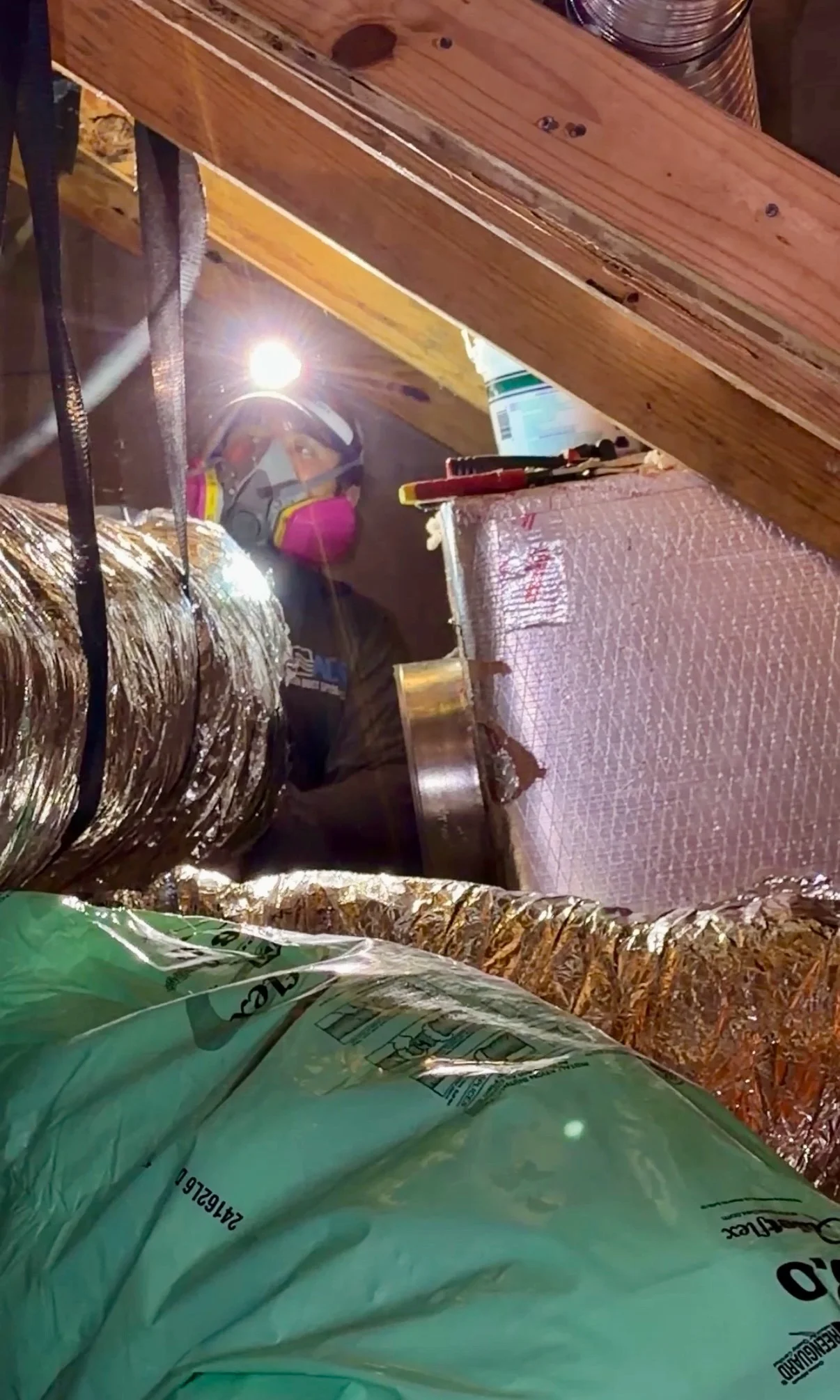
An inspection for growth is not a glance at the vent grille. We look at the places growth actually lives:
You see photos of what we find. Growth claims should come with evidence, not just a verbal report, and the photos also show you the moisture source — because the fix has to address both, and you should be able to see why.
Real remediation is a mechanical process, not a chemical one. It starts with source removal: the system is placed under continuous negative pressure with a high-powered vacuum, registers are sealed, and agitation tools break buildup loose from the duct walls so the vacuum carries it out — rather than pushing it around the system or into the home. Rotary brushes suit rigid metal ducts; softer air whips are used on flexible and fiberglass-lined duct to avoid damaging the liner.
Cleaning only the runs is half the job. The two components most responsible for recontaminating freshly cleaned ductwork are the evaporator coil and the blower. A dirty coil and blower push dust and moisture back through the system within weeks, so a whole-system approach cleans the coil, blower, drain pan, registers, and ducts together.
What about spraying or fogging? A spray or fog applied without first mechanically removing the buildup only masks the problem and can leave contaminants behind. Chemical treatments are not a substitute for mechanical cleaning, and any company offering a fog as the entire solution is selling a shortcut. If a treatment is used at all, it comes after the physical cleaning, never instead of it.
Residential air duct cleaning typically falls in the $200 to $500 range, depending on the size of the home and the number of vents. Work beyond cleaning — sealing, re-insulating, or replacing damaged runs — is priced separately on the same free estimate.
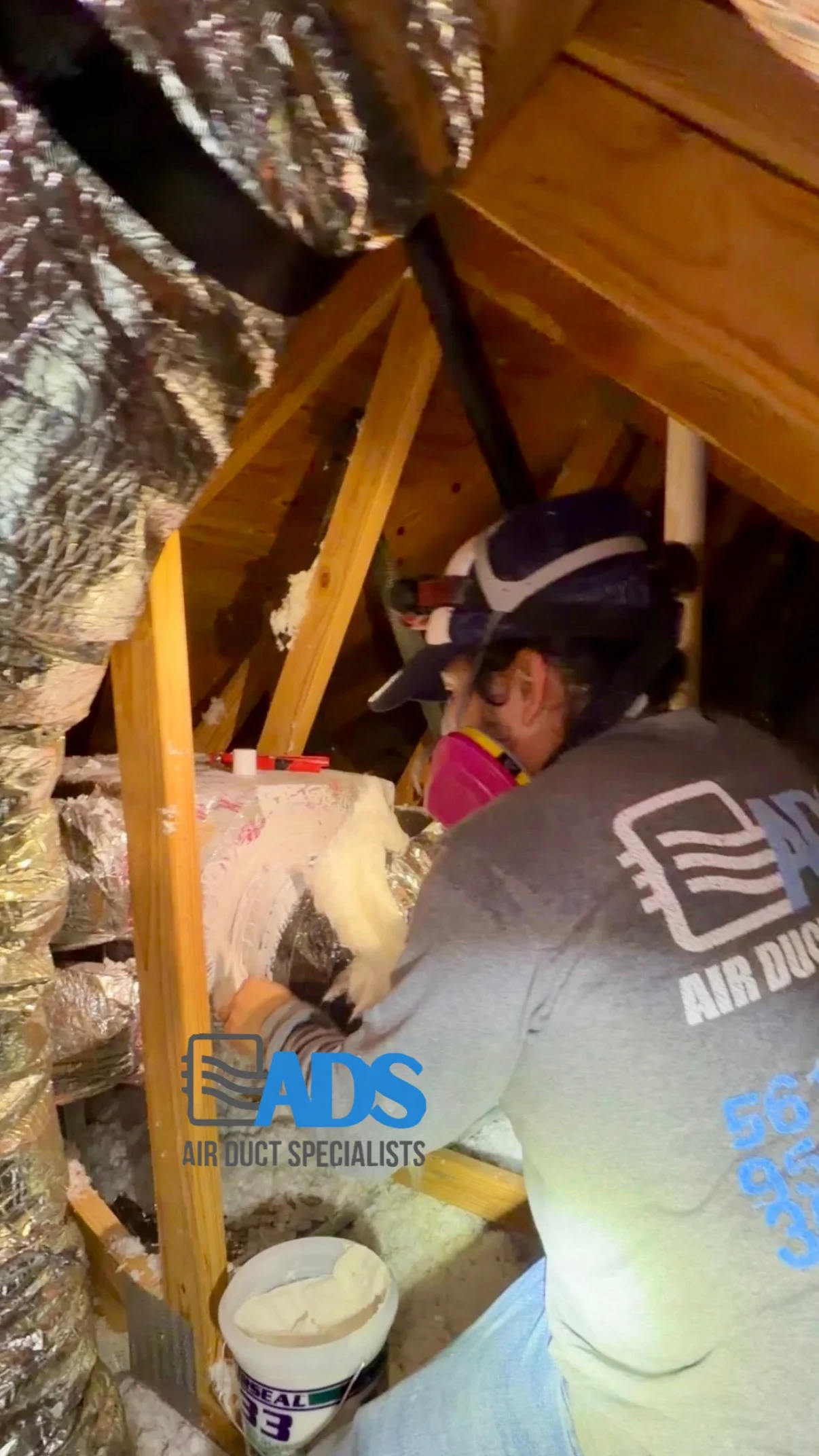
This is the part that separates a lasting fix from a repeat cleaning bill. Cleaning removes what is there now; drying the duct keeps it from returning. Depending on what inspection finds, that means:
Clean a duct and leave it wet, and growth comes back. Dry the duct and keep it dry, and the cleaning holds. That order — clean, then fix the moisture — is the whole approach. It is also why a quote that only prices the cleaning, without pricing the moisture fix, should raise a question: the cleaning is the visible half of the job, but the sealing, insulation, and drainage work is the half that decides whether you pay for it once or pay for it again.
Our on-site estimates for mold and bacteria in ductwork are free. We inspect the vents and the ductwork, show you photos of what we find, identify the moisture source, and give you a firm price before any work begins. If you'd like, we can also check the rest of the system while we are up there — insulation condition, duct condition, and airflow — so you hear about a second problem from us now rather than discovering it yourself later. There is no obligation, and what we quote is what you pay.
Air Duct Specialists LLC inspects and remediates mold and bacteria in ductwork across Miami-Dade, Broward, and Palm Beach counties — including Miami, Coral Gables, Pinecrest, Fort Lauderdale, Davie, Weston, Boca Raton, Delray Beach, and Palm Beach. Same-day service is available, and we are open 7am–11pm, 7 days.
If you'd like, we will come out, inspect your vents and ductwork, show you photos of what we find, and give you a firm price — no charge for the estimate, no obligation. Licensed CAC1825166. Fully insured. 350 five-star reviews. Open 7am–11pm, 7 days.
📞 (561) 331-6777 — Palm Beach 📞 (954) 302-1550 — Broward 📞 (305) 885-9911 — Miami-DadeHow do mold and bacteria grow inside air ducts?
Growth needs three things, and South Florida ductwork supplies all of them: moisture, dust to feed on, and dark enclosed runs where air moves slowly. Moisture usually arrives through sweating vents, condensation on duct surfaces, a clogged drain, or a damaged run — and once a run stays damp, dust already in the duct becomes food for whatever colonizes it.
What are the signs of mold on air vents or bacteria in ducts?
The usual signs are visible spots or discoloration around a vent or register, a musty odor that appears when the system runs and fades when it stops, dust that returns to vents soon after cleaning, and a history of moisture at the vent — sweating, dripping, or staining. Spots around a vent deserve an inspection, because surface spots can indicate growth further inside the run.
Can you just spray or fog the ducts to kill mold?
No — not as the fix. Spraying or fogging without first mechanically removing the buildup only masks the problem and can leave contaminants behind. Real remediation starts with source-removal cleaning: physically extracting debris from the duct walls under negative pressure, cleaning the coil and blower, and then fixing the moisture source so growth does not return to a still-damp duct.
Will cleaning the ducts fix the problem permanently?
Cleaning removes what is there now, but it is only permanent if the moisture source is fixed at the same time. That is why our approach pairs cleaning with sealing vent boots, re-insulating runs that lost their insulation, clearing drains, and repairing damaged duct sections. Clean a duct and leave it wet, and growth comes back; dry the duct and keep it dry, and the cleaning holds.
How much does air duct cleaning cost?
Residential air duct cleaning typically falls in the $200 to $500 range, depending on the size of the home and the number of vents. Work beyond cleaning — sealing, re-insulating, or replacing damaged runs — is priced separately on the same free estimate, so you see the full picture before any work begins.
Do you offer free estimates for mold or bacteria in ducts?
Yes. Air Duct Specialists LLC offers free on-site estimates across Miami-Dade, Broward, and Palm Beach counties. We inspect the vents and the ductwork, show you photos of what we find, and give you a firm price before any work begins. We are a licensed Florida air conditioning contractor, license CAC1825166, and fully insured.
Sweating Air Vents
Sweating vents are the most common moisture source behind growth
Air Duct Cleaning
Source-removal cleaning for the whole system
HVAC Coil Cleaning
A dirty coil recontaminates cleaned runs within weeks
Duct Sealing & Repair
Sealing the boots and joints that let moisture in
Bacteria in Air Ducts in Boca Raton
How moisture in ductwork feeds bacterial growth
Ceiling Condensation
When moisture forms on the ceiling itself, not the vent