★★★★★
350
☰
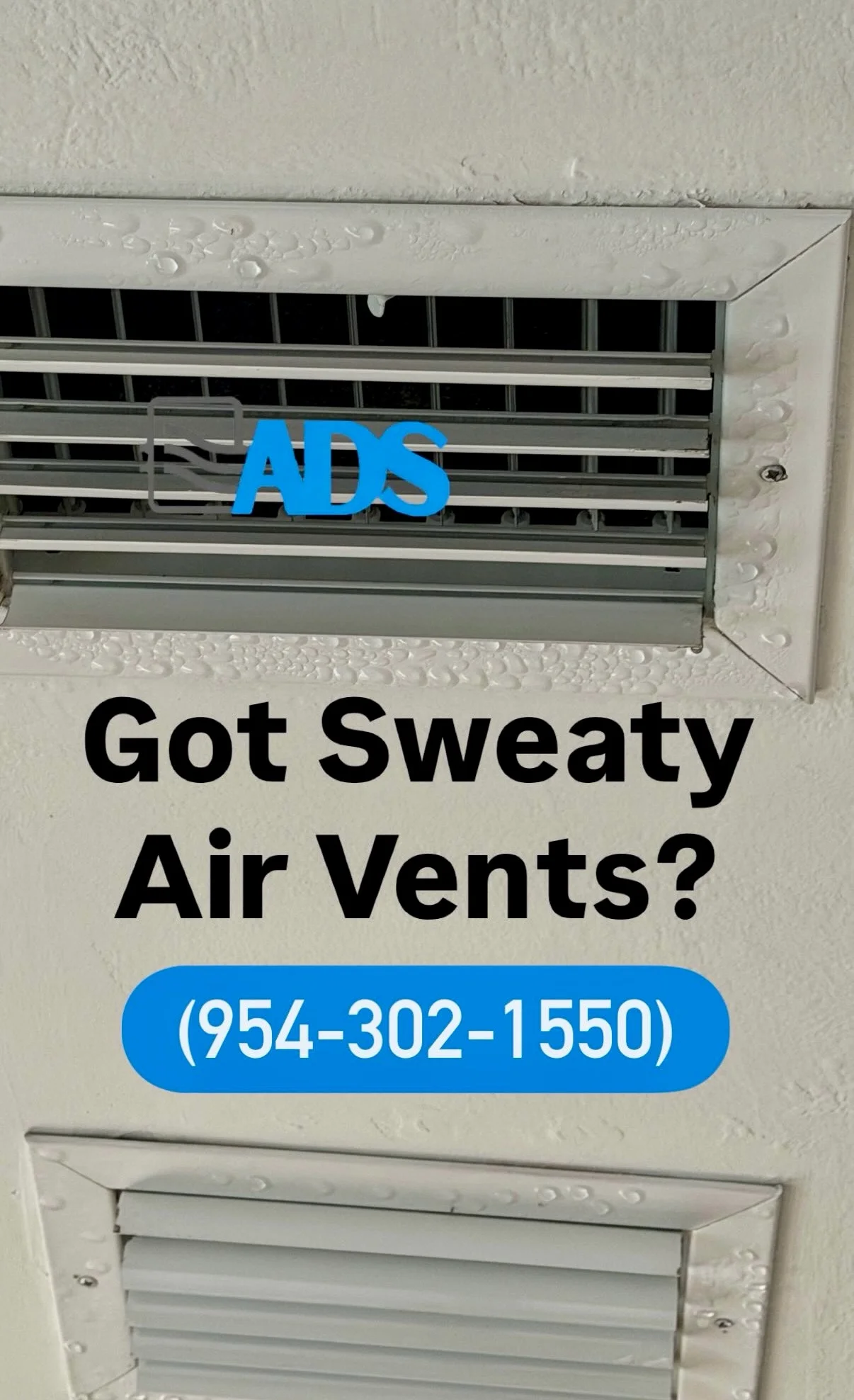
Water dripping from a vent onto the floor, staining the ceiling, or pooling around a register is not something to live with. In South Florida it usually traces back to one of four causes — and each one has a different fix. Here's how to tell them apart, what to do right now, and how the drip actually gets stopped.
A drip at an air vent gets attention fast, and it should. Water where it does not belong damages ceilings, feeds growth inside ductwork, and soaks insulation until the insulation itself becomes part of the problem. But the drip is a symptom, and the symptom alone does not say what is wrong. The same drip pattern can come from condensation, from a drain backing up, from a coil freezing and thawing, or from a duct run that has lost its insulation — and treating the wrong one wastes money while the real cause keeps dripping.
The good news is that the four causes leave different evidence, and a proper inspection reads that evidence before proposing any work. This page walks through each cause, how to tell them apart, what you can safely do right now, and what a real fix looks like.
South Florida is hard on air conditioning in a specific way: the system runs nearly year-round, the attic above the ceiling is hot and saturated with humidity, and the cooled air inside the ducts is far colder than the air around them. That combination produces water in several different ways. The four causes we find most often:
More than one cause is often at work. A clogged drain plus an unsealed boot, or a frozen coil plus a run that lost its insulation, is a typical combination — which is why a fix aimed at only one of them sometimes leaves the drip half-solved.
Not every drip at a vent comes from the duct system at all, and the wrong diagnosis means the wrong repair. Here is how the three usual suspects differ:
Condensation forms on the vent face itself and around the boot. It appears when the AC is running hard in humid weather, often affects several vents at once, and comes and goes with humidity and system runtime rather than with rain. The moisture sits on the surface of the vent and the ceiling immediately around it.
A condensate drain problem shows up near the air handler. When a drain line clogs or a drain pan overflows, water backs up and drips from the unit itself or from the ceiling directly below or beside it. If the wet spot is close to the air handler, the system has been shutting off on its own, or the drip started suddenly after a long stretch of normal operation, the drain is a prime suspect.
A roof leak follows rain, not AC runtime. It usually stains one spot, often away from any vent, and an attic inspection will show a wet path from the roof deck down. If the stain appears after storms and not on dry days with the AC running, the roof deserves a look before the ducts do. A proper inspection checks the attic above the stain, which settles the question quickly.
While you wait for an inspection, a few steps limit the damage:
What not to do: do not just keep wiping the vent and hoping it stops. A drip that keeps coming back is water going somewhere it should not go, and every day it continues, the ceiling, the insulation, and the ductwork absorb more of it.
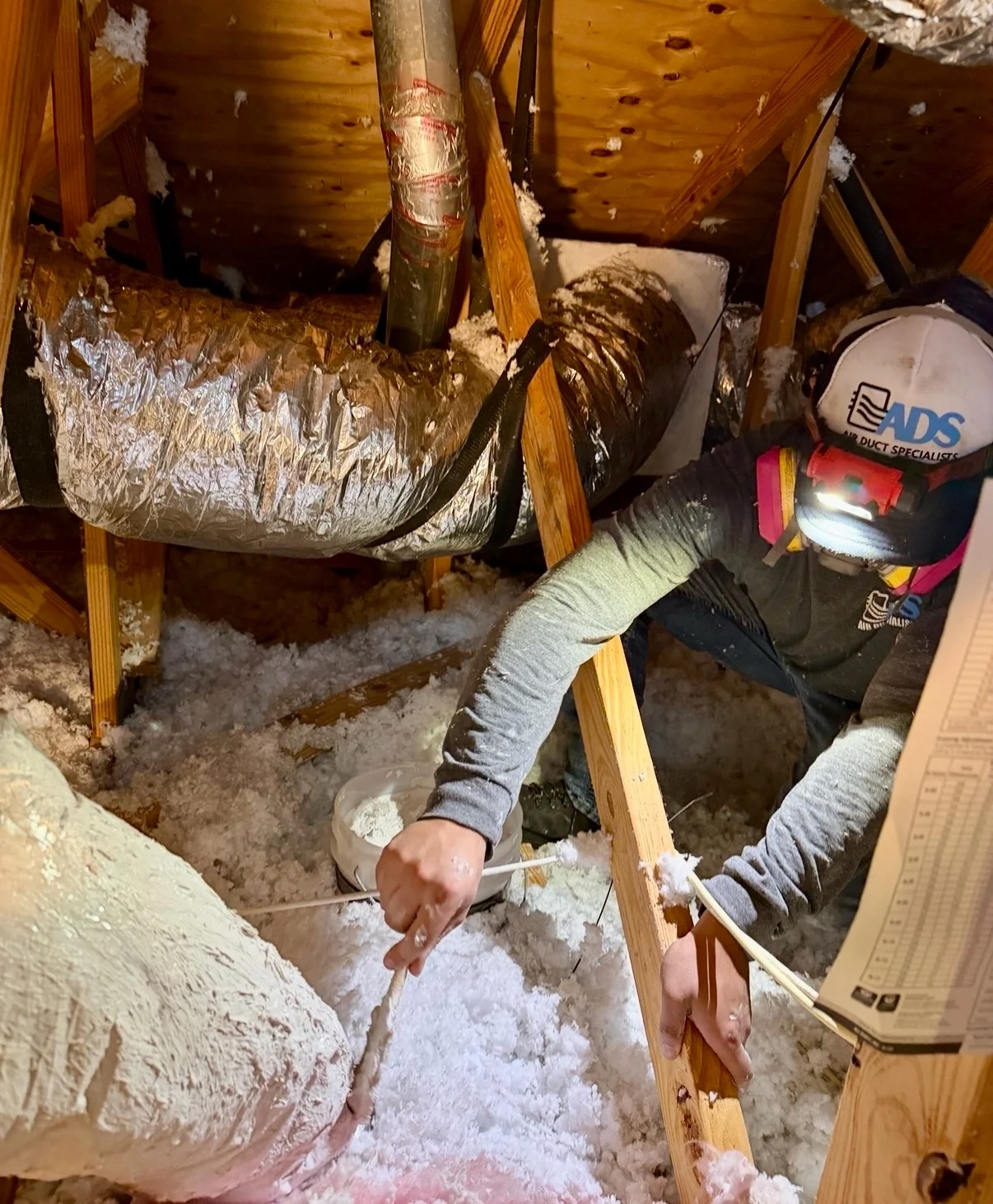
Diagnosis starts above the ceiling and at the unit, not at the vent — the vent is where the water shows up, and the cause is almost always elsewhere. On an inspection we check:
You get the findings in plain language and a firm price for the fix — not a vague recommendation to replace everything and not a guess. If the problem turns out to be a roof issue rather than a duct issue, we will say so, because fixing the wrong thing helps no one.
Clearing the condensate drain. A clogged line is cleared, the pan is checked for rust or damage, and the float switch is verified so a future clog shuts the system down safely instead of overflowing.
Addressing the frozen coil. The coil is allowed to thaw, then the airflow problem behind the freeze is found and fixed — filter, coil cleaning, blower, or duct restriction — so the coil does not simply freeze again next week.
Sealing boots and joints. Gaps between the boot and the ceiling are sealed, and duct-to-boot joints are sealed with mastic so humid attic air can no longer flow across cold surfaces and condense.
Re-insulating duct runs. Runs that have lost their insulation are re-insulated so the duct surface stays warm enough that attic air no longer condenses on it. Sections too damaged to re-insulate are repaired or replaced.
Our on-site estimates for dripping vents are free. We inspect the vents, the attic ductwork, and the condensate drain, identify the cause, and give you a firm price for the fix before any work begins. If you'd like, we can also check the rest of the system while we are up there — insulation condition, duct condition, and airflow — so you hear about a second problem from us now rather than discovering it yourself later. There is no obligation, and what we quote is what you pay.
Air Duct Specialists LLC diagnoses and repairs dripping vents across Miami-Dade, Broward, and Palm Beach counties — including Miami, Coral Gables, Pinecrest, Fort Lauderdale, Davie, Weston, Boca Raton, Delray Beach, and Palm Beach. Same-day service is available, and we are open 7am–11pm, 7 days.
If you'd like, we will come out, find out why your vents are dripping, and give you a firm price for the fix — no charge for the estimate, no obligation. Licensed CAC1825166. Fully insured. 350 five-star reviews. Open 7am–11pm, 7 days.
📞 (561) 331-6777 — Palm Beach 📞 (954) 302-1550 — Broward 📞 (305) 885-9911 — Miami-DadeWhy is water dripping from my air vent?
In South Florida the most common causes are condensation forming faster than it can drain away, a clogged condensate drain line, a frozen evaporator coil that melts and overflows, and damaged or uninsulated ductwork that lets moisture collect. Which one is responsible depends on where the water appears, when it appears, and what the system looks like on inspection.
Is water dripping from a vent an emergency?
It depends on how much water there is. A slow drip that stains the ceiling can usually wait for a scheduled visit, but heavy dripping, a sagging or bulging ceiling, water near electrical fixtures, or water spreading across a floor should be treated as urgent — turn the system off and call. Ongoing dripping should never be ignored, because the moisture keeps damaging the ceiling and the ductwork while it continues.
How do I tell a condensation drip from a drain problem or a roof leak?
Condensation drips from the vent face and appears when the AC is running hard in humid weather, often at several vents. A drain problem shows up near the air handler, where a clogged line or overflowing pan backs water up. A roof leak follows rain, usually stains one spot away from any vent, and leaves a wet path from the roof deck in the attic. An inspection of the attic and the unit separates the three.
What should I do right now while water is dripping?
Put a bucket or towels under the drip, move anything water could damage, and check whether the drip follows AC runtime or rain. If the dripping is heavy, the ceiling is sagging, or water is near lights or outlets, turn the system off and call. Do not poke at a sagging ceiling or climb into the attic to investigate a leak yourself — a wet ceiling can fail without warning.
How do you fix water dripping from air vents?
The fix follows the cause found on inspection: clearing a clogged condensate drain line, addressing the frozen coil and the airflow or refrigerant issue behind it, sealing vent boots and duct joints with mastic, and re-insulating duct runs that have lost their insulation. Fixing the cause stops the drip; catching the water only manages the symptom.
Do you offer free estimates for dripping vents?
Yes. Air Duct Specialists LLC offers free on-site estimates across Miami-Dade, Broward, and Palm Beach counties. We inspect the vents, the attic ductwork, and the condensate drain, identify the cause, and give you a firm price for the fix before any work begins. We are a licensed Florida air conditioning contractor, license CAC1825166, and fully insured.
Sweating Air Vents
When the drip starts as condensation on the vent
Duct Sealing & Repair
Sealing boots and joints that let humid attic air in
HVAC Coil Cleaning
A dirty coil restricts airflow and can freeze over
Ceiling Condensation
When moisture forms on the ceiling itself, not the vent
Water Dripping From Air Vents in Fort Lauderdale
The dripping-vent problem, explained in depth
Air Duct Cleaning
Cleaning where moisture has already left growth behind